

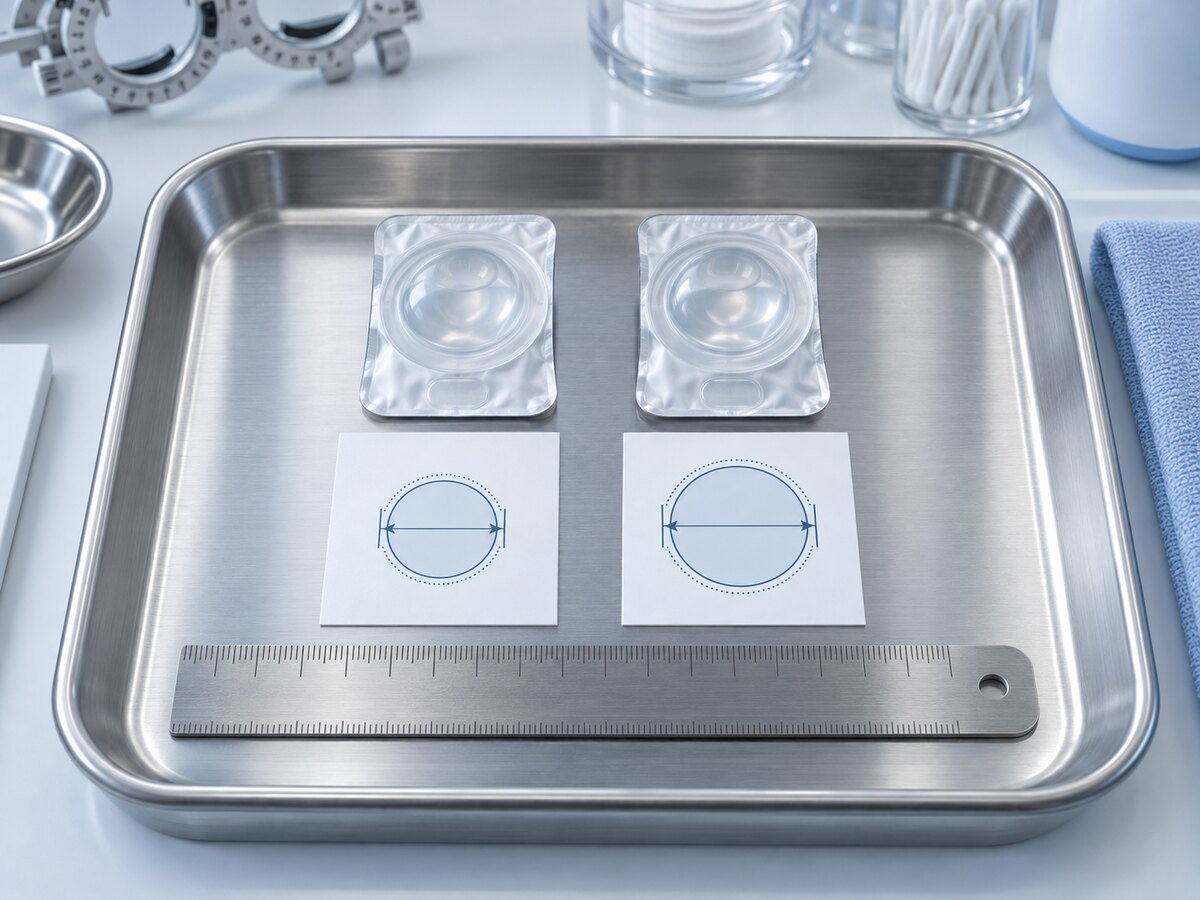
Short answer: 14.0mm and 14.2mm DIA describe the full lens from edge to edge. They do not tell you how large the colored pattern will look. A 14.2mm lens can have a smaller graphic than a 14.0mm lens.
DIA and G.DIA answer different questions
- DIA: the overall physical lens diameter, relevant to how the lens fits and interacts with the eye.
- G.DIA: the approximate diameter of the printed design, relevant to visible enlargement.
The 0.2mm difference between 14.0 and 14.2 is small on a ruler, yet fit is not a beauty preference to guess from. Diameter works together with base curve, material and lens design. Use the specifications prescribed or approved for your eyes.
Why shoppers get confused
Product names sometimes emphasize “14.2mm,” so it is easy to read the number as an enlargement score. Instead, open the specification panel and locate both DIA and graphic diameter. Then review the outer-ring design and real-eye photos.
A safer comparison sequence
- Confirm power, base curve and overall DIA with your eye-care professional.
- Within suitable options, compare G.DIA for the desired visible size.
- Compare ring darkness, pigment density and edge softness.
- Choose color only after the size and pattern meet your goal.
KPOP2 product pages list available specifications so shoppers can compare candidates. Start with the Lens Journal for more fitting and design explainers, then search products by the exact specification you have been given.
Bottom line
Do not select 14.2mm because you expect bigger-looking eyes. Treat overall DIA as a fit specification and G.DIA plus pattern contrast as the visual-size information.
Explore Related Lens Options
Continue from this guide with active KPOP2 categories and products that match the topic’s color, size, replacement schedule or fitting intent. Confirm the specifications in your valid prescription before ordering.