
Pink-brown colored contacts can show a rosy effect on dark brown eyes, but the result is usually a warm brown first and pink second. The clearest signs are a visible rose or mauve pigment, enough contrast against the natural iris, and customer images taken in more than one lighting condition. Do not judge from the shade name or a bright studio close-up alone.
In this guide

What pink-brown usually looks like on dark brown eyes
A natural pink-brown lens is rarely designed to turn a deep brown iris into a flat pastel pink disc. More often, the brown base keeps the effect wearable while rose, mauve or dusty-pink pigment changes the temperature of the eye. At normal conversation distance, another person may read the result as warm brown, cocoa rose or muted mauve rather than simply “pink.”
This distinction matters when setting expectations. If the goal is a subtle romantic tone, a brown-dominant result can be successful. If the goal is an unmistakably pink iris, a sheer rose wash may be too restrained on a dark base. Choose the visual goal first, then evaluate whether the product images support it.
Check the printed design, not only the shade name
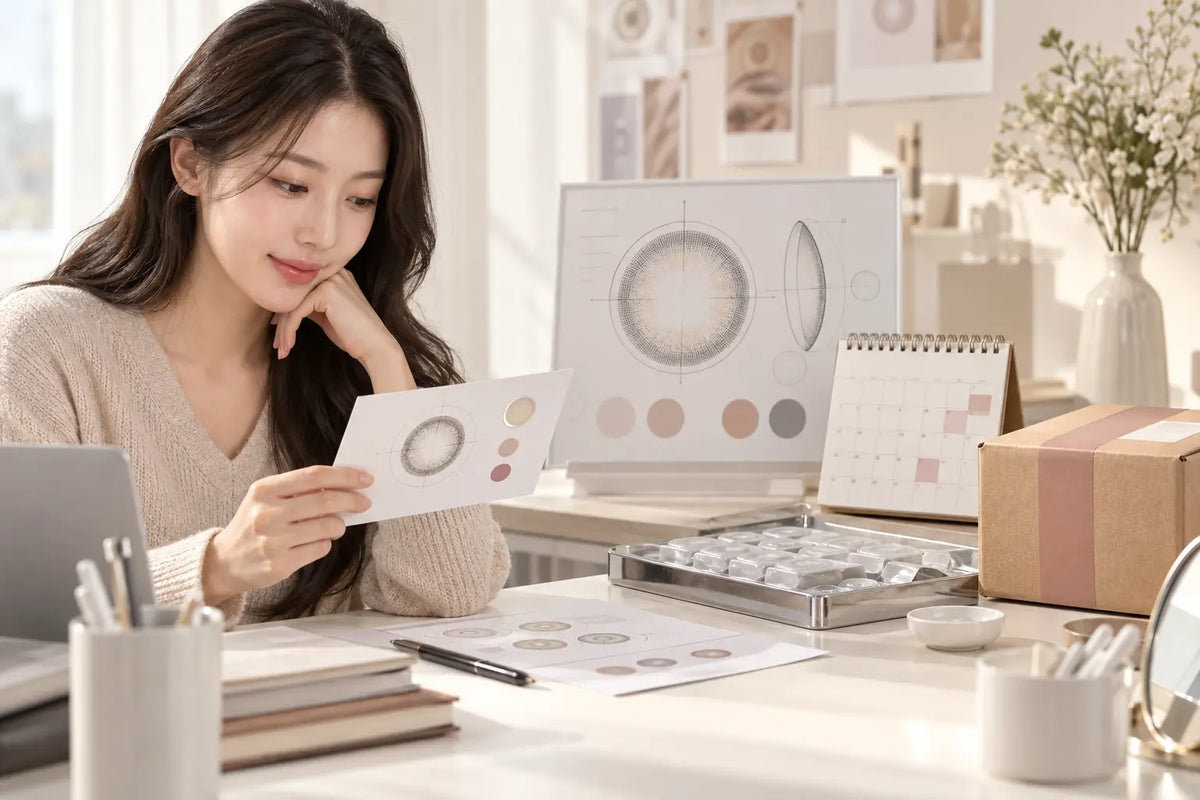
Shade names are helpful labels, not standardized color measurements. “Rose brown,” “pink brown,” “dusty rose” and “mauve brown” can describe very different prints. Look closely at the lens image and on-eye photographs for four useful clues:
- Center color: a visible rose or mauve area near the pupil can add a pink cast, while a golden or orange center may make the result warmer.
- Overall pigment: sparse translucent dots usually allow more natural brown to show through; a denser print can make the added tone easier to see.
- Outer ring: a dark brown or gray ring increases definition but can make the overall impression less pink from a distance.
- Color balance: compare the amount of rose with the amount of brown. A small pink accent in a mostly brown print will usually remain subtle.
Graphic diameter can change how much printed color is visible, but a larger number does not automatically mean a stronger pink result. Pigment density, placement and contrast are equally important. Compare the complete design rather than chasing one specification.
Compare three lighting views before deciding
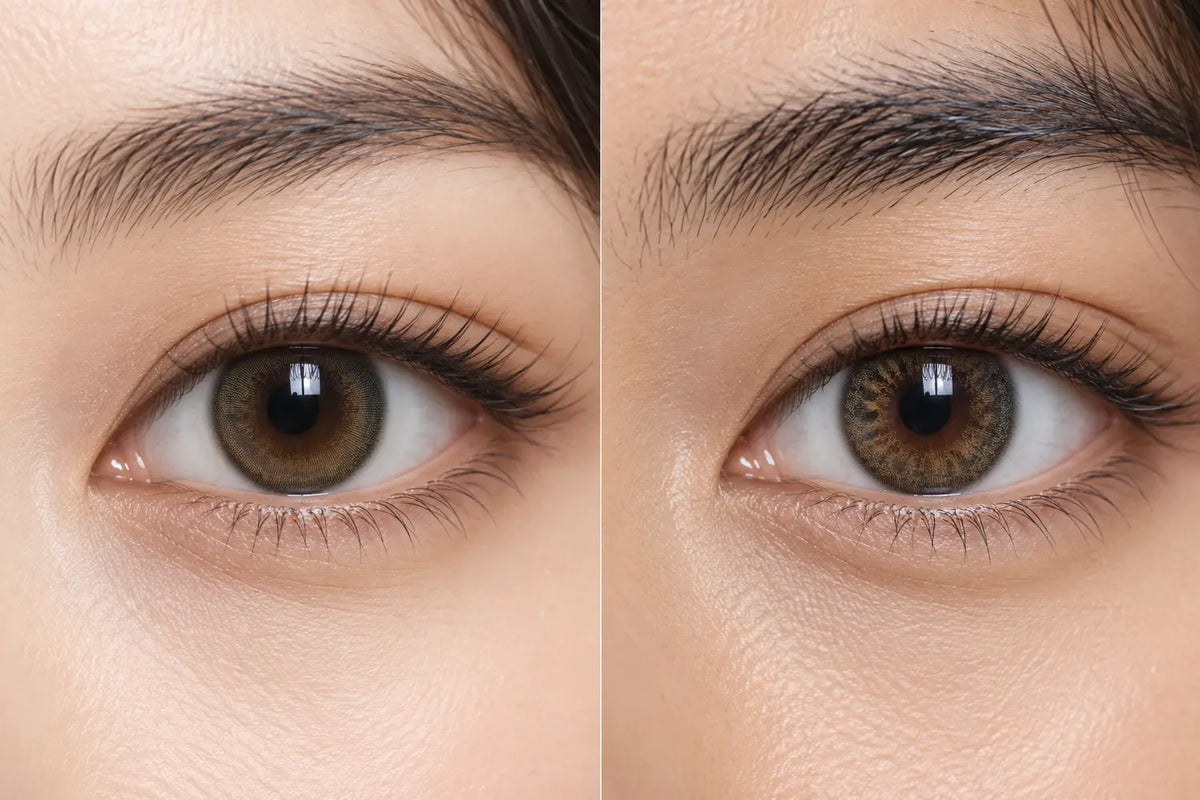
Light changes both the natural iris and the printed pigment. A bright, front-lit image can reveal rose that is difficult to notice indoors, while warm indoor bulbs may push the same shade toward reddish brown. The most useful product page therefore shows the lens in more than one realistic situation.
| View | What it helps you judge | Common trap |
|---|---|---|
| Neutral window light | Whether rose or mauve pigment is genuinely present | Treating a very bright close-up as the everyday result |
| Typical indoor light | Whether the lens still reads pink-brown at normal distance | Assuming a warm bulb represents every indoor setting |
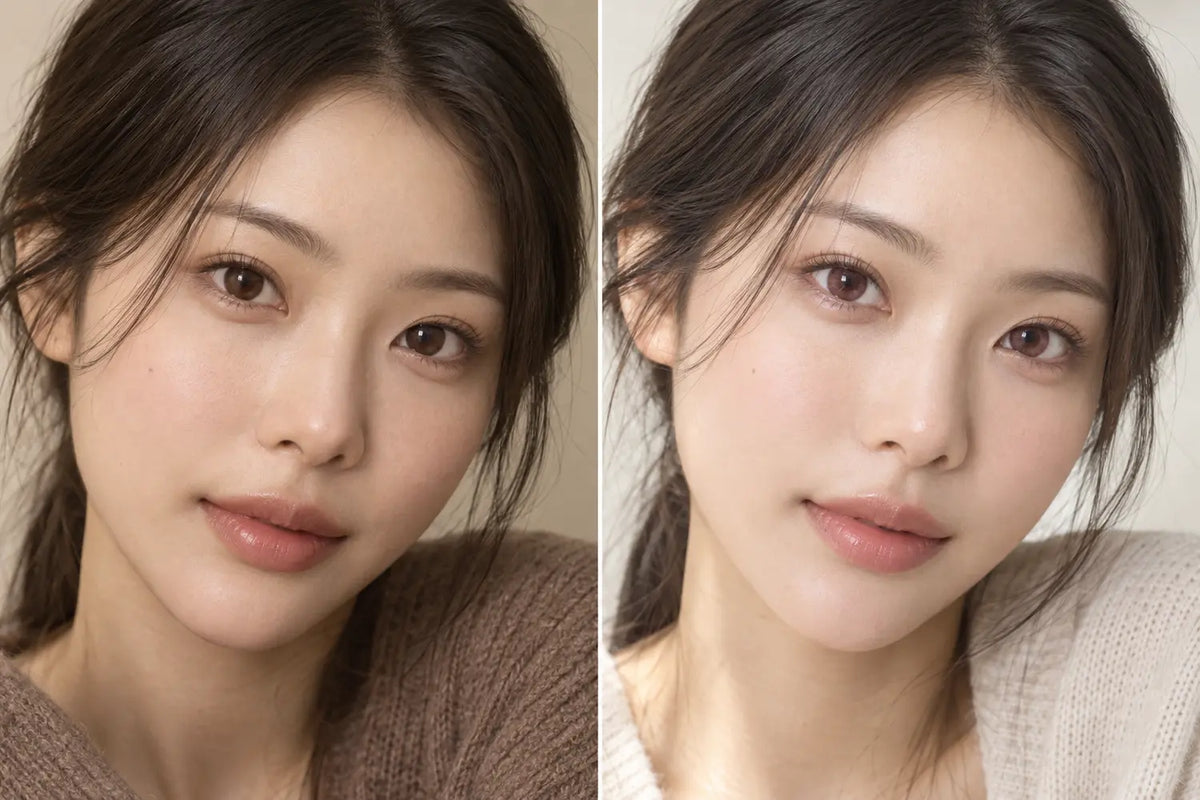
| Full-face image | Overall balance with skin, hair and makeup | Choosing from a magnified eye crop alone |
When only one lighting condition is available, keep the conclusion narrow. You can identify the design direction, but not confidently predict how strongly the pink will remain in a dim room or against your own iris.
Use makeup as context, not proof of lens color
Blush, eyeshadow, lip color and white balance can all influence how pink the eyes appear. Rose-toned makeup can create a harmonious look, yet it may also make a brown lens seem rosier than it is. Check the iris itself as well as the entire face.
For a pink-brown lens, compare at least one image with restrained makeup to one styled image when possible. Neutral taupe makeup helps reveal the lens’s own undertone. Rose or berry makeup demonstrates how the color can be emphasized. Neither image proves the exact result on another person, but together they give a more useful range than a single heavily graded campaign photo.
A fast product-page check
- Confirm that the photographed product is the exact version you are considering, including daily or monthly replacement.
- Find the model’s starting eye color. A result shown on a lighter iris should not be treated as evidence for deep brown eyes.
- Look for rose or mauve pigment in the lens print rather than relying on the product name.
- Compare neutral light, indoor light and a full-face image when available.
- Decide whether your goal is a subtle warm-brown shift or an obviously pink effect.
- Only after the appearance check, confirm the exact prescribed model, available prescription options, replacement schedule and box contents.
If the page lacks a dark-eye example, compare another shade from the same exact series only as a design clue—not as proof that the pink-brown shade will behave identically. Pattern, pigment and center color can change between shades.
Related categories
Compare nearby color directions in Pink Contacts, Brown Contacts and Colored Contacts for Dark Eyes. Keep the links together as a short comparison path, then confirm the exact product version and available prescription selections on its product page.
Questions and answers
Will pink-brown contacts look pink on very dark brown eyes?
They may show a rose or mauve cast, but many natural designs remain brown-dominant. Pigment density, pattern, lighting and the natural iris all influence the visible result.
Does a larger graphic diameter make pink more visible?
Not automatically. It can increase the printed area, but color strength also depends on pigment density, placement, opacity and contrast.
Why does a pink-brown lens look red indoors?
Warm bulbs, makeup and camera white balance can shift muted rose toward reddish brown. Compare a neutral-light image before judging the undertone.
Can I use a light-eye model photo to predict my result?
Only as a reference for the printed pattern. A lighter natural iris can make translucent pink pigment appear brighter than it will on deep brown eyes.
Should I choose a lens with no outer ring for a pinker look?
A softer edge may let the inner color dominate, but ring style alone does not determine the result. Compare the complete print and full-face images.
Is the result guaranteed if the product page shows dark brown eyes?
No. A relevant starting-eye example is more useful, but lighting, pupil size, natural iris pattern, camera processing and individual appearance can still change the result.
Reviewed September 14, 2026 by the KPOP2 Editorial Team. This guide provides visual shopping criteria, not a guaranteed on-eye result or a prescription recommendation. Generated artwork is labeled as an AI editorial illustration.