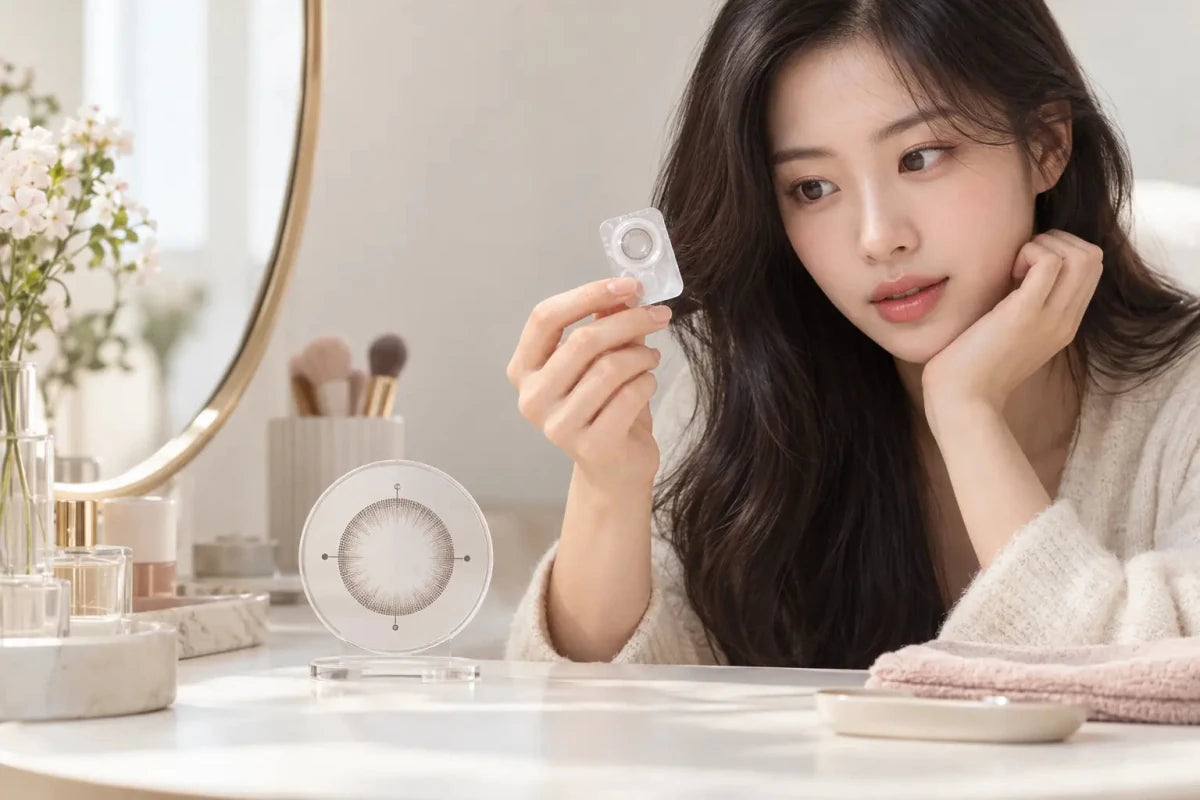


The regular and toric versions of the same colored-contact shade may not look identical because they are separate product versions. The shade name can stay the same while the printed pattern, graphic diameter, overall diameter, material, replacement schedule, power range or packaging changes. Use the exact toric listing for both prescription and appearance decisions.

Does the Same Shade Name Guarantee the Same Toric Color?
No. A product family name helps shoppers recognize a color direction, but it does not guarantee that every version uses the same specifications or print. The toric design must support astigmatism correction and is sold through its own combination of model, SPH, CYL and AXIS options. Treat it as a separate item even when the packaging and marketing name look closely related.
This distinction also applies across daily and monthly editions. A daily spherical product, monthly spherical product and monthly toric product may share a color identity while differing in lens count, material, dimensions and visible effect. Never transfer specifications from one page to another.
What Can Differ Between the Regular and Toric Versions?
| Detail | What to verify | Why it matters |
|---|---|---|
| Printed pattern | Ring density, gradient, center transition and directional details | Changes visible color and definition |
| Graphic diameter | The printed design measurement on each exact listing | Can change apparent iris size |
| Overall diameter and base curve | Product specifications, not the family name | Belong to the fitted product record |
| Prescription range | SPH plus CYL and AXIS for the toric version | Determines whether the complete prescribed combination exists |
| Pack and schedule | Lenses per box and daily or reusable replacement | Changes quantity and cost planning |
A listing should not silently copy the regular-version specifications into the toric page. When a detail has not been confirmed, it is better to leave it unclaimed and ask for verification than to create false consistency.
How to Compare the Two Versions Visually
Begin with a flat pattern image for each exact product. Compare the outside edge, the amount of printed color, the clear center and any directional highlight. Then use on-eye photographs with similar starting iris color and lighting. A close-up shows the blend; a full-face image shows whether the overall effect feels subtle or defined.
Do not compare a bright studio photo for one version with a dim indoor photo for the other and call the difference a product fact. Camera exposure, white balance, crop and makeup can shift color. Manufacturer images are useful design references, not controlled wear tests.
If a toric page uses the regular image as a temporary reference, the page should label that limitation. A customer should not have to infer which photograph belongs to which model.
Why the Toric Prescription Must Come Before the Shade Match
The regular version cannot replace a prescribed toric model simply because the shade is preferred. Confirm the exact model and the complete SPH, CYL and AXIS combination for each eye. If one required option is missing, do not round a value or choose the spherical version.
A prescriber may fit a different toric model when appropriate, but the shopper should order only the product and values provided after that fitting. KPOP2 can clarify catalog availability, specifications, packaging and processing time; it cannot select a clinical substitute.
A Practical Same-Shade Comparison Checklist
- Open the regular and toric listings in separate tabs and confirm the full product titles.
- Record each version’s material, base curve, overall diameter and graphic diameter.
- Confirm replacement schedule and lenses per box.
- Use only the toric page to check SPH, CYL and AXIS availability.
- Compare exact-version pattern images before on-eye photos.
- Read the cart line again before payment so the regular and toric products are not switched.
If the two versions are intended for different eyes, do not assume matching names guarantee visual symmetry. Compare the exact patterns and ask the fitting professional about appropriate prescribed options before buying.
Bottom Line
A shared shade name is a family cue, not a specification guarantee. Regular and toric lenses can differ optically, physically, visually and commercially. Prescription validity comes first; exact-version pattern and specifications come next; price and promotion come last.
Continue Comparing Exact Versions
Frequently Asked Questions
Can the toric pattern be slightly different?
Yes. Confirm the exact product images and specifications rather than assuming an identical print.
Does the same color name mean the same graphic diameter?
No. Graphic diameter is version-specific and should be checked on each listing.
Can I order the regular version if my toric AXIS is missing?
Do not replace a prescribed toric lens yourself. Ask the fitting professional about an appropriate alternative.
Why can the toric version cost more?
Price can reflect a different product, option range, pack quantity or production process. Compare cost per lens and schedule rather than the box price alone.
Can regular-version photos prove the toric result?
No. They can suggest a color family only when clearly labeled; use exact-version images whenever available.
Can the two versions be worn in different eyes?
Only when each exact product has been fitted and prescribed for its respective eye.