

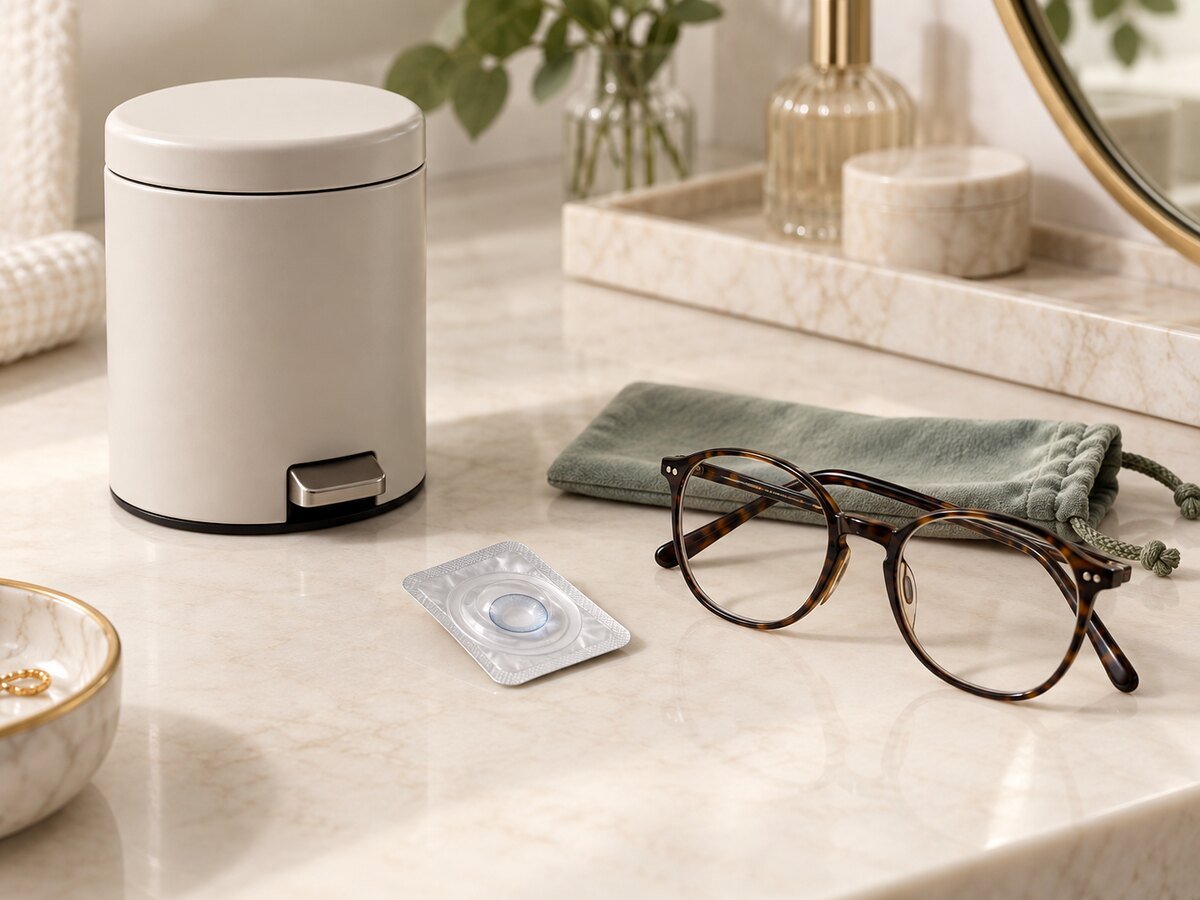
Never insert or continue wearing a colored contact that is torn, nicked, split, permanently folded or damaged at the edge. A physical defect cannot be repaired with solution, and trimming or smoothing the lens can create more damage.
If you notice damage before insertion
- Leave the lens out of your eye.
- Do not trim, stretch, glue or “polish” it.
- Use a fresh sealed lens only if it is the exact prescribed product and your eye feels normal.
- If the lens came damaged from a sealed blister, photograph the blister, lot information and defect before contacting the seller.
Do not place a damaged lens on a fingertip for a beauty photograph; keep product-defect documentation practical and away from the eye.
If the lens tears or feels damaged while worn
- Stop what you are doing. Do not keep blinking hard to “settle” it.
- Wash and completely dry your hands.
- Remove the lens using the method taught by your eye-care professional. Do not use nails, tweezers or tools on the eye.
- Check the removed lens without reinserting it. If you cannot account for the whole lens, get professional help rather than repeatedly probing the eye.
- Switch to glasses. Do not immediately test another cosmetic lens in an irritated eye.
If you think a fragment remains
A contact lens cannot travel behind the eyeball, but a folded lens or fragment can be difficult to locate. Do not sweep the eye with fingernails or household tools. If gentle, previously taught removal steps do not work—or if pain, redness, tearing, light sensitivity or blur is present—contact an eye-care professional promptly.
Should you save the damaged lens?
If the issue is only a sealed-package defect and the lens never touched the eye, keep the packaging and photos for the seller’s process. If symptoms developed during wear, the FDA advises not throwing the lens away because an eye-care professional may want it when evaluating the cause. Store it as directed, and never wear it again.
Why lenses tear
Possible contributors include a nick from a fingernail, a dry lens sticking to packaging, rough handling, rubbing the lens against a sharp case edge, or continuing beyond the prescribed replacement schedule. A tear does not prove which cause occurred, so focus first on the eye and then document the product.
Questions and answers
Can solution repair a tiny edge nick?
No. Solution cleans or disinfects as labeled; it cannot repair physical damage.
Can I wear the other eye’s lens?
Only use the lens assigned to that eye. Power or other parameters may differ, and moving a used lens between eyes is not a safe substitution.
Can I open a new lens right away?
Only if the eye feels completely normal and the replacement is the exact prescribed product. With irritation or uncertain removal, use glasses and seek advice.
What information helps with a defect report?
Keep the box, blister, brand/series/color, power, lot or batch number, expiration date, purchase record and clear packaging photos.
Which symptoms should not wait?
Pain, worsening redness, discharge, unusual light sensitivity, swelling or decreased/blurred vision need prompt professional assessment.
Reviewed September 12, 2026 by the KPOP2 Editorial Team. AI-assisted guidance checked against the official sources below. This article provides general education and cannot diagnose an eye condition, confirm a lens fit, or replace instructions from your eye-care professional.
Sources
Explore the collections in this guide
Shop only the exact lens version, prescription, replacement schedule and box quantity that match your fitting and product page.