

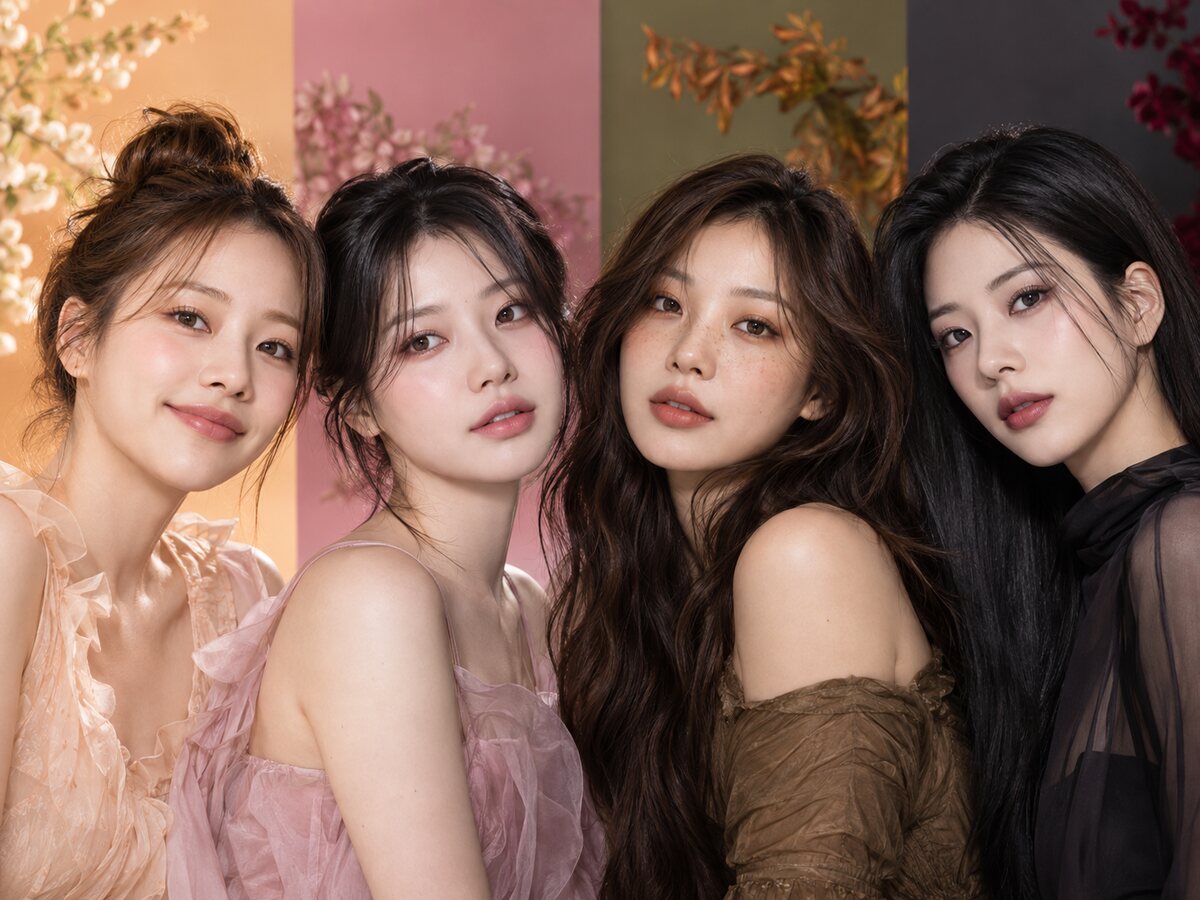
Short answer: Seasonal personal color can narrow your styling choices, but it cannot predict lens fit or guarantee how a printed color will blend with your iris. Use Spring, Summer, Autumn, or Winter as a palette starting point, then compare the lens on eyes similar to yours in ordinary lighting.
The four-season shortcut
| Season | Palette direction | Lens colors to explore |
|---|---|---|
| Spring | Warm, clear, lively | Light brown, honey, warm hazel, clear olive |
| Summer | Cool, soft, muted | Soft gray, gray-brown, muted violet, dusty blue |
| Autumn | Warm, rich, earthy | Chocolate, caramel, deep olive, amber brown |
| Winter | Cool, clear, high contrast | Defined black, clear gray, blue-gray, cool violet |
Spring: keep the effect clear and warm
Warm Spring styling usually works best when the eye look stays fresh rather than heavy. Explore transparent honey, beige brown, or bright olive patterns with a soft edge. Pair them with peach blush, coral lips, and champagne shimmer. If a thick black ring overwhelms the palette, compare a thinner limbal ring or smaller graphic diameter.
Summer: choose softened cool tones
Summer palettes favor colors that look blended rather than stark. Gray-brown, mauve-gray, muted violet, and gentle blue-gray can coordinate with rose, taupe, and cool pink makeup. A lower-contrast pattern may be easier than a very dark outer ring.
Autumn: build depth with earthy color
Chocolate, caramel, olive, and amber-brown lenses echo an Autumn palette’s warmth and depth. Bronze liner, terracotta blush, and muted brick lips can complete the look. On dark brown eyes, evaluate whether the lens adds visible warmth or simply reads darker indoors.
Winter: use clean contrast intentionally
Winter styling can carry sharper black, cool gray, blue-gray, or plum-violet definition. The goal is not automatically a larger lens; crisp contrast can come from color and pattern even at a moderate graphic diameter. Keep the rest of the makeup clean if the lens itself is the focal point.
Why your season is not the whole answer
- Your natural iris changes the final blend.
- Lighting and phone processing can shift gray, brown, and violet.
- Hair color and makeup can move the overall look warmer or cooler.
- Personal color is a styling framework, not an eye-health or fitting method.
A practical three-photo test
Compare the same lens in indirect daylight, normal indoor light, and a plain front-facing phone photo. If the color works in all three, it is more likely to fit your real routine—not only a studio campaign image.
Explore by color family
Editorial note: This guide is general information, not medical or legal advice. Requirements and product details can change. Follow your eye-care professional’s instructions and the rules that apply to your order.