
Group reviews by starting iris depth before comparing the result. A lens shown on a light hazel eye and the same lens on a very dark brown eye are two different blending tests. The most reliable decision keeps appearance evidence, product identity and order eligibility separate until the final cart check.
In this guide
Direct answer
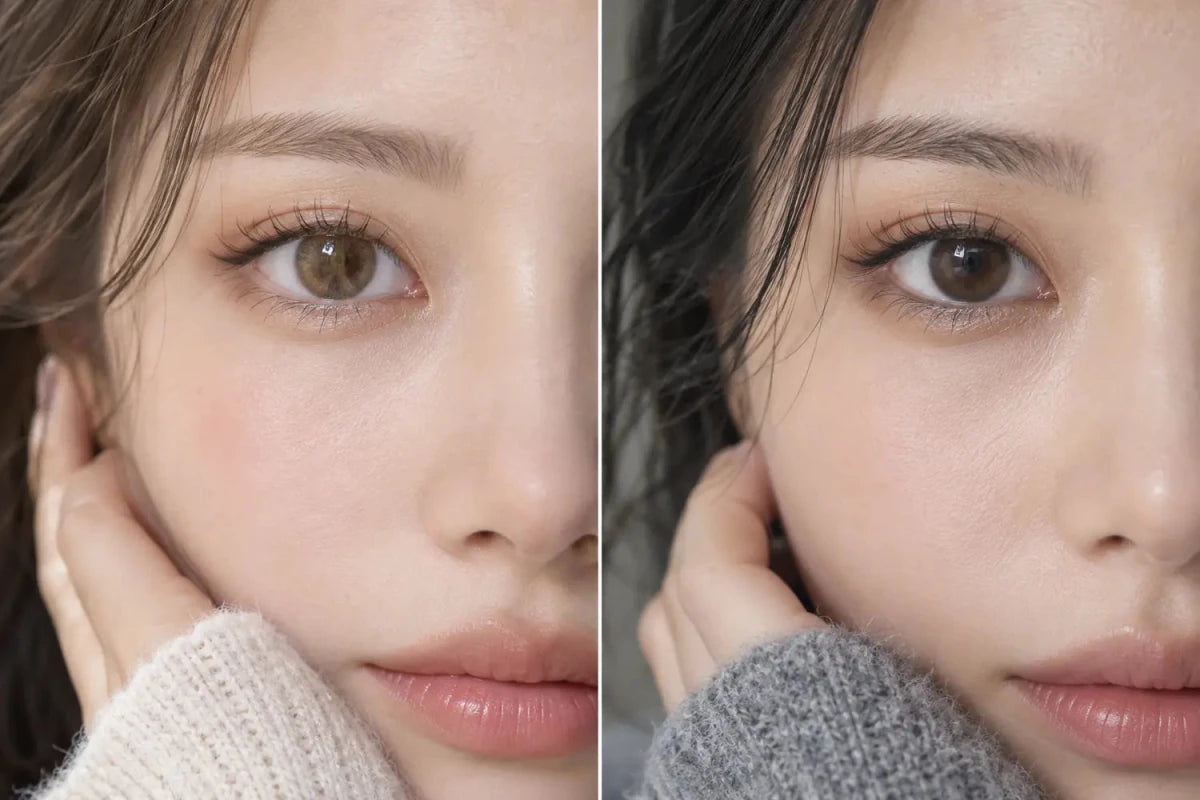
Group reviews by starting iris depth before comparing the result. A lens shown on a light hazel eye and the same lens on a very dark brown eye are two different blending tests.
Evidence worth comparing
Track brightness change, center transition, ring visibility and color direction within each starting-eye group. Keep lighting and camera filters as consistent as possible.
| Checkpoint | Useful proof | Weak proof |
|---|---|---|
| Identity | Full model, shade and schedule | Color name alone |
| Appearance | Comparable light and starting iris | One filtered macro |
| Eligibility | Complete live options for each eye | Headline power range |
| Order | Package count and cart lines | Promotion label alone |
A practical comparison method
Find the group closest to your own eye color first, then use other groups to understand transparency and pigment behavior—not to predict an identical result.
- Confirm the exact product and version shown.
- Record the starting eye color, light and image distance.
- Change one visual variable at a time.
- Remove candidates that cannot support the exact order.
- Recheck quantity, timing and both-eye selections in the cart.
Turn the evidence into a decision
Natural eye color labels are imprecise. A clear close-up in neutral light is more useful than a self-selected label alone.
Related KPOP2 guides
Related categories
After applying the review method, browse Colored Contacts, Brown Contacts, Gray Contacts. Treat a collection as a discovery route, then verify the exact model, replacement schedule, package count, measurements and available prescription selections on the product page.
Questions and answers
What is the direct answer?
Group reviews by starting iris depth before comparing the result. A lens shown on a light hazel eye and the same lens on a very dark brown eye are two different blending tests.
What evidence should I compare?
Track brightness change, center transition, ring visibility and color direction within each starting-eye group. Keep lighting and camera filters as consistent as possible.
What is the simplest method?
Find the group closest to your own eye color first, then use other groups to understand transparency and pigment behavior—not to predict an identical result.
What mistake should I avoid?
Natural eye color labels are imprecise. A clear close-up in neutral light is more useful than a self-selected label alone.
Can photos or reviews confirm contact lens fit?
No. They can explain appearance and ordering context, but only the exact fitted product and professional guidance address suitability.
What should I verify before checkout?
Confirm the exact brand, model, shade, replacement schedule, package count, options for each eye, preparation status and final cart lines.
Reviewed September 14, 2026 by the KPOP2 Editorial Team. This guide explains product comparison and ordering information; it does not provide a prescription or substitute one contact lens for another. The image is an editorial illustration, not a wear test.