
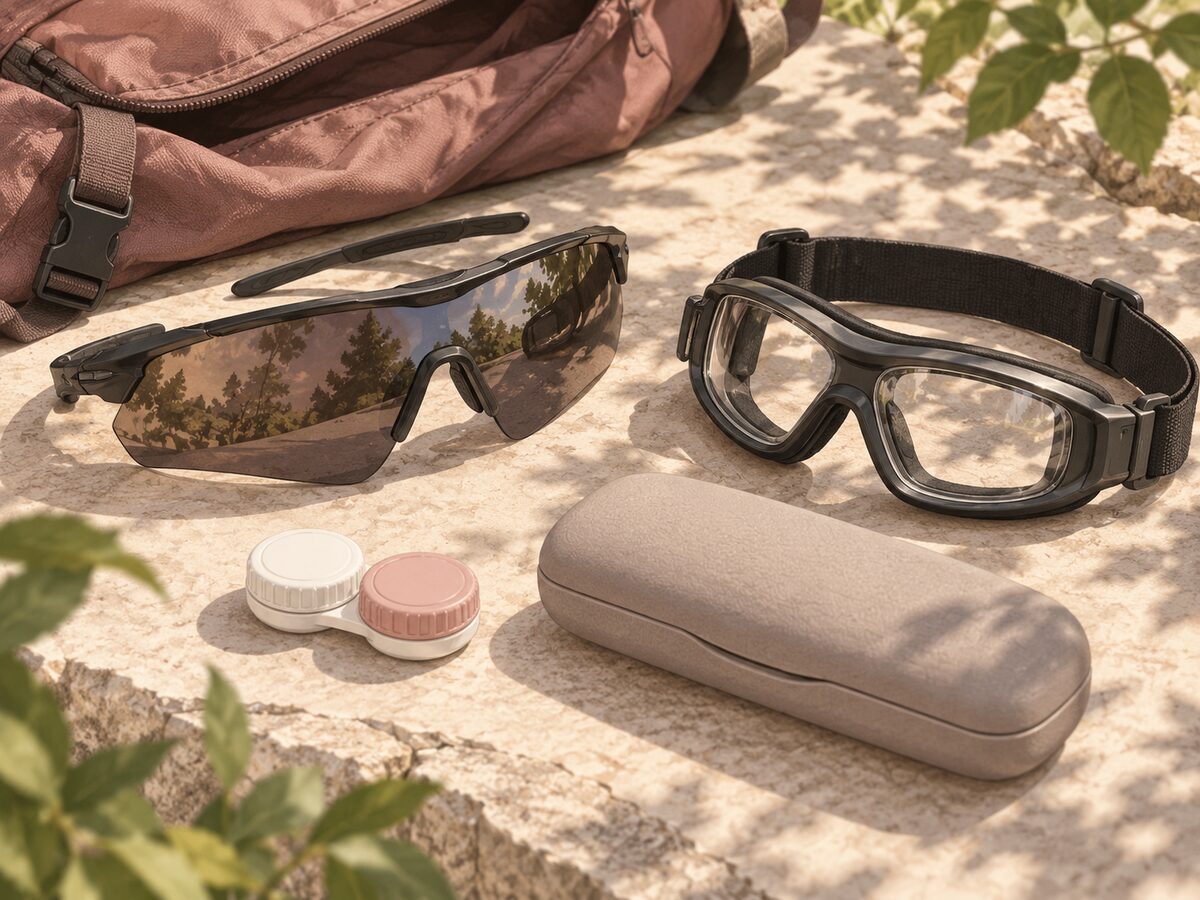
For exercise or an outdoor day, choose your eye-protection plan before choosing a lens color. Colored contacts do not take the place of protective sports eyewear. A cosmetic tint also does not establish UV performance: check the exact manufacturer's information, and keep suitable sunglasses in your outdoor plan even when a lens has a documented UV feature.
In this guide
Separate appearance, vision and protection
These are three different purchasing questions. Appearance concerns the color and pattern you want. Vision and fit concern your prescribed lens. Protection concerns the activity and equipment needed around your eyes. A product page should not collapse those questions into a single “outdoor lens” recommendation.
The FDA recommends discussing glasses or contacts during sports with your eye care professional. Describe the actual activity: a walk, a racket sport and a swim are different situations. “I exercise” leaves out the details that make the conversation useful.
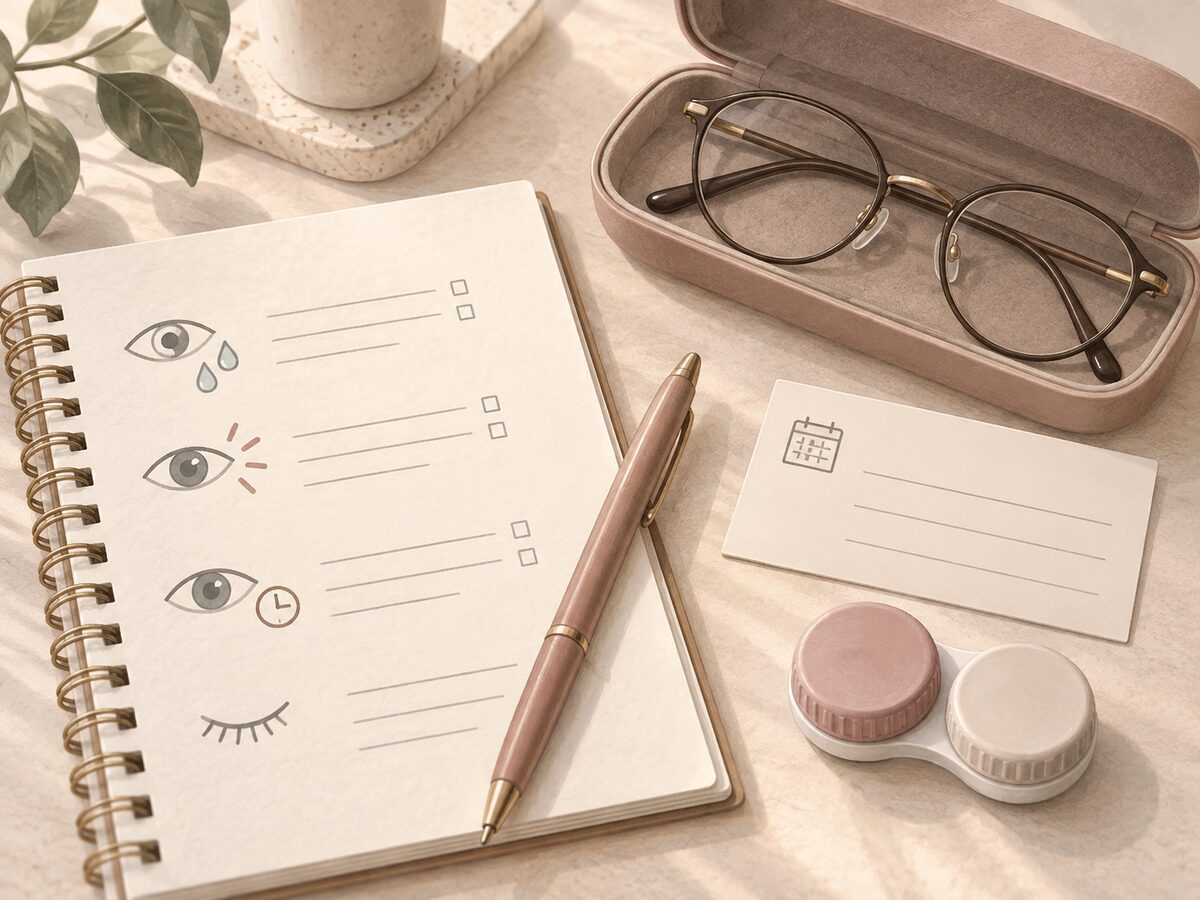
Before an appointment, write down where you train, whether the activity involves balls or other objects, whether you go into water, and what eye protection you already use. Those are practical planning details, not a self-assessment that clears you to wear a particular lens.
The exam and fitting guide explains why product suitability needs more than a clear view of an eye chart. A zero-power colored lens still needs the relevant fitting and use instructions.
Choose protection for the sport
The National Eye Institute recommends appropriate protective eyewear for activities such as sports. Ask which equipment suits your activity and how it works with your prescribed vision correction.
Ordinary eyewear should not be assumed to provide a sport's required protection simply because it has a frame and lenses. Take the actual eyewear or its specifications to the discussion. If a club, coach or venue has an equipment requirement, check that requirement separately as part of your preparation.
Consider an indoor court session followed by an outdoor lunch. The sports protection question belongs to the court session; the UV question belongs to the outdoor plan. One item may have several documented features, but those features need to be established independently.
Do not select a darker colored contact as an alternative to equipment you find inconvenient. Cosmetic color is not an equipment specification. If you cannot use the recommended setup for the activity, revisit the plan before participating rather than relying on the contact lens to provide missing protection.
Read a UV claim as a product-specific claim
Look for the complete lens name and its manufacturer information. A statement about one daily version does not automatically apply to the monthly version, another color family or a different brand. The words “brown,” “gray” or “natural” describe appearance, not a verified UV result.
A useful example of the distinction appears in the manufacturer's 1-DAY ACUVUE DEFINE package insert. It describes that product's UV feature while warning that UV-absorbing contacts do not replace UV-protective eyewear because they do not cover the entire eye and surrounding area. This is an example of labeling to read, not a claim about every colored lens sold by KPOP2.
If a KPOP2 listing has no confirmed UV information, treat the feature as unconfirmed. Ask for the exact product documentation instead of estimating performance from pigment darkness, price, material or the size of the printed ring.
When making your comparison notes, use separate entries: “cosmetic color,” “manufacturer UV statement,” and “external eyewear.” That format makes a missing UV statement visible. It also prevents a photograph showing a darker iris from being mistaken for a protection test.
Keep sunglasses in the outdoor plan
NEI advises sunglasses that block 99 to 100 percent of both UVA and UVB radiation, including on cloudy days. Check the sunglasses' labeling rather than using how dark the scene looks as your only selection method.
Pack them for the point when you will need them. If your sunglasses are in a car while you arrive at the venue by public transport, they are not part of the practical plan. Treat them as a separate item from your contact-lens supply.
For a mixed indoor and outdoor event, identify the transition in advance. Your clothing or camera look may change; the relevant product instructions do not. A lens worn for a photo at lunch is not evidence of UV protection during the walk back.
Our tint and cosmetic-color guide explains another commonly confused label distinction. Seeing color in a lens is only a starting observation; identifying what that color does requires the actual product information.
Plan the shower, the changing room and the journey home
The CDC advises removing contacts before swimming or showering and washing and thoroughly drying hands before handling lenses. Include the activities after training in your plan, not just the workout itself.
A useful sequence to write down is arrival, activity, removal if needed, shower, and journey home. Add where glasses and any required care supplies will be accessible. The sequence does not tell you when reinsertion is appropriate; that remains part of your lens instructions.
Do not treat a changing-room sink as an invitation to improvise a lens-care routine. Identify a suitable handling arrangement beforehand. If your planned supplies or setup are unavailable, the glasses alternative is more useful than a packing list that assumes everything will go perfectly.
For the water-specific questions, use the existing sleeping, showering and swimming guide. For an event with several changes of activity, the event checklist can help organize the timing.
Know when the activity plan must stop
For irritation, pain, unusual redness or blurred vision, remove lenses, keep them out and contact an eye care professional promptly, following FDA guidance. The score, route or remaining event time should not decide whether symptoms need attention.
If an injury occurs, seek appropriate medical help instead of using this guide to judge its seriousness. Tell the provider what happened and whether you were wearing contacts and protective eyewear. Product identification can be useful, but collecting it should not delay care.
The discomfort guide supports that conversation. A fresh pair of contacts is a supply item, not a treatment or proof that returning to the activity is appropriate.
Outdoor and sports questions
Do darker colored contacts block more UV?
Do not infer a UV rating from the visible color. Look for the exact manufacturer's documented feature. A dark cosmetic pattern and a tested UV statement are different information.
Can UV contacts replace sunglasses?
No. The manufacturer example above explicitly distinguishes contact-lens coverage from protective eyewear. Choose appropriate external eye protection as part of the outdoor plan.
Are colored contacts suitable for every workout?
This article does not clear a lens for all sports. Discuss the activity, prescribed product and protection requirements with your eye care professional before deciding on the setup.
Can I wear contacts through the shower after training?
Plan removal before showering, following the CDC guidance linked above. The shower is part of the lens routine even when it happens after the main activity.
What if the product page does not mention UV?
Keep that field unconfirmed and request product-specific information. Do not borrow a claim from a similar name or another lens in the brand's range.
Should I buy a spare lens instead of bringing glasses?
Spare supply and a glasses alternative serve different purposes. A spare does not resolve a situation in which contacts need to remain out. Include both supply planning and an appropriate alternative in your discussion.
AI-assisted educational content using the linked primary sources, checked September 12, 2026. No KPOP2 lens was tested for sports performance or UV transmission for this article. Find related guidance in Lens 101.