
If your eyes feel dry and you want colored contacts, prepare an eye-care conversation before choosing a material or water percentage. Explain the symptoms, your current routine and the exact lens you are considering. Once a lens is fitted, keep the recommended follow-up plan even if it feels comfortable: everyday comfort and an eye-health assessment answer different questions.
In this guide
- Turn “Which lens is best?” into a useful appointment question
- Prepare a short history that helps the assessment
- Ask what the proposed lens choice does and does not establish
- Leave with a follow-up plan you can actually use
- Keep three reminders separate
- Do not wait for a routine visit when symptoms occur
- Questions before choosing colored contacts
Turn “Which lens is best?” into a useful appointment question
A search for “best colored contacts for dry eyes” mixes two decisions: assessing an eye concern and choosing a cosmetic effect. A catalog can show color, pattern and manufacturer specifications. It cannot establish the cause of dryness or determine whether a particular lens is suitable for your eyes.
The National Eye Institute describes dry eye as a problem involving insufficient tears or tears that do not work properly. Assessment may consider tear quantity, tear stability and eyelid structure. That is broader than comparing two water-content percentages.
A clearer appointment request is: “My eyes sometimes feel dry during this routine. I would like to know whether contact wear is appropriate, and whether this exact colored lens can be assessed.” Bring the full product name and version so the discussion does not rely on a photograph labeled only “brown lens.”
Separate an existing diagnosis from a description of how your eyes feel. If a professional has diagnosed a condition, bring the relevant information. If not, describe the sensation without assigning it a medical label. Both starting points deserve attention, but they are not interchangeable records.
Prepare a short history that helps the assessment
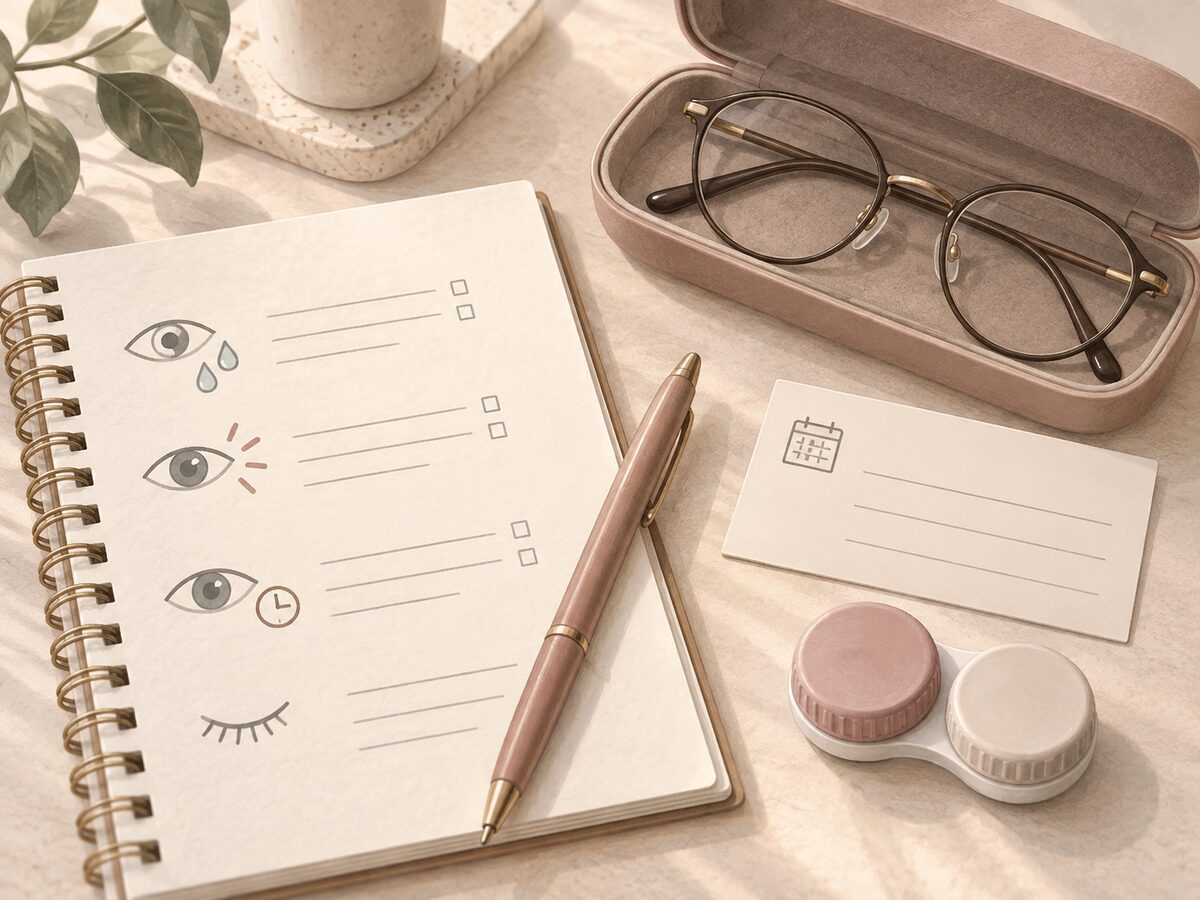
Write a few concrete notes before the appointment. Include when you first noticed the problem, whether it affects one or both eyes, and whether you were wearing contacts. If you already use lenses, bring their exact identity and the instructions you follow.
- Symptoms: describe the sensation and any change in vision in your own words.
- Timing: note when it happens, rather than estimating only how often.
- Routine: include work, travel, screen sessions and other relevant activities.
- Products: list lenses, care products and eye drops by full name.
- Previous advice: bring any instructions or assessment already provided.
- Your goal: explain the desired color effect and the occasions you hope to wear it.
This is an appointment aid, not a questionnaire that calculates your eligibility. Leave uncertain details marked “unknown.” A guessed product name can be less useful than taking a clear photograph of the actual package.
The screen-time guide helps organize workday observations. You do not need to conduct another wearing trial to complete the notes. If a symptom is happening now, follow the response below rather than waiting to gather more examples.
Ask what the proposed lens choice does and does not establish
Once the eye concern has been assessed, ask how the proposed lens fits into the plan. Is the exact model being fitted? What instructions apply to wear, removal, care and replacement? What should happen if the planned routine is not manageable?
Our hydrogel and silicone-hydrogel guide explains material terminology. Use it to understand a label, not to turn a material family into a personal recommendation. Likewise, “monthly” tells you about replacement rather than proving suitability for a long working day.
Keep the cosmetic discussion specific. “I want a quieter outer ring” or “I would like this shade assessed” gives the practitioner a product goal. It does not require you to accept an unsuitable product just because the photograph matches the look you hoped for.
If the proposed product is unavailable, return to the exact-product question. An alternative with the same base curve, color or material name is still an alternative. The backup-lens guide explains which identification details to bring to that discussion.
Leave with a follow-up plan you can actually use
Ask when to return and what the next appointment is intended to check. Record the date or interval your practitioner recommends, what to bring, and whether there are specific instructions about wearing lenses before that visit. Do not invent a universal pre-appointment wearing period.
A useful appointment note includes the practice's contact route and what to do if concerns arise earlier. Keep that note separately from the shopping reminder to reorder lenses. Running low on supply and needing clinical review are different triggers.
The NEI notes that some eye diseases have no early symptoms. Feeling comfortable therefore does not replace the recommended eye-health examination. This does not mean that comfort is irrelevant; it means it is one observation rather than a complete assessment.
Bring changes in your routine to the follow-up: a new work pattern, a different eye product or a problem following care instructions. “The lenses felt fine” can sit alongside that information, not stand in for it.
Keep three reminders separate
Your next eye-care visit, prescription validity and the lens replacement date serve different purposes. Store them as separate reminders, with the relevant instructions attached. One future date should not silently override another.
For example, having unopened boxes does not answer whether a new prescription changes what you should use. A prescription renewal also does not restart the replacement interval of an opened reusable lens. Our dates guide explains the distinction.
When booking, use the exam and fitting guide to confirm which service you need. For documents used in an order, consult Prescription Verification. Store verification and a clinical appointment have different roles.
Do not wait for a routine visit when symptoms occur
For irritation, unusual redness, pain or blurred vision during contact wear, remove lenses, keep them out and contact an eye care professional promptly, following FDA guidance. Do not postpone help until the date of an ordinary follow-up.
The discomfort guide explains what information to provide. A new material or a different drop is not a home test that establishes the cause.
Questions before choosing colored contacts
Does dryness mean I can never wear contacts?
This article cannot decide that. Ask for an assessment of your eyes and the proposed lens. The relevant outcome is an individual plan, not a rule inferred from a search phrase.
Is higher water content the first thing to look for?
Start with assessment and exact-product suitability. Use the water field to understand the product being discussed, rather than to choose treatment or predict your experience.
What should I bring if I have never worn contacts?
Bring your glasses or current prescription if applicable, information about eye products you use, your symptom notes and the exact lens you want assessed. Ask what fitting and handling instruction are needed.
Can I cancel follow-up because the trial feels comfortable?
Discuss that with the practice rather than replacing its plan with your own comfort judgment. Ask what the visit is intended to check and arrange a workable appointment.
Does a current prescription replace an eye-health appointment?
Keep the prescription record and the recommended examination schedule separate. If you are unsure which service is due, ask the practice to clarify.
Can a retailer tell me when to restart wear?
A retailer can identify the ordered lens. An eye care professional should guide the individual decision about symptoms and resuming wear.
AI-assisted educational content using the linked primary sources, checked September 12, 2026. This guide does not report an individual clinical assessment or a KPOP2 product test. Explore related guidance in Lens 101.