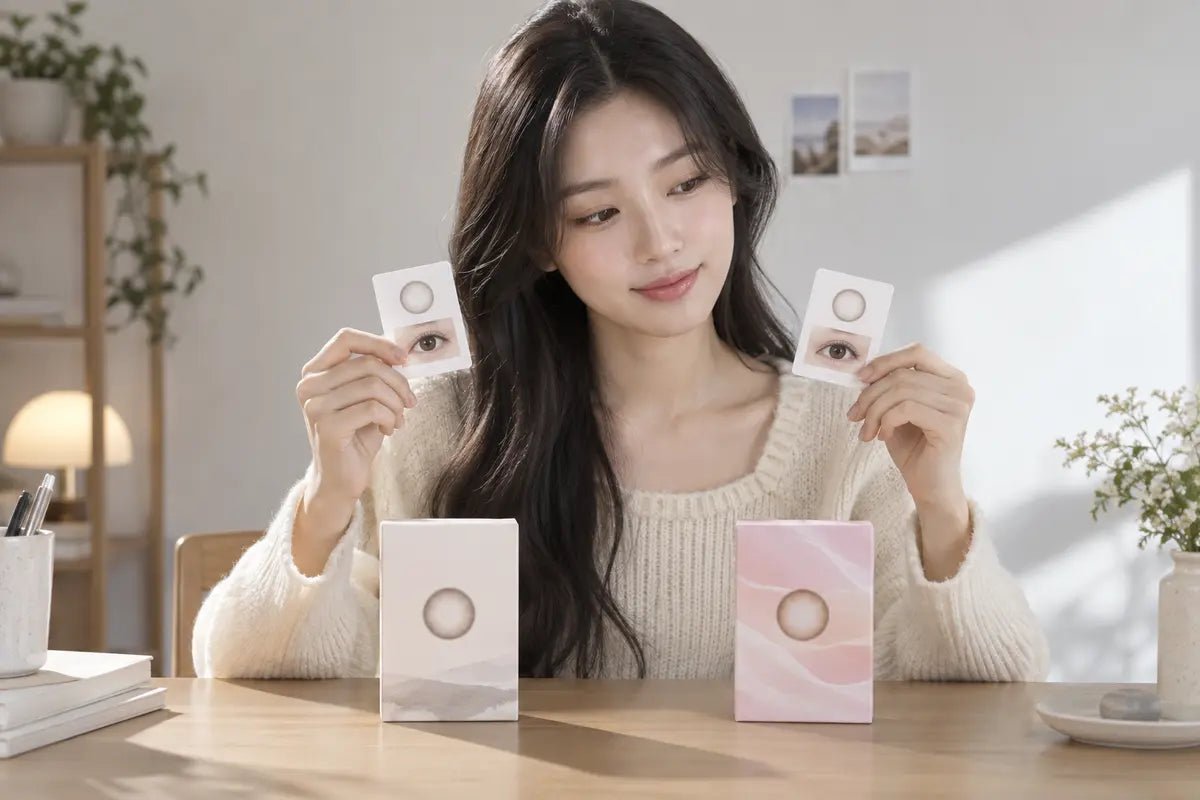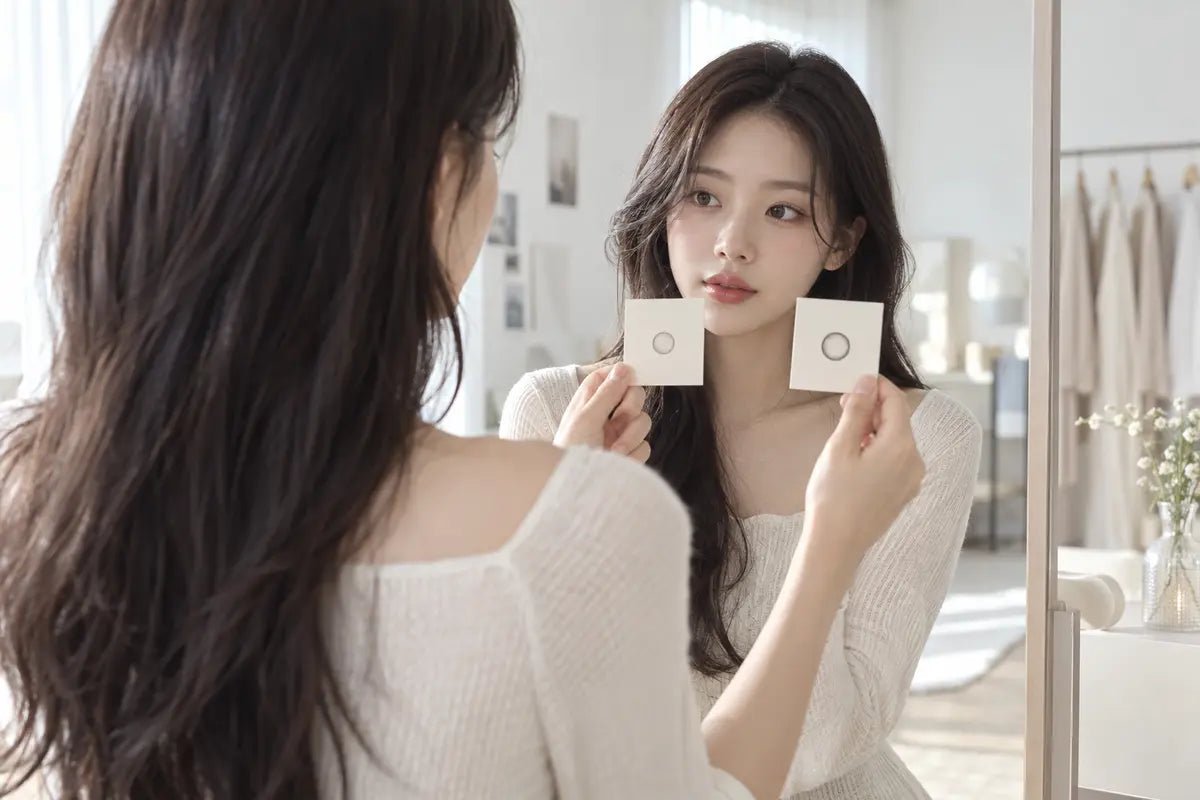


Emerald contacts usually aim for a brighter jewel-green impression, while forest green is deeper and more muted. On dark eyes, emerald needs enough visible print to remain green, while forest green may blend naturally but can read brown or gray in low light. The most reliable decision keeps appearance, product identity, order eligibility and timing as separate checks until the final cart review.
In this guide
Direct answer
Emerald contacts usually aim for a brighter jewel-green impression, while forest green is deeper and more muted. On dark eyes, emerald needs enough visible print to remain green, while forest green may blend naturally but can read brown or gray in low light.
Evidence worth comparing
Use exact-product photos on a similar starting iris in daylight and indoor light. Compare the amount of yellow, blue or brown in the pattern as well as edge density.
| Checkpoint | Useful evidence | Avoid assuming |
|---|---|---|
| Identity | Full model, shade and schedule | A related name is identical |
| Appearance | Comparable light and starting iris | One edited image predicts every result |
| Eligibility | Complete live options for each eye | A headline range proves availability |
| Order | Cart lines, quantities and dated status | A label alone proves the final outcome |
A practical comparison method
Hold apparent size constant, compare color survival in ordinary indoor light, and then decide whether brightness or subtle blending matters more.
- Open the exact product or support page instead of relying on a search snippet.
- Record product identity, version, package unit and the condition being compared.
- Change one important variable at a time and remove unlike evidence.
- Confirm the complete left- and right-eye requirements without rounding or substitution.
- Read the final cart, preparation note and delivery information before payment.
Turn the evidence into a decision
Do not use a heavily backlit or color-graded image to rank which green is more visible.
Store content can explain product fields and ordering steps, but it does not prescribe, fit, round, convert or substitute a contact lens. Remove lenses and seek appropriate professional advice if pain, marked redness, discharge, light sensitivity or persistent blur occurs.
Related KPOP2 guides
Related categories
For the next green-lens comparison, browse Green Contacts, Gray Contacts, Brown Contacts. Treat a collection as a discovery route, then verify the exact model, replacement schedule, package count, measurements and available prescription selections on the product page.
Questions and answers
What is the direct answer?
Emerald contacts usually aim for a brighter jewel-green impression, while forest green is deeper and more muted. On dark eyes, emerald needs enough visible print to remain green, while forest green may blend naturally but can read brown or gray in low light.
What evidence should I compare?
Use exact-product photos on a similar starting iris in daylight and indoor light. Compare the amount of yellow, blue or brown in the pattern as well as edge density.
What is the simplest method?
Hold apparent size constant, compare color survival in ordinary indoor light, and then decide whether brightness or subtle blending matters more.
What mistake should I avoid?
Do not use a heavily backlit or color-graded image to rank which green is more visible.
Can a photo, review or menu confirm contact lens fit?
No. These sources can explain appearance and ordering context, but only professional guidance and the exact fitted product address individual suitability.
What should I verify before checkout?
Confirm the full brand, model, shade, replacement schedule, pieces per package, complete options for each eye, preparation status and every final cart line.
Reviewed September 14, 2026 by the KPOP2 Editorial Team. This guide explains comparison and ordering information; it does not provide a prescription or substitute one contact lens for another. The image is an editorial illustration, not a wear test.