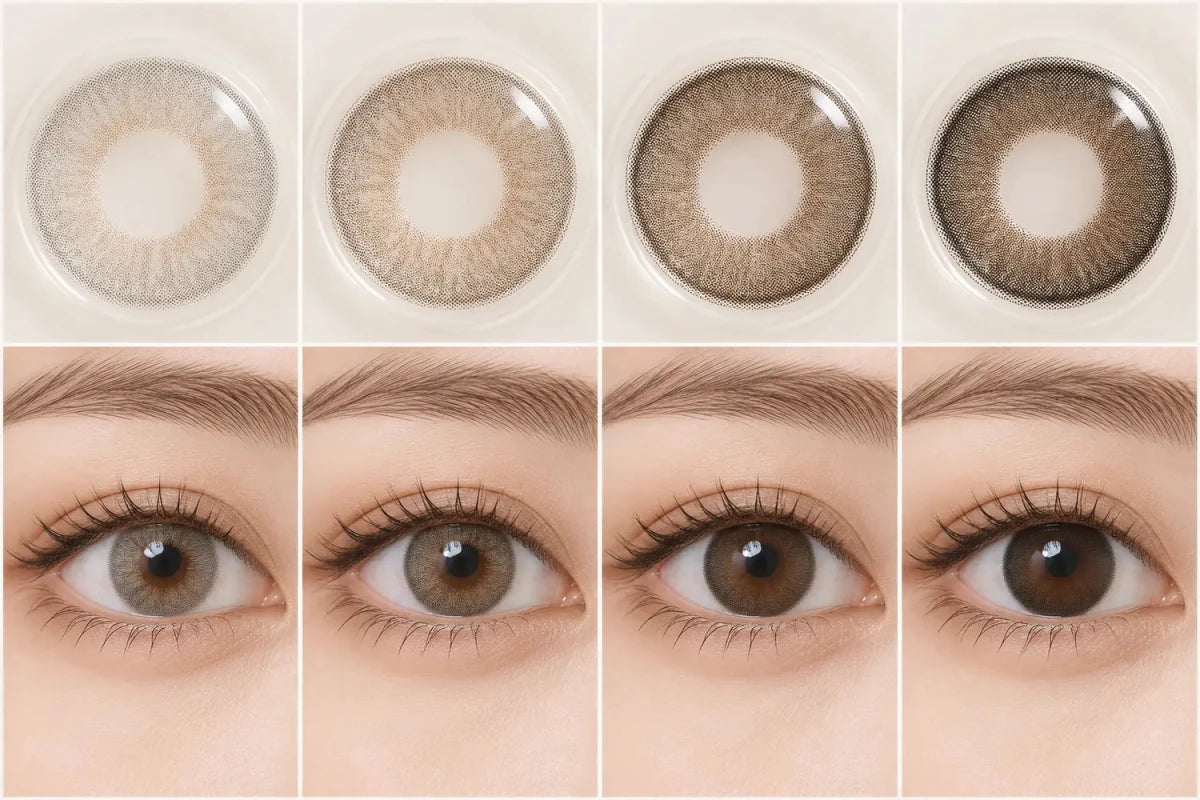


A brown limbal ring usually gives dark eyes a warmer, softer boundary; a black ring creates stronger separation and a more graphic outline. Print density and width determine the difference more reliably than the color label alone. This guide keeps the visual decision separate from the product, prescription and quantity checks that determine whether an order is appropriate.
In this guide

Direct answer
A brown limbal ring usually gives dark eyes a warmer, softer boundary; a black ring creates stronger separation and a more graphic outline. Print density and width determine the difference more reliably than the color label alone.
The useful sequence is eligibility first, evidence second and checkout confirmation last. That prevents an attractive image, sale label or broad range summary from carrying more weight than the exact item and selections.
Evidence to compare
On nearly black irises, a thin brown ring may blend away while a dense brown ring can still look dark. A black ring may increase apparent size even when the graphic diameter is unchanged.
Keep every comparison tied to the exact brand, model, color and replacement schedule. When appearance is involved, compare a close-up with a full-face view and note the starting eye color and lighting. When prescription or stock is involved, verify the live option combination for each eye.
| Checkpoint | Useful evidence | Do not assume |
|---|---|---|
| Exact product | Brand, model, color and schedule | A related name is identical |
| Order eligibility | Complete live options for each eye | A headline range proves availability |
| Appearance | Comparable on-eye images | One edited photo predicts every result |
| Final order | Cart lines, quantities and timing | Remembered values are automatically correct |
A practical workflow
Compare the ring at normal face distance and in close-up. Keep center color and graphic diameter as similar as possible so the border is the main changed variable.
- Open the exact product page rather than relying on a collection card.
- Confirm product identity, schedule and pieces per box.
- Check every required option separately for the left and right eye.
- Compare only the candidates that remain valid.
- Read the completed cart before payment.
If the interface remembers previous selections, treat them as a starting point and confirm them. A helpful shortcut should reduce repeated typing without concealing a changed model, unavailable field or different box configuration.
Mistakes to avoid
Neither ring style guarantees a natural or dramatic result for everyone. Use photos from a similar starting iris and verify product requirements independently.
Store content can explain what a product page, selector or package says. It should not diagnose symptoms, choose a lens for an eye or invent equivalence between products. If anything about the prescription or fitted model is unclear, pause and ask the eye-care professional.
Related categories
Continue with Brown Contacts, No Black Rim Contacts, Enlarging Contacts. These links are grouped compactly so the next comparison is close at hand on desktop and wraps naturally on mobile.
Questions and answers
What is the direct answer to “Brown vs Black Limbal Rings on Dark Eyes”?
A brown limbal ring usually gives dark eyes a warmer, softer boundary; a black ring creates stronger separation and a more graphic outline. Print density and width determine the difference more reliably than the color label alone.
What should I check first?
On nearly black irises, a thin brown ring may blend away while a dense brown ring can still look dark. A black ring may increase apparent size even when the graphic diameter is unchanged.
What is the simplest comparison method?
Compare the ring at normal face distance and in close-up. Keep center color and graphic diameter as similar as possible so the border is the main changed variable.
What mistake should I avoid?
Neither ring style guarantees a natural or dramatic result for everyone. Use photos from a similar starting iris and verify product requirements independently.
Can a product photo or menu replace professional fitting advice?
No. Product information helps you compare and place an order, but it does not prescribe, fit, round, convert or substitute contact lens specifications.
Where should I continue the comparison?
Use Brown Contacts, No Black Rim Contacts, Enlarging Contacts for a focused shortlist, then verify the exact product page before purchase.
Reviewed September 14, 2026 by the KPOP2 Editorial Team. This guide explains product comparison and ordering information; it does not provide a prescription or substitute one contact lens for another. The image is an AI editorial illustration, not a wear test.