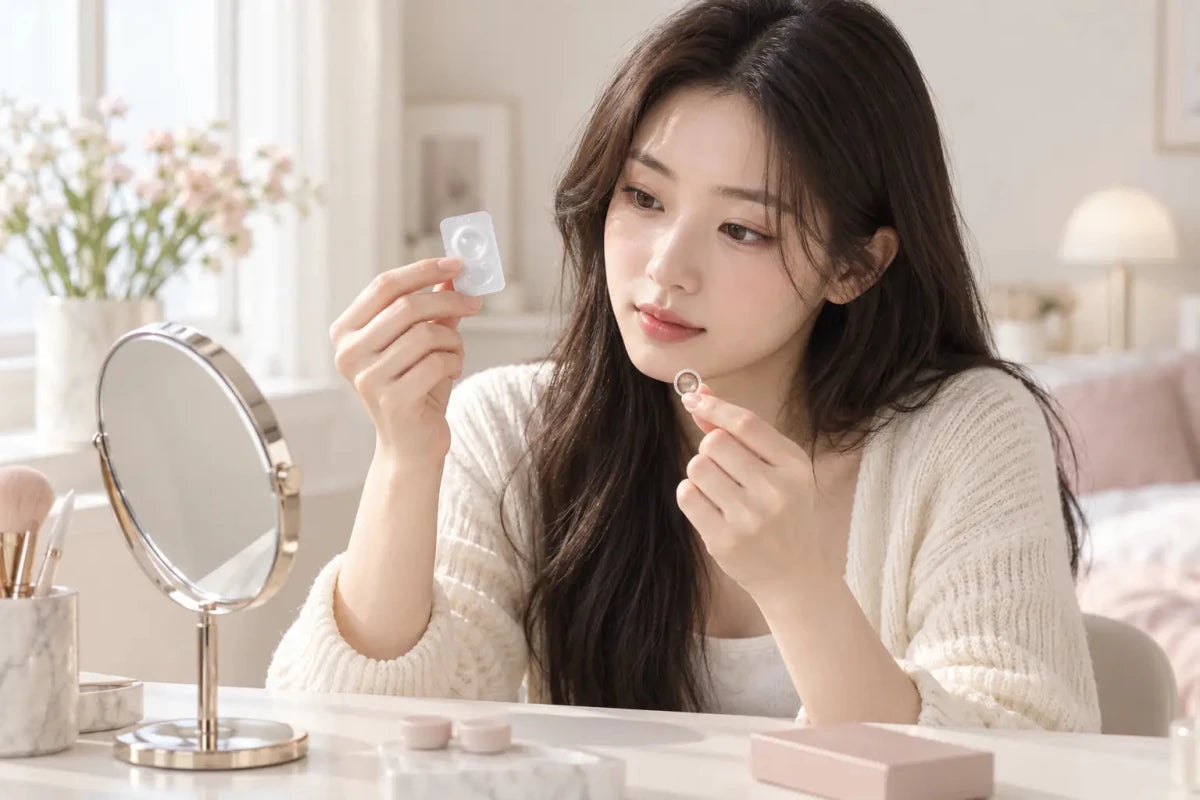


Air conditioning, outdoor wind, low humidity and upward mask airflow can all make colored contact lenses feel more noticeable for some wearers. These conditions do not prove that a lens is defective or that one material is universally better. The most useful response is to reduce direct airflow, compare one condition at a time, keep backup glasses available and stop lens wear when comfort or vision changes.
Why the environment can change how lenses feel
Contact lens comfort is not determined by the lens alone. Moving air, a dry room, time since insertion, screen activity, blinking, the care routine and individual eye response can overlap. This is why the same lens may feel unremarkable in one setting but become more noticeable during a long office session, a flight, a windy walk or a day spent wearing a mask.
The sensation is also not a reliable diagnosis. “Dry,” “gritty,” “tight” and “noticeable” can describe different experiences, and a product page cannot determine their cause. Treat the environment as one variable to investigate rather than assuming that color, water content or material explains everything.
Compare the four common environments
| Situation | What to observe | Practical adjustment |
|---|---|---|
| Air conditioning | Vent direction, room changes, screen time and time since insertion | Move away from direct airflow and schedule glasses breaks when appropriate |
| Low humidity, heating or travel | Whether comfort becomes less predictable as the day continues | Plan conservatively and keep backup glasses accessible |
| Windy weather | Wind strength, dust or debris, outdoor duration and whether one or both eyes are affected | Use suitable protective eyewear and avoid rubbing the eyes |
| Upward mask airflow | Air escaping near the nose bridge, glasses fogging and when the sensation begins | Improve the nose fit without weakening the mask’s intended protection |
These situations can overlap. An air-conditioned office may also have low humidity and long screen sessions. A mask may redirect air upward while a nearby vent adds another airflow source. Record the combination rather than assigning the entire experience to the first factor you notice.
Use a simple one-variable comparison
A short record is more useful than a general comfort rating. Keep the same prescribed lens, insertion routine and care products while comparing conditions that are otherwise as similar as possible. Do not change lens type, solution, environment and wear schedule all at once, because the result will not show which difference mattered.
- Record the exact lens. Note the full model, shade and replacement schedule. A similar product name is not the same product.
- Record the setting. Include indoor or outdoor location, airflow direction, approximate duration, screen activity and mask use.
- Record the timing. Note when the lens was inserted and when awareness, dryness, blur or irritation began.
- Change one reasonable environmental factor. For example, move away from a vent or correct upward mask leakage while keeping required protection intact.
- Compare the response. If the issue repeats, stop trying to solve it through increasingly long wear. Use glasses and discuss the pattern with an eye-care professional.
This method is for organizing observations, not for diagnosing a condition or extending wear time. Always stay within the schedule and instructions given by your eye-care professional and the lens manufacturer.
Practical guidance by situation
Air-conditioned offices, shops and cars
Direct vent airflow is the first variable to check. Adjust your seat or vent direction when possible, especially if one side feels different from the other. Long screen sessions can occur at the same time, so note whether the sensation changes after leaving the room or taking a normal break. Do not use a water-content percentage alone to decide which lens should feel best in an air-conditioned space.
Low-humidity rooms, heating and flights
Build the day around comfortable wear rather than a fixed event duration. A plan that felt manageable in another environment may not feel the same in heated rooms or during travel. Carry glasses in a clean case and make them easy to access. If you use any rewetting product, use only one your eye-care professional has confirmed is suitable for your lenses; do not improvise with water or an unapproved liquid.
Wind, dust and outdoor events
Moving air can carry dust or debris toward the eye and may make the lens more noticeable. Suitable glasses or sunglasses can provide a physical barrier, but they do not make it safe to continue through pain, redness or persistent blur. Do not rub an eye while the lens is in place. If something seems trapped or the lens appears damaged, stop wear and follow professional care instructions.
Masks that direct air toward the eyes
Check whether exhaled air escapes from the top edge and whether glasses fog at the same time. Improve the fit around the nose according to the mask instructions, but do not loosen a required protective mask or create gaps simply to change lens comfort. If the setting requires continuous mask use and the problem continues, glasses may be the more practical choice for that period.
What the environment does not tell you
- It does not identify a defective lens. Inspect the sealed product before opening and contact KPOP2 if the delivered item appears damaged or incorrect.
- It does not prove one material is universally better. Comfort depends on fit, eye health, care, environment and individual response.
- It does not justify changing prescription or fit parameters. Never round, convert or substitute power, base curve or other fitted details yourself.
- It does not make extended wear safe. A busy event, flight or workday should not override professional instructions or the product’s replacement schedule.
When to remove the lenses and seek advice
Remove contact lenses promptly if you experience unusual irritation, eye pain, marked redness, sensitivity to light, discharge or sudden or persistent blurred vision. Do not put the lenses back in simply to test whether the symptom returns. Contact an eye-care professional promptly; urgent assessment may be needed, especially when symptoms continue after lens removal.
For ordinary planning, the safest fallback is simple: stop wearing the lenses, switch to glasses and keep the lenses and packaging available if a professional asks what was worn. Store guidance can help with product identity and order records, but it cannot diagnose the eye or confirm whether continued wear is appropriate.
A better plan for long days
- Start with the exact lens and wear schedule approved for you.
- Carry current backup glasses rather than relying on lenses for the entire day.
- Avoid direct vents and use suitable protective eyewear in wind or dust.
- Follow the approved cleaning and replacement routine; never use tap water on lenses or cases.
- Keep the product box or a clear photo of its model, power and lot details.
- End wear when comfort or vision changes instead of forcing the original plan.
Related KPOP2 guides
Related categories
Use these collections to continue the comparison, browse Colored Contacts, Daily Contacts, Monthly Contacts. Treat a collection as a discovery route, then verify the exact model, replacement schedule, package count, measurements and available prescription selections on the product page.
Questions and answers
Can air conditioning make contact lenses feel drier?
It can coincide with more lens awareness for some wearers, particularly when a vent directs air toward the face. Move away from direct airflow, compare the change and use backup glasses if comfort does not return.
Does low humidity mean I need a different lens material?
No single humidity experience proves that another material will be better. Fit, eye health, care, wear time and environment all matter, so discuss repeated problems with an eye-care professional rather than choosing by one specification.
What should I do during windy weather?
Use suitable protective glasses or sunglasses, avoid rubbing the eyes and limit direct exposure to dust and debris. Remove the lenses and seek advice if pain, redness, light sensitivity or persistent blur develops.
Can I loosen my mask to stop air reaching my eyes?
Do not compromise a mask’s required protective function. Adjust the nose area according to its instructions to reduce upward leakage, or use glasses if comfortable lens wear is not practical in that setting.
Are rewetting drops always safe with colored contacts?
No. Use only a product that your eye-care professional has confirmed is compatible with your specific lenses. Never substitute tap water, saliva or another unapproved liquid.
When is discomfort more than an environmental issue?
Remove the lenses and contact an eye-care professional promptly for unusual irritation, pain, marked redness, light sensitivity, discharge or sudden or persistent blurred vision. Symptoms cannot be safely diagnosed from the environment alone.
Reviewed September 15, 2026 by the KPOP2 Editorial Team. Safety guidance was checked against current CDC contact lens guidance and NHS contact lens advice. This article provides general educational information and does not replace an eye examination, prescription or individualized professional advice. The image is an editorial illustration, not a wear test.