Lens reviews & comparisons
Canna Roze Daily vs Reusable: Cost per Pair for Occasional Wear
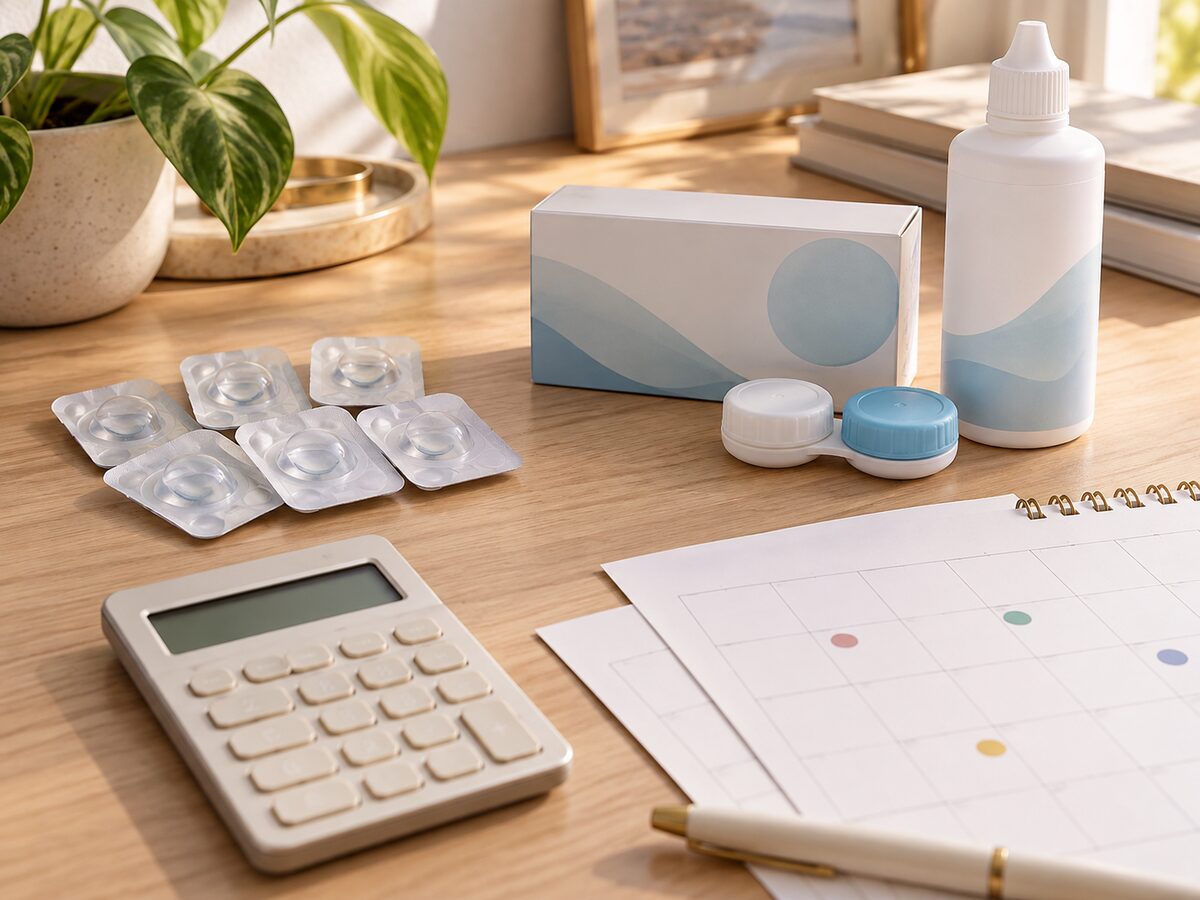
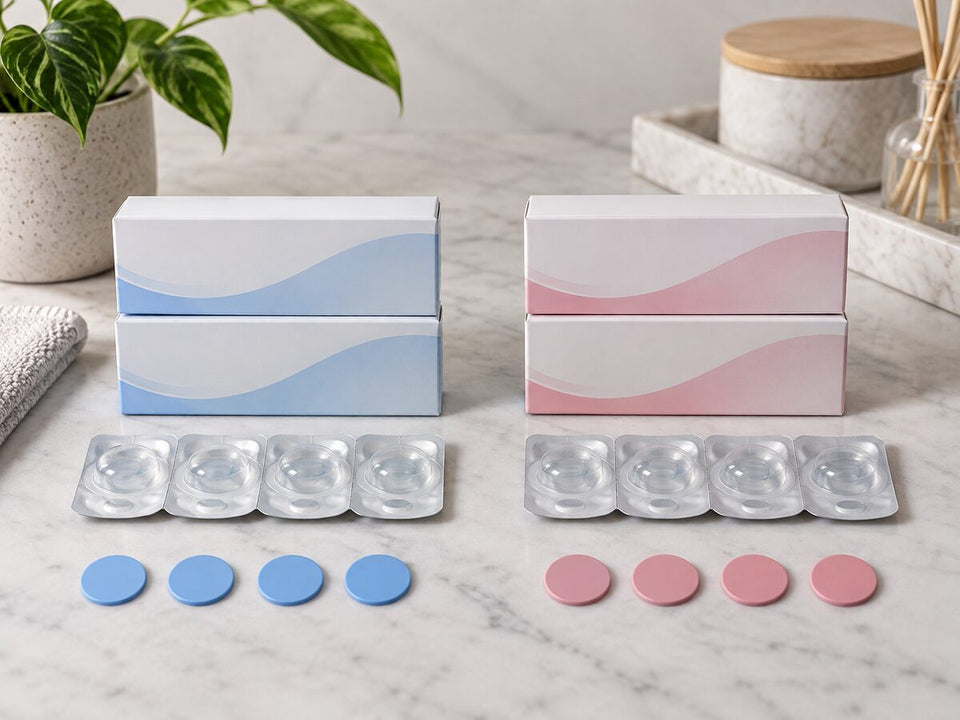
For occasional Canna Roze Beige Brown wear, compare two figures: the cost allocated to the lenses you use and the amount you must pay for complete boxes. The daily version contains ten individual lenses per box; the 3–6-month version contains one. A two-eye 3–6-month supply therefore starts with two one-lens boxes, while daily checkout quantities depend on how many occasions you plan and whether your eyes need different powers.
In this guide

Compare approved routines before the prices
A cost worksheet is useful only after an eye-care professional has confirmed the exact Canna Roze options you are comparing. Beige Brown 1Day 10p and reusable Beige Brown are different lenses. The current daily listing shows a 13.2 mm graphic, 14.2 mm overall diameter, 8.7 mm base curve, silicone hydrogel, and 43% water. The reusable listing shows 13.0 mm, 14.0 mm, 8.6 mm, HEMA, and 38% water. A shared color name does not make the prescription transferable.
The daily product contains ten individual single-use lenses per box. The reusable product contains one lens per box and currently lists a 3–6 month replacement range. The exact interval for a supplied reusable pair needs confirmation from its packaging and your eye-care professional. Do not treat the longest endpoint as a given in a cost calculation. Also keep daily wearing hours separate from the replacement interval.
If only one of the two formats is professionally appropriate, the other should not appear as an interchangeable low-cost option in your personal decision. Use the worksheet to compare realistic, approved choices, not to justify a product change by arithmetic alone.
The two money questions are different
What is the value of the lenses I actually use? This allocates a box price across individual lenses. A ten-lens daily box can supply five complete two-eye occasions when both eyes use the same product and power. If the box costs D, the allocated lens value is D divided by five per occasion, excluding other costs.
How much money must I pay now? The store sells whole boxes. For four same-power two-eye occasions, eight daily lenses are used, but one ten-lens box must be purchased. The allocated value is four-fifths of D while the immediate box payment is D. The two remaining unopened lenses are potential future supply, not cash returned at checkout.
With different powers, one ten-lens box at each required power may be needed, even for four occasions. If both boxes have the same price, the upfront daily payment becomes 2D. That does not mean all twenty lenses are consumed; eight are used and twelve remain across the boxes. Record unused inventory and expiration separately from the checkout total.
Build a worksheet from current numbers
Let D be the live price of one ten-lens daily box at your exact selections. Let M be the live price of one one-lens reusable box. Let C be the cost of compatible care supplies allocated to the reusable pair over its confirmed replacement period. Let n be the number of complete two-eye occasions you reasonably plan within that period. If right and left eye boxes have different prices, use separate prices rather than one D or M.
For a same-power two-eye daily plan, the consumed lens value is n × D ÷ 5. The number of boxes you must buy is the smallest whole number at least as large as 2n ÷ 10. For a reusable two-eye pair, two one-lens boxes have a purchase cost of 2M. Add the care supplies actually required; allocated per-occasion cost is (2M + C) ÷ n if the confirmed pair can be used for those n occasions within its instructions.
These simple formulas deliberately omit shipping, taxes, promotions, and any products already in your possession. Add current checkout charges and decide whether you are comparing new cash outlay, consumed value, or the total cost of an entire routine. Naming the question makes the answer less misleading.
Count occasions with removal in mind
An occasion in this worksheet is one two-eye use using appropriate lenses. Daily disposables are single-use. If you remove and discard a daily pair and later need contacts again, that later wear requires fresh lenses. It should be counted as another pair, even if both activities occur on one calendar day. Do not reuse the first pair to keep the cost estimate low.
A reusable lens follows its own wearing and care instructions between uses. If you remove it, clean, disinfect, and store it correctly for later wear as directed. That routine adds both time and compatible supplies. The replacement clock for an opened lens does not pause merely because you did not wear it on some days.
For travel, count spare lenses by eye. A daily spare at the wrong power does not form a complete extra pair. A reusable spare, if professionally prescribed, is another physical lens with its own package and eventual opening record. Avoid comparing a daily plan that includes spares with a reusable plan that silently omits them.
Why the break-even point moves
The simple consumed-value equality is n × D ÷ 5 = 2M + C, or n = 5(2M + C) ÷ D. This number is a worksheet threshold under your chosen assumptions. It is not a recommendation to wear reusable contacts that many times or to extend their replacement schedule. If the planned occasions do not fit within the confirmed interval, the comparison has to include another reusable pair.
Changing D, M, C, or n changes the result. A promotion can alter the checkout price; different eye powers can double the number of daily boxes purchased up front; required solution and case costs affect the reusable routine. Unused daily lenses may remain for future use if unopened and within expiry. None of these factors can be captured by comparing the two product-card prices alone.
Keep two columns in your notes: “cash paid now” and “value used for planned occasions.” A threshold based on consumed value may occur at one number of occasions, while whole-box checkout spending changes in steps. When the number of planned occasions crosses five, ten, or another box boundary, the next box purchase can change cash outlay abruptly.
Factor in the confirmed replacement date
The reusable Beige Brown page currently gives a 3–6 month range. Determine the applicable schedule for the exact supplied lens before using a time span in the cost model. If the confirmed interval is shorter than the plan's horizon, the reusable side may require another pair and more care supplies. If you never open a spare pair during the period, it does not begin an opened-lens clock, but the unopened package has its own expiration date.
Do not divide a reusable pair's cost by an optimistic number of occasions that would occur after its replacement date. Likewise, do not assume every unopened daily lens will be used before expiry. A careful comparison records the intended dates, not merely the number of theoretical wears that fit inside a box.
Continue the correct care routine regardless of how often you wear the pair. Wash and dry hands, use fresh suitable solution, keep reusable lenses away from water, and replace the case as instructed. The CDC contact lens guidance supports those basic practices. Saving money by skipping care or reusing a daily disposable is not a valid cost option.
Make a decision that includes effort and preference
Cost matters, but so do the maintenance routine, availability of your exact powers, and the style you want. Daily disposables avoid cleaning and storage for reuse, yet every wear consumes a fresh pair. A reusable option requires ongoing care and a confirmed replacement date. Some people value the simplicity of a fresh daily pair for occasional events; others may prefer an approved reusable routine. The right answer depends on your professional fitting and actual pattern of use.
Use current checkout figures, not the hypothetical dollars in an example article. Confirm the full product name, eye-specific powers, box count, and the applicable care plan. Keep the arithmetic transparent enough that you can update it when prices or plans change. A good comparison should reveal its assumptions rather than hide them inside a claim that one format always saves money.
Occasional-wear cost questions
Why can my checkout total be higher than the value I use?
Because boxes are purchased whole. Four same-power two-eye daily occasions consume eight lenses, but the box contains ten. You pay for all ten at checkout and retain two unopened lenses. With different powers, you may need a box for each eye, leaving more unused pieces. Consumed value allocates a price to used lenses; cash outlay records the full packages purchased.
Can I call one ten-lens daily box ten pairs?
No. It contains ten individual lenses. At one lens per eye, that is five complete pairs when both eyes use the same prescribed product and power. If powers differ, separate correctly selected boxes may be needed. Count complete two-eye sets from the inventory at each required power.
Does occasional use make a reusable lens last past its replacement date?
Do not assume that. Follow the exact interval supplied with the lens and confirmed by your eye-care professional. The current Beige Brown listing gives a 3–6 month range, which is not permission to choose six months for every pair. Occasional wear still requires correct cleaning and storage between uses.
Should I include the entire solution bottle price?
For cash needed today, include any bottle or case you must buy now. For an allocated cost-per-occasion worksheet, assign a reasonable portion of supplies used during the confirmed lens period. State which measure you are using and do not omit required care to make the reusable option appear cheaper.
What if the left and right boxes cost different amounts?
Use a separate price for each eye. Calculate the number of lenses consumed and boxes required at each power, then add the two checkout amounts. A single D value assumes both boxes cost the same and can obscure promotions or option-specific prices.
Do taxes and shipping belong in the comparison?
They belong in the cash-outlay comparison when they apply. Read the current checkout for the destination and chosen order. Do not copy an old delivery charge into a new calculation or assume both alternatives qualify for the same promotion. If you compare product-only lens value, label that narrower scope clearly.
What if I have daily lenses left over?
Keep them unopened in their original packaging and follow the expiration date and storage instructions. They may be useful for future professionally appropriate wears, but do not count them as guaranteed future savings. Your prescription, product availability, plans, or expiry may change before you use them.
A simple record for your own numbers
Write the exact approved daily and reusable product names at the top. Then enter today's D and M prices, the eye-specific powers, the number of planned occasions, the number of daily boxes needed, any unused daily lenses, the confirmed reusable replacement date, and compatible care supplies. Add the current checkout charges. Finally calculate both cash paid now and cost allocated to the occasions you expect to use. Save the date of the calculation so you know when prices and plans were checked.
Related categories
Questions and answers
Is a ten-lens daily box ten pairs?
No. It contains ten individual lenses, which supply five complete two-eye occasions when the same prescribed product and power apply to both eyes. If the eyes need different powers, box quantities must be calculated separately for each selection.
Why can daily consumed cost be lower but checkout higher?
You buy complete boxes, not only the lenses allocated to a few occasions. Different powers may require two boxes even when relatively few lenses will be used. Keep leftover sealed inventory separate from the amount you must pay today.
Are the example dollar amounts current prices?
No. The $20 daily box, $8 3–6-month lens, and $6 allocated care values are hypothetical inputs used to demonstrate the arithmetic. Replace them with current amounts for your exact selections and include the charges shown at checkout.
Can I count more 3–6-month uses by keeping the lenses longer?
Do not extend replacement to improve a cost calculation. Count only uses within the applicable instructions and your practitioner’s schedule. Occasional wear, color rotation, or unused days do not establish permission to continue beyond that schedule.
Does the break-even formula tell me which lens to buy?
It compares consumed-lens value under stated assumptions. It does not account automatically for complete-box rounding, different powers, changing prices, or individual suitability. Use it after exact-product confirmation and alongside an immediate-spending calculation, not as a prescription or universal recommendation.
What if each eye’s daily box has a different price?
Calculate each eye separately using its actual selected box price and ten-lens contents, then add the results. The shared D formula assumes equal prices. Keep each eye’s prescription, required lens count, and complete-box quantity visible in the worksheet.
Product records checked September 17, 2026. KPOP2 editorial guidance using KPOP2 product fields and the linked sources. Catalog images and design discussions are not controlled wear tests.