Buying guides
I-DOL EuroRing Mineral Gray: No Black Rim and 3–6 Month Guide

I-DOL EuroRing Mineral Gray is described in its listing as a “No Black Rim” design. That label concerns the outer printed appearance; it does not mean the lens has no physical edge, guarantees an invisible transition, or suits every eye. Its checked specifications include a 13.0 mm graphic and one lens per box. The current listing gives a 3–6 month replacement range, and the exact supplied instructions need confirmation before use.
In this guide
What “No Black Rim” actually describes
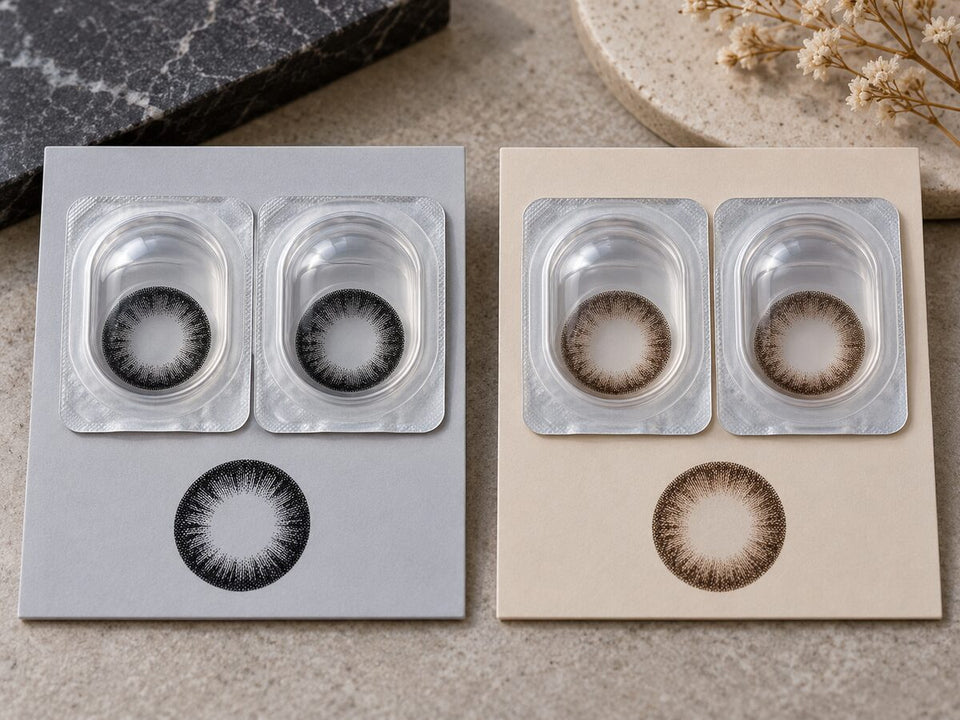
“No Black Rim” is a visual descriptor in the current EuroRing Mineral Gray listing. It suggests that the printed design is not framed by a stated black outer ring. It does not mean the entire lens is rimless, invisible, or free of a physical edge. Every contact lens still has a full diameter and has to sit correctly on the eye. The design phrase is useful when choosing images to inspect, but it is not a fitting parameter.
If a dark outer ring made a previous colored lens feel visually strong, this phrase can help you investigate a different print style. Ask what the outer border actually looks like in close-up and how it reads in a full-face portrait. Gray pigment may still produce definition, and a lighter-looking border can still be visible on a particular iris. Treat “No Black Rim” as a prompt for comparison, not a guarantee of an undetectable effect.
The product's listed 13.0 mm graphic diameter describes the print area. Its 14.0 mm overall diameter describes the complete lens. These values answer different questions. Neither tells you the printed border's exact contrast, and neither proves how subtle the lens will look on dark brown, hazel, or light eyes. Use the specification sheet to identify the product, then use relevant images for style judgment.
How gray may read on different starting irises
A colored contact overlays your own iris, so the background matters. On a dark iris, a gray print may appear muted or contrasted depending on the pattern and lighting. On a lighter iris, different parts of the print may blend differently. This article has no controlled test showing a universal result, and the word “Mineral” is a shade name rather than a standardized pigment measurement.
Look for photographs identified as the exact Mineral Gray product. A useful set has a close-up and a full-face view, with the wearer's original eye color described when possible. The close-up can show the transition between the gray print and the pupil. The portrait can show whether the eye appears gently shifted or visibly colored at normal distance. If only a studio image exists, note the missing everyday-light view instead of assuming the campaign lighting reflects ordinary wear.
Warm indoor light can change the appearance of gray, sometimes making it look softer or more neutral. Cool daylight, flash, and screen editing can make another version look brighter. Compare images under similar light and camera distance. A gray-on-brown-eye photograph of another lens family should not be treated as evidence for EuroRing Mineral Gray, even if it shares a “no black rim” tag.
Compare a softer-looking edge without guessing
If the outer edge is your main concern, inspect three areas: the extreme boundary, the middle color, and the transition toward the pupil. Ask whether the boundary looks crisp or blended in that particular image. Then zoom out. Some patterns that look strong at macro scale become less prominent in a portrait; others remain distinctive. Both views matter because customers often make the mistake of judging “natural” from only a magnified crop.
Make a small comparison sheet with another professionally appropriate gray lens. Record its exact product name and graphic size, then compare photographs of both at similar iris color, lighting, and distance. Do not claim the EuroRing design is always more natural merely because it lacks a stated black rim. A dark gray print without a separate black ring may still create contrast. The lens that suits your desired style depends on the whole pattern and your own features.
Minimal makeup can make a colored lens a bigger focal point. Strong eyeliner may change how you perceive the edge. If you want a subtle everyday result, inspect images with simple makeup as well as styled campaign portraits. If the lens is for an event, try to find examples under comparable event lighting. Keep the focus on visual preference; the cosmetic print does not tell you whether the lens is suitable to wear.
Read the current 3–6 month replacement range correctly
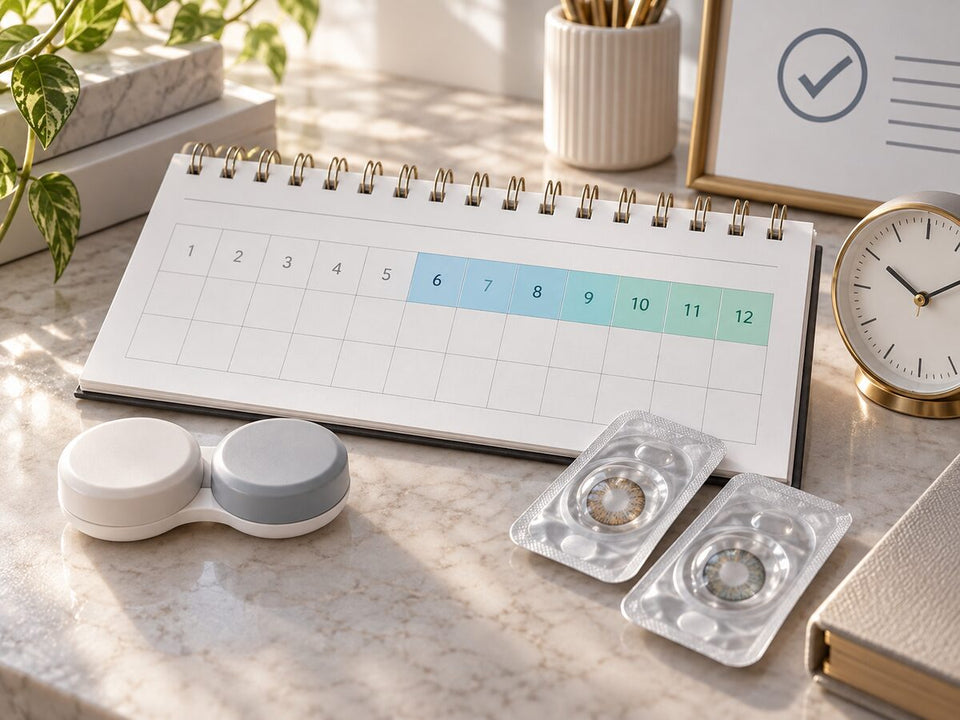
The current KPOP2 product description identifies this reusable lens with a 3–6 month replacement range. Tags also refer to “3-6 Months” and “6 Months.” This does not authorize choosing six months for every pair. Confirm the exact instructions supplied with the lens and your eye-care professional's advice. The beginning of the replacement clock and the handling routine should be clear before you open the box.
A replacement interval is separate from a wearing schedule. “3–6 months” does not mean continuous wear, overnight wear, or a fixed number of hours per day. Follow the exact prescribed wearing schedule. Remove the lens when required, clean and disinfect it using the recommended system, and store it correctly. Never extend the replacement period because a pair has been worn only occasionally.
If the packaging or professional directions give a more specific interval than the catalog range, follow those directions. If they seem inconsistent, ask before use and keep the answer with your order record. Do not borrow an interval from another EuroRing shade, an older product page, or a social-media review. The current listing is a starting point for a precise question, not a substitute for instructions supplied with the exact pair.
Care for a reusable gray lens
Wash and dry your hands before handling the lens. After each wear, clean, disinfect, and store it according to the supplied lens and solution instructions. Use fresh appropriate contact lens solution; do not top off old solution in a case. Do not use tap water as a substitute, and avoid showering or swimming while wearing contacts. The CDC contact lens guidance and FDA care guidance explain these routines.
Keep the right and left lenses organized, especially if your prescribed powers differ. Check for tears, deposits, or other visible damage before insertion. Do not wear a damaged lens. Replace the case as instructed by the care system. If the lens causes pain, unusual redness, discharge, light sensitivity, or a change in vision, remove it and seek professional advice promptly. A desired gray look is not a reason to keep wearing a symptomatic lens.
A reusable lens may seem economical for occasional wear, but it still needs the full care routine and must be replaced on schedule. Consider that requirement when deciding whether this exact product fits your lifestyle. Do not estimate the cost per wear using the longest possible catalog interval without knowing the applicable instructions and the supplies you need.
Understand the one-lens box before checkout
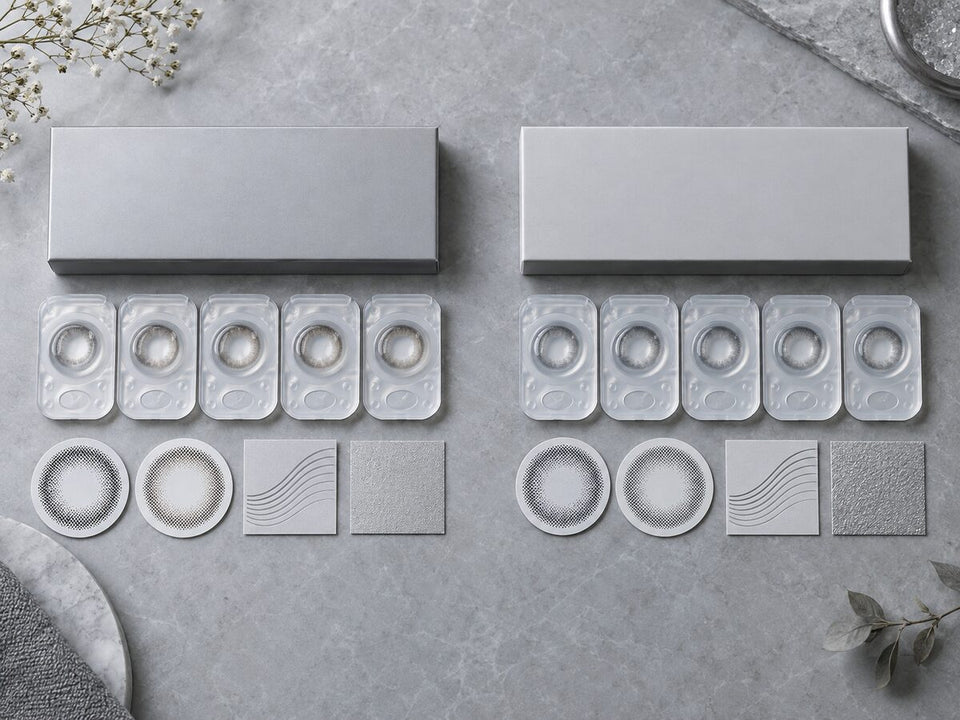
The current product description says one lens per box. For a two-eye pair at the same prescribed power, two appropriate boxes supply two lenses. If your left and right eyes have different powers, select the correct power for each individual box. Adding quantity two at one power does not automatically cover the other eye.
Check the cart line items before paying. They should reflect the exact EuroRing Mineral Gray product, your confirmed power for each eye, and the quantity you intend. The listed general power range of 0.00 to -10.00 does not guarantee that every value is currently selectable. If a required option is absent, ask about it rather than choosing a nearby number.
At delivery, verify the sealed package label: full product name, power, one-lens quantity, expiry information, and packaging condition. Keep a photograph of the label. It can help resolve a replacement-schedule question and make a future reorder more precise. Do not open or wear a box that does not match your confirmed order.
Fit and material: what the listing cannot decide
EuroRing Mineral Gray is listed with an 8.6 mm base curve, 14.0 mm overall diameter, HEMA material, and 38% water. These are product identifiers. They do not establish that the lens fits you, feels comfortable for a particular number of hours, or is interchangeable with another lens that shares a number. A professional fitting and contact lens prescription for the exact product remain necessary.
The 38% water value is not a comfort score. Lens fit, surface, your tear film, environment, wear time, and care routine can all affect the experience. If you are searching for a new lens because another one was uncomfortable, explain that history to your eye-care professional. Switching to a design without a black printed rim is a style change; it does not diagnose or treat the source of irritation.
Likewise, a 0.00 or plano power still involves a contact lens on the eye. Color-only use does not remove the fitting and safety requirements. The FDA decorative lens guidance explains why cosmetic lenses are treated as contact lenses. Use a current prescription and follow professional advice even when no vision correction is intended.
A practical shopping sequence
- Identify the exact I-DOL EuroRing Mineral Gray product and review its current listing.
- Confirm the lens and power for each eye with your eye-care professional.
- Ask for the applicable replacement interval within the current 3–6 month range and the correct care routine.
- Compare clearly identified images to judge the printed edge and gray effect on a relevant starting iris.
- Count one box per individual lens and review the selected powers in the cart.
- Check sealed packaging and instructions before opening, then keep a record for later use.
This order lets you appreciate the no-black-rim design without turning the design label into a medical claim. If the schedule, fit, or power remains unclear, resolve that before committing to the aesthetic choice. If the exact lens is appropriate, the final question is whether its actual appearance in relevant images suits your own style.
More Mineral Gray questions
Does “No Black Rim” mean the contact lens has no border at all?
No. It describes the stated print style, not the physical edge of the lens. The material extends to the listed 14.0 mm overall diameter, while the graphic is listed at 13.0 mm. A design without a separate black ring can still have a visible gray outer pattern. Review exact-product photographs at both close and normal distance.
Can I use the lens for six months because the page says 3–6 months?
Do not assume the longer endpoint applies to your supplied pair. Read the included instructions and confirm the schedule with your eye-care professional. Track the opening date and replacement date for the exact lens. A longer interval on an older page or a tag is not permission to extend the current pair's instructions.
Will a 13.0 mm graphic look smaller than another 13.2 mm lens?
The printed extent is numerically smaller, but appearance depends on pattern contrast, color placement, the underlying iris, and lighting. A smaller listed graphic does not guarantee a subtler portrait or safer fit. Compare relevant full-face images and the full specification sheet of any alternative lens.
Is one box enough for both eyes?
No. The current listing contains one physical lens per box. Two-eye wear generally requires two appropriate boxes, with the correct prescription selected for each eye. If the eyes have different powers, review both cart entries before paying.
What if I cannot find clear photographs of the exact lens?
Keep the visual conclusion uncertain. A similar gray lens or another EuroRing shade may suggest a style direction, but it cannot prove the appearance of Mineral Gray. Ask for exact-product imagery or compare a different professionally appropriate option with better evidence. Avoid turning the “No Black Rim” phrase into a substitute for a realistic photo.
Related categories
For the next cool-tone comparison, browse Gray Contacts, Blue Contacts, Daily Contacts. Treat a collection as a discovery route, then verify the exact model, replacement schedule, package count, measurements and available prescription selections on the product page.
Questions and answers
Does “No Black Rim” mean there is no lens edge?
No. It is a description of the printed design, not the physical structure of the complete contact lens. EuroRing still has an overall diameter and fitting requirements. The label cannot establish that its edge or color transition will be invisible on every eye.
Will it look more natural than a ringed gray lens?
That depends on the exact designs, your original eye color, and the viewing conditions. There is no controlled comparison in this guide proving one universal result. Use the label to identify images worth examining, then compare those images with their limitations in mind.
Is the replacement schedule three or six months?
The current KPOP2 product description gives a 3–6 month range. Confirm the exact directions supplied with your lens and your eye-care professional's advice. Do not assume that the longer endpoint always applies.
Does a box contain two lenses?
The checked Mineral Gray listing contains one individual lens per box. Two-eye use therefore requires two appropriate lenses. Check the power selection for each eye and the cart quantity; two boxes selected at one power do not automatically cover different prescriptions.
Does the 38% water figure predict comfort?
No. That value alone does not tell you how the lens will fit, feel, or perform for your eyes. It also does not establish a daily wearing allowance. Discuss comfort concerns with your practitioner instead of using the percentage or design label as a guarantee.
What should I confirm before paying?
Confirm the exact prescribed model, selectable power for each eye, individual-lens quantity, and replacement instructions for the supplied version. For the appearance decision, seek clearly identified Mineral Gray images under relevant conditions. Confirm the 3–6 month range against the instructions supplied with the exact lens.
Product records rechecked September 28, 2026. KPOP2 editorial guidance using KPOP2 product fields and the linked sources. Catalog images and design discussions are not controlled wear tests.