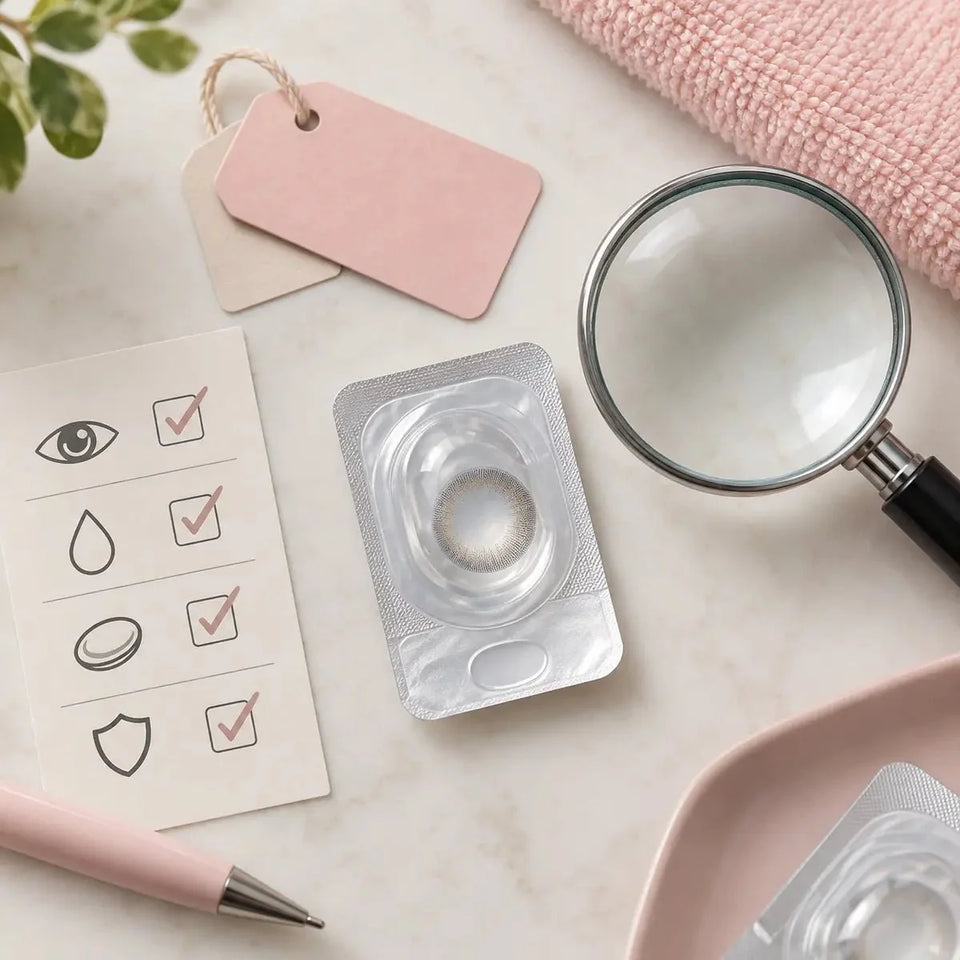
Care & authenticity
Can You Wear Plano Colored Contacts With Dry Eyes?

Plano colored contacts have no spherical vision-correction power; they are not a treatment for dry-eye symptoms. A 0.00 label also does not show whether a particular lens will be suitable or comfortable for you. If your eyes feel dry, discuss the symptoms and exact colored lens with an eye-care professional before ordering or changing products.
In this guide
The short answer
A plano colored lens may be considered only after an eye-care professional confirms whether contact lens wear is appropriate and assesses the exact product for you. Choosing 0.00 power does not prevent dryness, make a lens easier to tolerate, or replace an examination. If you have new, persistent, or recurring symptoms, get advice before buying a different color or lens type.
This article focuses on one specific question: what a plano value does and does not tell someone who has dry-eye symptoms. For a wider checklist about prescription colored lenses, product details, and preparing for a practitioner discussion, see our prescription colored contacts for dry eyes guide.
What plano means
Plano generally means 0.00 spherical corrective power. It indicates that the lens does not provide that type of vision correction. It does not describe how a contact lens fits, whether it is suitable for your eyes, its replacement schedule, or whether it will feel comfortable.
A colored lens with plano power is still a contact lens placed on the eye. In the United States, the FDA says decorative colored lenses require a prescription and professional fitting even when they do not correct vision. Requirements differ by location, so check the rules where you live. A 0.00 listing should not be read as “no prescription,” “safe for everyone,” or “appropriate for dry eyes.”
Why 0.00 power does not answer a dry-eye question
People may describe burning, stinging, scratchiness, redness, light sensitivity, or blurred vision as “dry eyes.” The National Eye Institute explains that dry eye can have different causes and may require professional evaluation. These symptoms alone do not tell you whether a contact lens, a care solution, or another factor is responsible.
Power and comfort address different questions. A 0.00 power value concerns vision correction; it does not diagnose symptoms or establish how a lens interacts with your eyes. Similarly, a lens marketed for a cosmetic effect is not a dry-eye treatment. Do not choose plano because you expect it to solve discomfort, and do not switch to a different lens or care product as a self-test.
What to discuss with an eye-care professional
Bring the exact lens name or product page, your current contact lens prescription, the care solution you use, and a concise description of your symptoms. Note when discomfort began, which eye is affected, what you feel, and whether symptoms continue when you are not wearing lenses. Do not wear a lens longer or put it back in to recreate symptoms.
Ask whether contact lens wear is appropriate while symptoms are present, whether the exact colored model can be assessed for you, and what wear schedule and care products apply. If a professional suggests an alternative, record its complete brand, model, color, and parameters. Similar power values or shade names do not establish that two lenses are interchangeable.
In the United States, colored and decorative contacts require a prescription and fitting even if they are plano. Read the FDA’s colored and decorative contact lens information. For general dry-eye symptoms and testing, see the National Eye Institute dry-eye guide.
How to read comfort and material claims
A product page may describe a lens as comfortable, moist, breathable, or suitable for sensitive eyes. Those words do not diagnose the cause of your symptoms or guarantee how a lens will feel for you. Technical properties such as material, water content, design, and replacement schedule describe different product characteristics; none by itself establishes personal suitability.
Check claims against information for the exact model and ask the manufacturer or seller to clarify product details. Ask your eye-care professional how those details relate to your eyes and symptoms. Do not infer that a lens is appropriate because it has a certain water-content figure or because someone with similar symptoms liked it.
If discomfort happens during wear
If you develop pain, unusual redness, light sensitivity, blurred vision, excessive tearing, or another concerning change while wearing a lens, remove it and contact an eye-care professional promptly. Do not reinsert the lens to see whether the symptom returns or use another person’s medication. If symptoms are severe or vision changes suddenly, seek urgent eye care.
Use drops only when their label and your practitioner’s directions say they are compatible with your exact lens. Do not use disinfecting solution as eye drops. If symptoms began after a new solution or lens, keep its package information so the professional can identify it.
Frequently asked questions
Do plano colored contacts help dry eyes?
No. Plano means 0.00 spherical vision-correction power; it does not treat dry-eye symptoms or guarantee comfort.
Can I wear colored contacts if my eyes feel dry?
Ask an eye-care professional to evaluate your symptoms and the exact lens before wearing or changing products. A general article cannot determine whether lens wear is suitable for you.
Does 0.00 mean plano colored contacts do not need a prescription?
In the United States, decorative colored lenses require a prescription and professional fitting even when they do not correct vision. Check local rules elsewhere.
Are “moist” or “comfortable” lens claims a guarantee?
No. Product descriptions cannot predict your individual comfort or diagnose dry-eye symptoms. Verify the exact specification and ask your practitioner.
Editorial note: This is general information and does not diagnose or treat dry eye. U.S. colored-lens prescription information is based on linked FDA guidance; symptom and testing information is based on the National Eye Institute. This article does not replace an eye examination, fitting, or prescription.