Buying guides
Same Base Curve, Different Contacts: How to Choose a Backup Lens
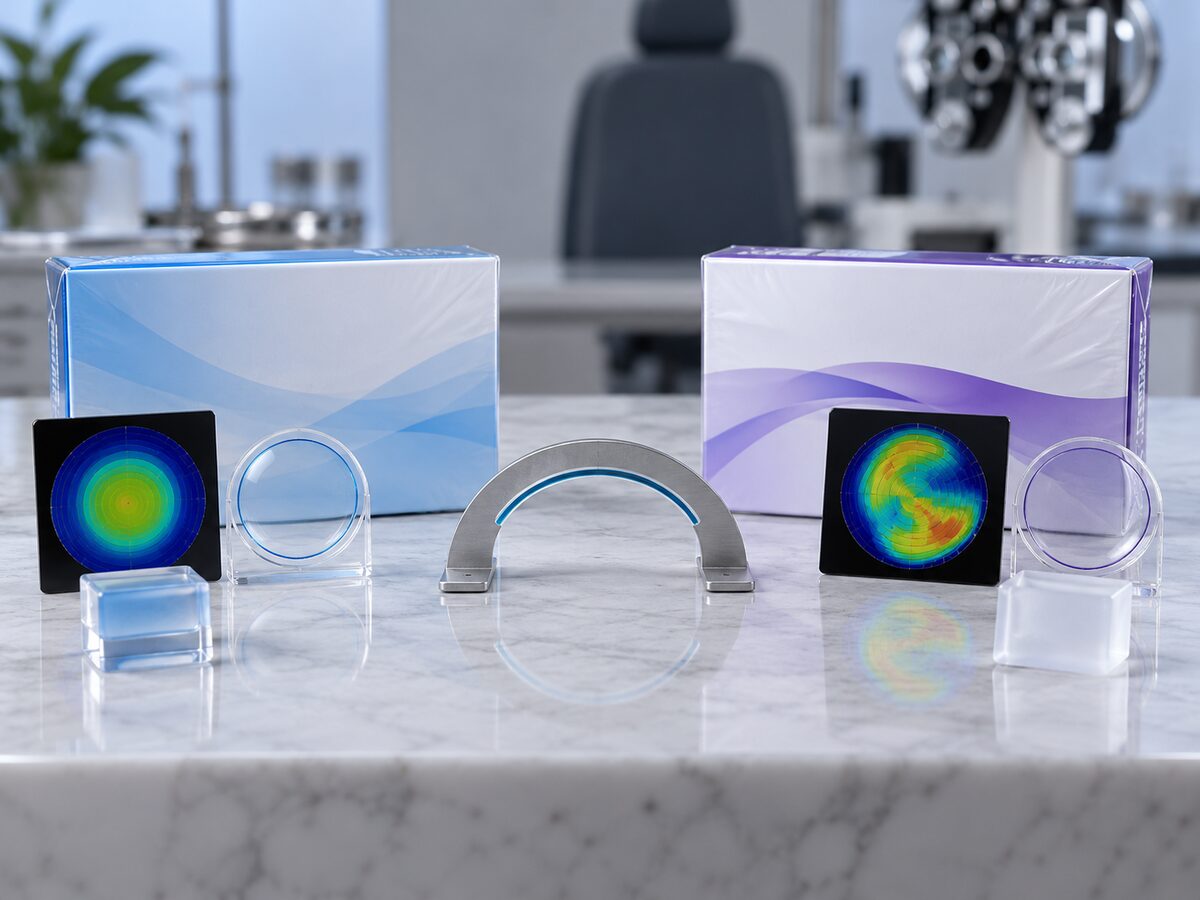
A matching base curve does not establish that another contact lens is a suitable backup. Two products can share BC, overall diameter, graphic diameter, and a material category while remaining different prescribed models with different package counts. Use matching fields to organize an exact-product comparison, then ask your eye care professional to assess the alternative. Do not substitute a nearby power or familiar measurement when your usual lens is unavailable.
In this guide
- Why one BC value is insufficient
- Compare matching catalog rows
- Evaluate a clear candidate
- Plan with a professional
- Check exact power options
- Calculate package quantity
- Keep distinct care records
- Follow a backup decision tree
- Review three scenarios
- Questions for the professional
- Questions for the store
- Use numbers in context
- Questions and answers
Why one BC number is not a backup plan
Base curve describes one aspect of a contact lens's geometry. If your usual box says 8.6 mm and another product page also says 8.6 mm, you have found a shared catalog value. You have not shown that the two lenses have the same edge profile, thickness, material behavior, on-eye movement, or suitability for your eyes. A backup plan needs an exact alternative that an eye-care professional has evaluated, not a search filter result.
Overall diameter is another useful identifier, but it is also only one field. Graphic diameter describes printed color extent and is mainly a design reference; it is not a fitting number that can authorize a swap. Water content and material category provide additional product facts, yet they do not form a complete specification or clinical equivalence test. As more rows match, the comparison becomes better organized, not automatically medically conclusive.
Write down the complete current lens name, brand, power for each eye, replacement schedule, and any other prescribed parameters. Bring that record and the proposed backup's exact listing to your eye-care professional. Ask whether that precise model is appropriate for your eyes and whether a fitting or updated prescription is needed. A general question such as “Can I use any 8.6 lens?” leaves the most important detail undefined.
Matching Yurial and iWWi rows still leave major differences
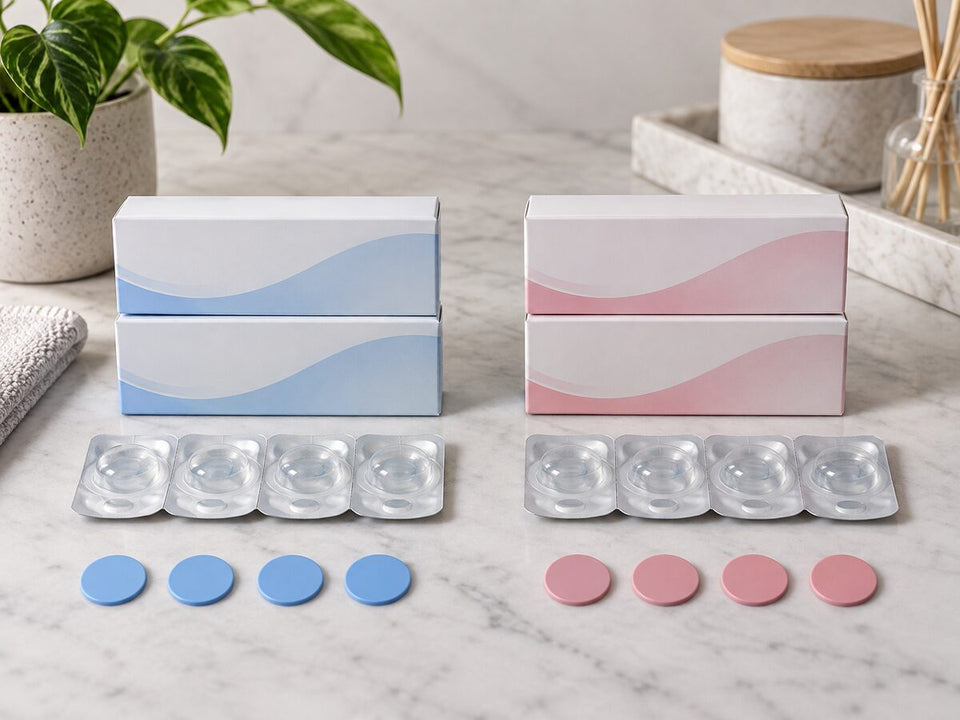
The current KPOP2 listings for I-DOL Yurial Royal Brown and LensRang iWWi Iwwing Black both show 8.6 mm base curve, 14.0 mm overall diameter, 12.8 mm graphic diameter, HEMA, 38% water, and broad 0.00 to -10.00 power endpoints. They can look strikingly similar in a short numerical table. Yet Yurial is listed as a 12-month brown lens with one physical lens per box, while iWWi is a monthly black lens with two per box.
Those differences affect the order before anyone considers style. A two-eye Yurial order generally needs two correctly selected one-lens boxes; a same-power two-eye iWWi order may use one two-lens box. The reusable replacement schedules and care records are not the same. A shopper who copies a quantity from one listing to the other can end up with the wrong number of lenses, even if the power is correct.
The design difference is also real but not quantified by the shared graphic diameter. A black printed design and a brown design may create different contrast against the original iris. A 12.8 mm printed extent does not tell you how dense the border is or how the center blends. If appearance matters, compare labeled images after professional suitability is established. A product's look is not evidence of a fitting match.
A clear lens is still a different product
LensRang Re:View Clear is listed as a monthly clear lens with 8.8 mm base curve, 14.2 mm overall diameter, silicone hydrogel, 40% water, and two lenses per box. Its broad listed power range begins at -1.00 and extends to -10.00. It has no cosmetic graphic-diameter field in the current product description. None of this makes it a generic replacement for Yurial or iWWi.
A clear lens may be appealing when you do not need a colored look, but removing print does not remove contact lens fitting requirements. Re:View changes the stated base curve, diameter, material, and potentially available power choices. A customer who needs 0.00 for a cosmetic lens, for example, should not infer that a clear product with a -1.00 starting endpoint is a suitable zero-power backup. Check the actual prescription and live menu.
Ask your eye-care professional about the exact clear candidate before an urgent need arises. If they confirm a clear backup, store its full model and prescription separately from your colored lens. Do not merge both under “monthly 8.6/8.8 contacts” or transfer a care instruction from one package to the other.
Have the backup conversation before stock runs out
Bring the reason you want an alternative: perhaps your usual color is temporarily unavailable, you travel frequently, or you want a different look for a particular occasion. These goals tell the professional what practical problem to solve. They do not identify a lens that is suitable. The professional can assess the exact proposed model and explain any required fitting or prescription update.
Ask for a record you can use later: full brand and model, eye-specific powers, any additional parameters, replacement and wearing schedules, and care instructions. If more than one alternative is appropriate, keep each one distinct. Approval of one exact model is not blanket approval for a third product that merely looks similar online.
Then ask the store a separate question: is the approved product currently offered in each required option, and how many physical lenses are in a purchasable unit? Store availability and professional suitability are different checks. A lens may be clinically acceptable but unavailable in your power, or available online but unsuitable for your eyes. Both conditions need to be satisfied before ordering.
Read broad power ranges cautiously
Yurial Royal Brown and iWWi Iwwing Black currently show general 0.00 to -10.00 endpoints, while Re:View Clear shows -1.00 to -10.00. These range statements do not list every selectable increment or guarantee current stock. Check the exact menu for each eye. Do not round a missing value to a nearby one or treat a matching endpoint range as evidence that your prescription transfers between models.
If your right and left eyes have different powers, make separate lines in your plan. Include the full product title beside each value. A response that confirms only one eye or only a broad range is incomplete. Keep the prescription documents in the appropriate private verification process, not a public product comment.
A zero-power cosmetic selection still involves a contact lens and fitting requirements. Conversely, a clear lens listing without a 0.00 option should not be converted into a cosmetic backup by inference. Ask the professional and the store about the exact intended product and option.
Calculate packages before ordering
For same-power two-eye wear, two one-lens Yurial boxes can supply one pair, while one two-lens iWWi or Re:View box can supply two lenses. If the eyes need different powers and boxes are selected by a single power, a two-lens box at each power can provide four physical lenses overall. Check the actual box and cart configuration before relying on that arithmetic.
Replacement schedules affect how those physical lenses are managed. Yurial's current listing says 12 months; iWWi and Re:View say monthly. Do not calculate cost or supply by assuming all lenses share a common replacement clock. Keep opening and replacement records for each reusable pair, following the exact package and professional instructions. A longer replacement label is not a longer daily wearing allowance.
If you are comparing current prices, normalize by physical lenses, the applicable replacement interval, and care supplies. Do not use a hypothetical longest interval for a product you have not been fitted to wear. A cheaper package or more lenses per box does not justify an unapproved substitution.
Give each model its own care record
For each professionally confirmed reusable lens, record the full name, intended eye, power, date opened, instructed replacement date, and care system. Keep the original package label or a private photo. This prevents a monthly black pair from inheriting a 12-month brown pair's reminder or vice versa. If two pairs are in rotation, opening one does not pause the other's replacement schedule.
Wash and dry your hands before handling contacts. Clean, disinfect, and store reusable lenses according to their supplied instructions and the recommended solution. Use fresh solution, not topped-off old solution; keep lenses away from water and avoid swimming or showering while wearing them. The CDC contact lens guidance covers these practices.
If a lens is damaged, painful, or associated with unusual redness, discharge, sensitivity to light, or vision changes, remove it and seek professional advice promptly. Do not immediately switch to an unconfirmed backup to finish the day. A symptom may need assessment before any further contact lens wear.
A practical backup decision tree
- Identify the usual lens: Save its full brand, model, prescription, package, and instructions.
- Name the proposed alternative: Use the complete product title and listing, not just the BC or color.
- Confirm professional suitability: Ask whether the exact alternative is appropriate for each eye.
- Confirm availability: Check each prescribed option and the current package count in the store.
- Confirm the routine: Follow that model's own wearing, care, and replacement instructions.
- Check delivery: Match sealed packages against the order before opening.
If any step is unresolved, keep appropriate glasses available rather than improvising a contact lens substitution. This workflow protects the accuracy of the order and makes future restocking easier because the approved alternative is recorded by name.
Three backup scenarios that reveal the missing check
Scenario 1: The usual 8.6 mm brown lens is out of stock
A shopper wears Yurial Royal Brown and sees iWWi Iwwing Black with the same base curve, overall diameter, graphic diameter, material category, water percentage, and broad power endpoints. The numerical overlap is a useful comparison sheet for the practitioner, but it is not permission to order iWWi as a direct replacement. The products differ in exact model, printed color, box count, and replacement schedule. The shopper should ask the eye-care professional about iWWi specifically and check the current power option before ordering.
If the professional approves the black alternative, the shopper still needs a new order calculation. Yurial is one lens per box, while iWWi is two. They also need a monthly care and replacement reminder for iWWi rather than copying Yurial's 12-month record. A correct power in the wrong product or wrong schedule is not a successful backup plan.
Scenario 2: A clear lens seems easier to obtain
A shopper wants clear Re:View because color is not essential for an upcoming trip. The absence of cosmetic print is a reasonable style preference, but Re:View's listed 8.8 mm base curve, 14.2 mm overall diameter, and silicone hydrogel material differ from the colored comparison pair. The shopper should bring the exact clear model to the professional for an assessment. If an appropriate clear lens is confirmed, they can check its live power selection and pack count.
The record should name Re:View Clear rather than “clear backup.” This matters when multiple clear products exist or one eye's power changes. A clear appearance does not make a lens interchangeable with a prescribed colored model, and the store's availability does not make it clinically suitable.
Scenario 3: A familiar lens number is found in an old drawer
An older unopened or opened box has 8.6 mm printed on it, but its product name, power, expiration, or opening date is uncertain. The matching base curve does not solve the identity problem. Do not wear a lens of uncertain status. Check the original packaging and order history; if the details cannot be established, ask your eye-care professional what to do and use glasses in the meantime.
For an unopened box, check the sealed package and expiration date before considering use. For an opened reusable lens, the applicable replacement and storage record is essential. A clear-looking lens in a case does not prove that it remains within its instructed period or was stored correctly.
Questions to take to your eye-care professional
- Is this exact proposed brand and model appropriate for my right and left eyes?
- Do I need a fitting or an updated contact lens prescription before changing?
- What wearing schedule and replacement interval apply to this model?
- Which care products and storage routine should I use for it?
- What should I do if the approved backup is also unavailable?
Take the product page or sealed package rather than only a list of measurements. A professional can address the specific lens design, while a store can answer the separate question of current stock and option selection. Record both answers and their dates so an old approval is not misapplied after your prescription or product catalog changes.
Questions to ask the store before buying
- Is the exact approved model available in each prescribed power?
- How many individual lenses are contained in the selected box?
- Can right and left powers be selected separately, and how will the cart show them?
- Does the current listing describe the same version as my saved package or order?
- What should I do if the delivered label differs from the confirmation?
A broad reply such as “we have 8.6 lenses” does not answer these questions. Ask for the full product name and exact option. Keep the written answer with the order record. This prevents the search term that located a product from becoming the only identifier used at checkout.
Why the numbers still matter
The warning against self-substitution does not make base curve, diameter, material, or power meaningless. They help identify a lens accurately, expose obvious differences, and frame a useful conversation with a professional. The problem is treating a small set of numbers as a complete fit decision. For example, a different base curve on Re:View is a clear reason to ask more questions, while a matching base curve between Yurial and iWWi is not proof that no questions remain.
When you compare candidates, label each value with its source and date. A product page can be updated, an old box may reflect earlier packaging, and a saved note may omit a version. Confirm the current live listing and the supplied package before repeating the order. If a specification differs, resolve the identity question first instead of assuming either a reformulation or a typographical error.
Finally, keep appearance and eye suitability separate. A black backup may not serve the same style purpose as a brown lens, and a clear backup has no colored effect. That preference matters, but it comes after the exact lens is professionally appropriate and available. A good backup plan gives you a safe, identifiable option you can actually order and care for correctly.
Before you place an alternative in the cart, say its complete name aloud alongside the power for each eye and the number of lenses you expect to receive. If you cannot state those facts or cannot identify the professional confirmation for the exact model, the backup plan is still incomplete. Keep the prior package and the new order separate so the care routine for one lens is never silently transferred to another.
Related categories
Questions and answers
Can I switch if another lens has the same BC and DIA?
Those matches do not establish an approved substitute. Products can still differ in identity and other characteristics, and the FDA advises professional approval before accepting a different lens. Bring the complete alternative product information to your eye care professional rather than selecting by two matching fields.
What if graphic diameter, material, and water content also match?
The Yurial and Iwwing examples show that several catalog rows can match while the products remain different models with different package counts. The table is not a complete manufacturing or clinical equivalence assessment. More matching fields do not replace exact-product confirmation for your eyes.
Are clear lenses automatically easier to use as a backup?
Clear appearance removes a cosmetic color choice, not the need for fitting. Re:View Clear is a distinct product with its own dimensions, material field, options, and instructions. Confirm the exact clear lens professionally instead of assuming it is a universal replacement for a colored model.
Can I choose a nearby power when my usual option is unavailable?
Do not round or change the prescribed value to complete the order. Ask about the exact model and configuration, and discuss an appropriate alternative with your practitioner. A nearby menu option or matching base curve does not establish an acceptable prescription change.
Why might the backup require a different box quantity?
The selling units can contain different numbers of lenses. Yurial Royal Brown lists one per box, while Iwwing Black lists two. Different eye powers can also require separately configured boxes. Count correctly prescribed individual lenses for each intended eye before comparing package quantities or prices.
Should I try a different lens if my current one causes irritation?
Treat irritation, pain, redness, or vision changes as a reason to remove lenses and seek professional advice, not simply a stock-substitution problem. Do not reinsert lenses or select a new model as a home test. A confirmed backup plan does not replace assessment of an eye symptom.
Product records checked September 17, 2026. KPOP2 editorial guidance using KPOP2 product fields and the linked sources. Catalog images and design discussions are not controlled wear tests.