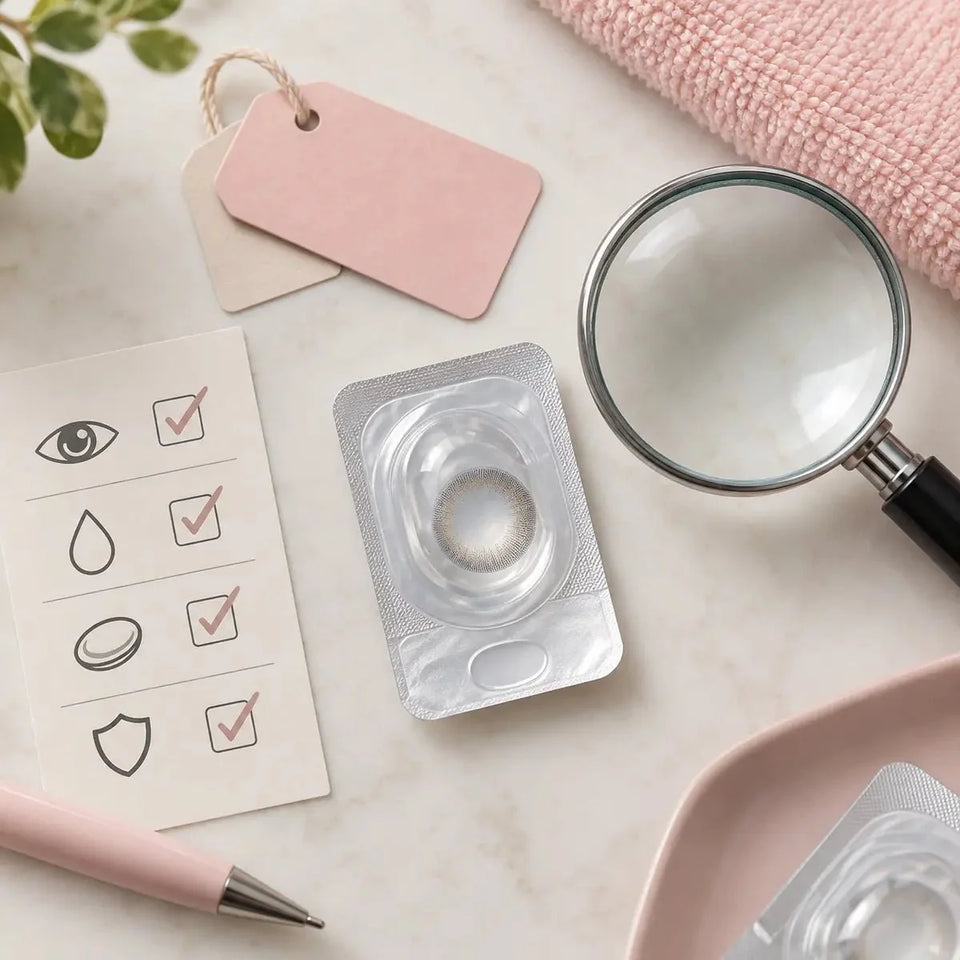
Care & authenticity
Can Contact Lenses Be Colored? Types, Prescriptions & Safety
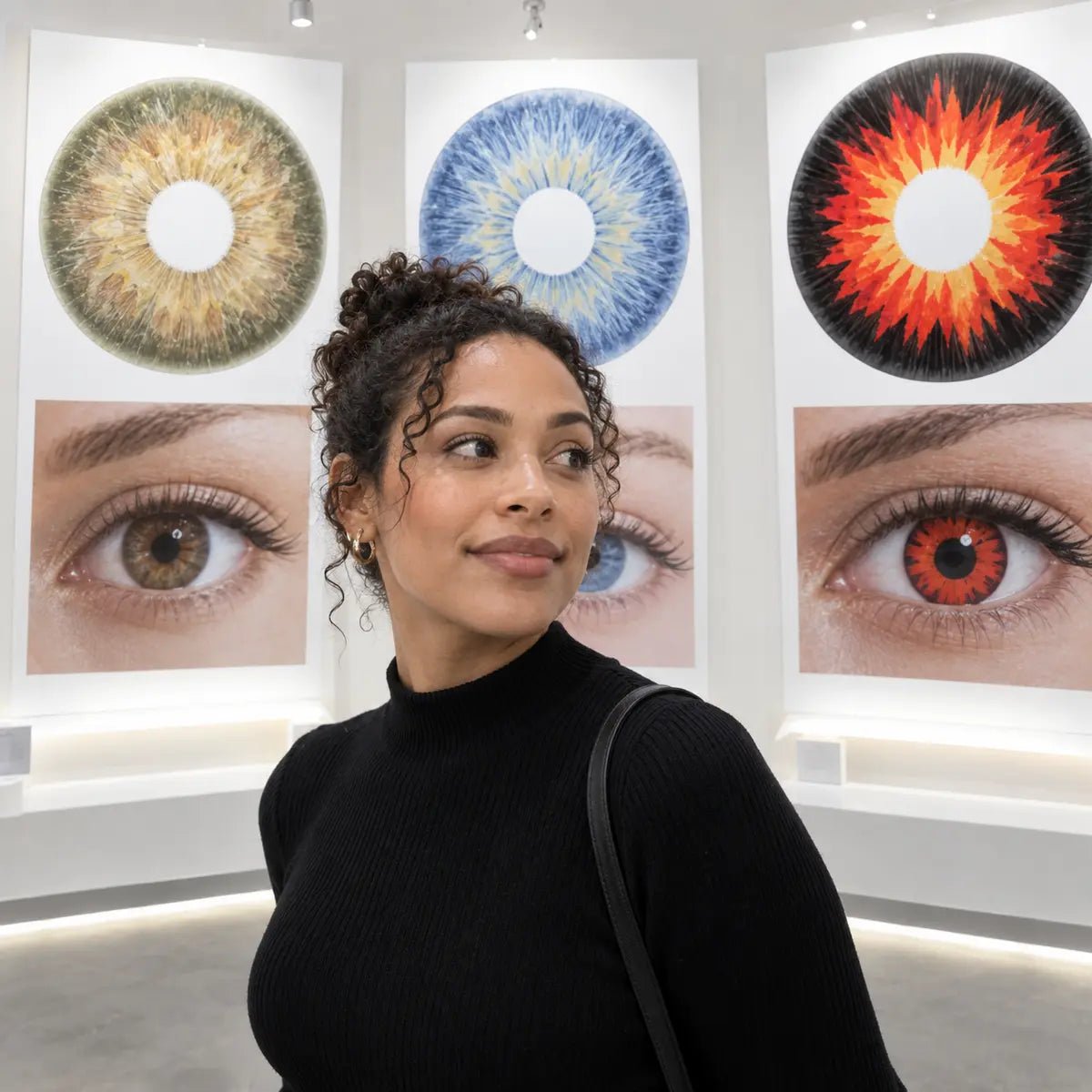
Yes. Contact lenses can be made with a color or printed pattern, and some colored lenses also correct vision. A color label does not tell you whether a lens is plano, spherical, or toric, or whether the exact design has been fitted for your eyes. First confirm the lens type and prescription needs; then compare the color effect and product details.

Types of colored contact lenses
Colored lenses use a tint or printed pattern to create a visual effect. Product names vary, but these descriptions can help you compare the design:
| Design description | Typical visual aim | What the label does not tell you |
|---|---|---|
| Visibility tint | A light tint that can make a lens easier to see while handling. | It is not necessarily intended to change eye color. |
| Enhancement tint | Subtle definition or a shift that blends with the natural iris. | It cannot predict the result on every eye color. |
| Opaque color | A more noticeable change through denser pigment coverage. | It does not establish fit or prescription. |
| Circle pattern | Added iris definition or a larger-looking effect from a printed border. | Graphic diameter is not the same as total lens diameter. |
| Theatrical or motif design | A pronounced costume, character, or high-contrast look. | A dramatic design still needs appropriate prescription and fit. |
These are shopping descriptions rather than a universal technical classification. One design can combine a translucent inner area, denser color, and a darker outer ring. Read the exact product description and inspect images of the same model and shade.
How a colored pattern changes the look
The final appearance depends on the printed design and the eye underneath it. Natural iris color, pigment coverage, pattern density, outer-ring contrast, pupil size, lighting, and camera processing all influence what you see. A translucent tint usually lets more of the natural iris show through. A denser print can make the shade more visible, although product photos cannot guarantee how it will look on an individual.
G.DIA, or graphic diameter, describes the approximate width of the printed color area. DIA describes the overall lens diameter. Neither number alone predicts fit or the exact visual result. If you compare on-eye photos, look for the same lens version, similar natural iris color, and similar lighting. Treat photos as style references, not fit evidence.
Most colored designs leave a clear central area for the pupil, but its shape and transition vary. If a lens shifts, decenters, or interferes with vision, the image of the print is not enough to diagnose why. Ask a qualified eye-care professional to assess the actual lens on your eye.
Plano, spherical, and toric options
Plano usually means no spherical corrective power, often written as 0.00. It describes a prescription field; it does not mean a lens has no fitting requirements or is risk-free.
Spherical prescription lenses have a SPH or PWR value. A product may offer only some powers and shades, and each eye may need a different value. Match the exact current contact-lens prescription, not an estimated number.
Toric lenses correct astigmatism with cylinder and axis values and a design that needs to settle in a consistent orientation. Not every colored lens is toric, and the available combinations can be narrower. If your prescription contains CYL and AXIS, do not assume that a spherical color lens with a similar SPH value is equivalent.
Color names can be shared across different optical designs. The shade does not establish whether the product is plano, spherical, or toric. Check the selectors and the full product description for the exact model.
How to read the product details
| Listing field | What it describes | How to use it |
|---|---|---|
| SPH / PWR | Spherical correction | Match the sign and value for each eye. |
| CYL / AXIS | Amount and orientation of astigmatism correction | Confirm both when prescribed for a toric model. |
| BC | Base curve, part of the lens geometry | Do not compare it alone as a comfort score. |
| DIA | Overall lens diameter | Keep it distinct from the printed pattern size. |
| G.DIA | Approximate printed color diameter | Use it as one style reference, not proof of fit. |
| Replacement format | Daily, monthly, or another labeled schedule | Follow the exact product instructions. |
| Package quantity | Number of individual lenses in the package | Confirm whether the count means lenses or pairs. |
Matching two values such as BC and DIA across different brands does not prove that the products are interchangeable. Material, edge design, surface, optics, and on-eye behavior can vary. Use the exact product version your professional evaluated and follow its labeling.
Do colored contacts need a prescription?
Requirements depend on where you live. In the United States, the FDA says decorative and colored contact lenses are medical devices that require a prescription, including lenses sold without vision correction. A plano option is not an exemption. The FTC Contact Lens Rule guide explains U.S. prescription verification and seller responsibilities.
Regardless of local terminology or sales channel, contact lenses sit on the eye and should be selected with a qualified professional’s prescription and fitting. A social media post, product review, or glasses prescription cannot determine the right contact lens for you. If you are in the U.S., see the FDA guide to colored and decorative lenses and the FTC Contact Lens Rule guide. Follow the rules where you live.
A clear shopping sequence
- Confirm whether you need plano, spherical, or toric correction with a current contact-lens prescription.
- Identify the exact brand, model, shade, and version. Similar names can refer to different designs.
- Compare each eye’s prescribed values with the options shown for that model.
- Check BC, DIA, replacement schedule, and package quantity without using any one value as a fit guarantee.
- Resolve missing values or conflicting product pages with the seller and your prescriber before ordering.
- After delivery, check the sealed package against your order and prescription before opening.
Use KPOP2’s live product page for current commercial details, and read the prescription verification information and wear and care guide before first use.
Safe use and care
Wash and dry your hands before handling lenses. Keep lenses away from tap water and saliva, do not share them, and never put one contact on top of another. Follow the exact product’s replacement, cleaning, and storage instructions. A monthly label does not mean the lens can be worn overnight, and an attractive print is no reason to extend wear.
Do not sleep, shower, swim, or use a hot tub in lenses unless the exact product and use have been prescribed. Remove the lens and seek prompt professional advice for pain, unusual redness, light sensitivity, discharge, swelling, or sudden or persistent blurry vision. Review the CDC guidance on decorative lenses and contact-lens prevention.
Frequently asked questions
Can contact lenses be colored and still correct vision?
Yes. Some colored lenses offer spherical prescription powers, and some models may offer toric correction. Check the exact design and parameters with your prescriber.
Are plano colored lenses the same as non-prescription lenses?
Plano means no spherical corrective power. In the United States, colored contacts still require a prescription. Check local rules where you live.
Can colored contacts change dark brown eyes?
Some designs use denser pigment to make the change more visible, but the outcome depends on the exact pattern, natural iris, lighting, and wearer. Photos provide an estimate, not a guarantee.
Does a larger G.DIA make a lens fit larger?
G.DIA describes the printed area, while DIA describes the overall lens diameter. These numbers do not by themselves show fit or predict the exact appearance.
Can I choose a close power if my exact value is missing?
No. Do not round or substitute a prescription value yourself. Ask the prescribing professional about an appropriate alternative.
Can reviews tell me whether a lens will be comfortable?
Reviews can describe another wearer’s experience but cannot predict your fit, vision, or comfort. Use them for style questions and ask a professional about suitability.
Can I sleep or swim in colored contacts?
Do not sleep, shower, swim, or use hot tubs in lenses unless that exact use has been prescribed. Follow the product labeling and professional advice.
Sources: U.S. FDA: Colored and Decorative Contact Lenses; U.S. FTC: Contact Lens Rule Guide; U.S. CDC: Decorative Contact Lenses.
This article is general product education. It does not replace a contact-lens prescription, professional fitting, or care from an eye-care professional.