Care & authenticity
Colored Contact Lenses for Dry Eyes: When to Stop Wearing
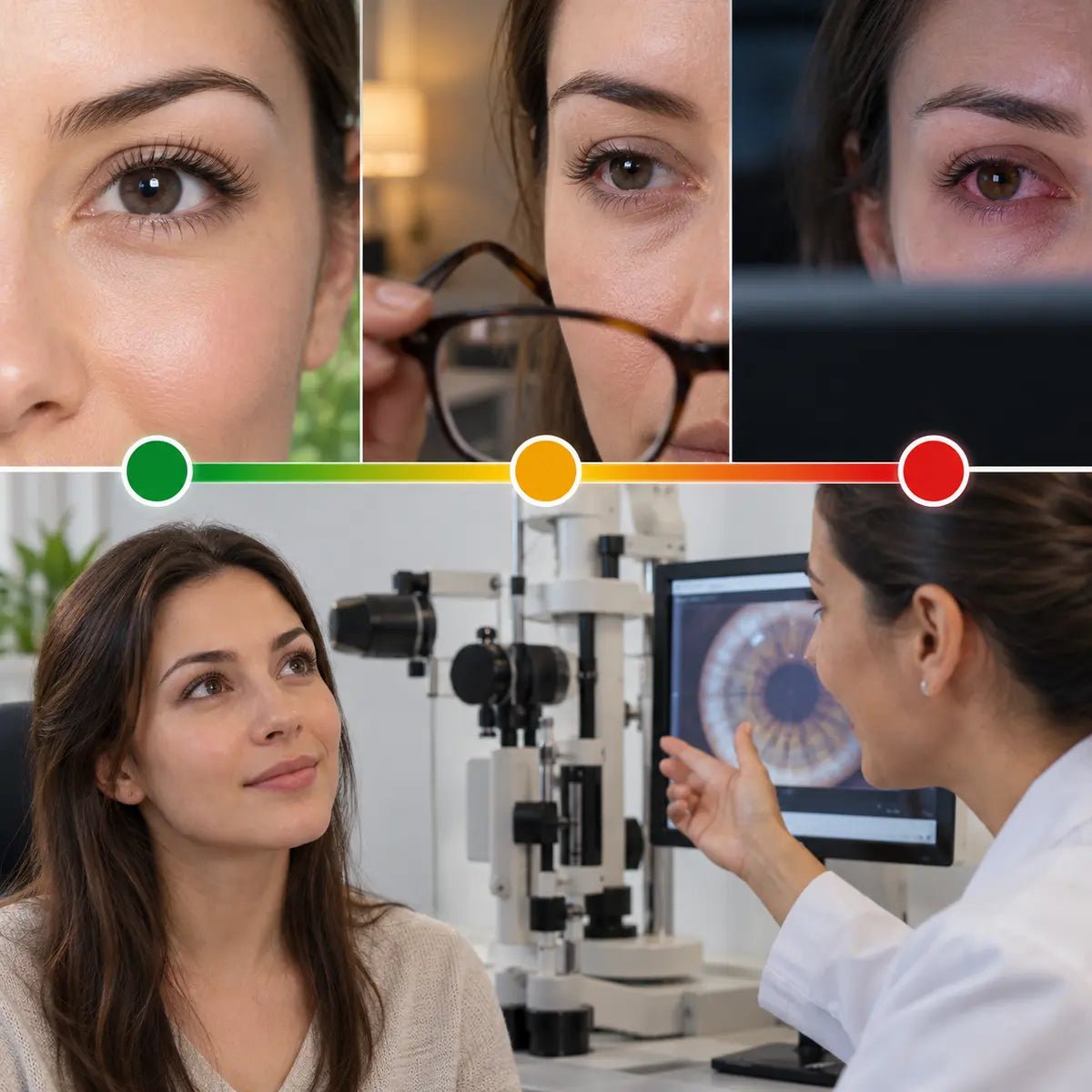
If you have dry-eye symptoms, a colored contact lens should be considered only as part of an individual contact-lens evaluation. No shade, material label, water-content number, review, or “for dry eyes” description can establish that a lens will be suitable or comfortable for you. Ask an eye-care professional to assess your symptoms and the exact lens; follow the prescribed wearing plan, and remove the lens promptly if irritation or other warning symptoms occur.

What “safe” can and cannot mean
There is no universal colored contact lens that can be labeled comfortable or safe for everyone with dry-eye symptoms. Dryness may relate to tear production, tear quality, the eyelids, medication, environment, screen habits, allergy, or another eye condition. Contact lens wear can also contribute to discomfort for some people. The National Eye Institute explains that dry-eye care depends on the cause and that an eye-care professional can evaluate the condition.
That is why “Which lens is best for dry eyes?” is not answered by a product category alone. A more useful question is: “Is my eye currently suitable for this exact lens and wearing plan, and what should I do if symptoms return?” The answer may depend on your eye examination, the product design, the planned hours of wear, the care routine, and your response over time.
A lens that feels comfortable at insertion is not automatically suitable for a long day. Clear vision does not prove that the eye surface is healthy. Likewise, an uncomfortable lens does not tell you the cause. Do not diagnose the problem or change a prescription based on a product description.
Why dry-eye symptoms vary
Dryness can feel like grittiness, burning, stinging, tiredness, or fluctuating clarity. Some people notice symptoms after screen use or in wind and air conditioning; others experience discomfort before inserting lenses. Timing and circumstances are useful observations, but they do not confirm dry eye or identify a cause by themselves.
The NEI notes that dry eye can occur when the eyes do not make enough tears or when tears do not keep the eye wet effectively. Other health conditions and some medicines can contribute. Tell your clinician about symptoms, medications, allergies, and relevant changes in your routine. Do not stop prescribed medication on your own.
Several factors can overlap. A lens may move or fit poorly; the tear film may change; the eye surface may be irritated; or another issue may be present. If discomfort repeatedly appears with a particular lens or after a predictable number of hours, record that pattern and ask for an assessment instead of increasing wear time to test endurance.
What an eye-care professional can assess
A professional can evaluate the eye surface and discuss whether contact-lens wear is appropriate at that time. For an exact lens, the fitting may include how it centers, moves after blinking, covers the eye, and affects vision. Product-page specifications such as base curve and diameter help identify a lens, but they cannot show how it behaves on your eye.
Bring the full product name and version, packaging or listing details, your wearing schedule, and a clear description of symptoms. Mention whether one or both eyes are affected, when symptoms start, whether vision changes, what drops or solutions you use, and whether symptoms continue after removal. Follow the clinician’s advice about a trial, schedule, follow-up, or pause in lens wear.
Ask which contact-lens drops, if any, are compatible with the exact product and your situation. Eye drops have different ingredients and purposes. A product marketed as moisturizing is not automatically suitable for use over every lens. Use drops only as directed by their labeling and your clinician.
How to compare lens options without treating labels as promises
Once your professional has discussed appropriate choices, compare exact product versions rather than broad labels such as “Korean,” “daily,” or “high moisture.” A similar shade name can refer to different models, replacement formats, materials, or designs. Verify the manufacturer, full model, replacement schedule, prescribed parameters, and package contents on the current listing and sealed package.
| Factor | What to verify | What it cannot prove |
|---|---|---|
| Exact model and version | Full name, prescribed design, and replacement format | Individual comfort or fit |
| Wearing schedule | Use and replacement directions for that product | That longer wear is appropriate |
| Material or water-content label | Current product information from the manufacturer or seller | A universal comfort ranking |
| BC and DIA | Listed lens specifications | How the lens centers or moves on your eye |
| Graphic diameter and shade | Cosmetic print and appearance | Correction, eye health, or suitability |
| Package quantity | Number of individual lenses and unit of sale | That one box contains a pair or matching powers |
Daily and reusable lenses have different care and replacement requirements; neither format guarantees comfort. Material names and water-content values are product identifiers, not personalized treatment. If you are considering a different lens from the one used in your fitting, ask your clinician about that exact product. Seller support can confirm current listing details; it cannot determine your eye’s fit.
Wear, care, and compatible drops
Follow the wearing time and replacement schedule for the exact prescribed product. Do not extend a daily or reusable lens schedule because the lens looks clean, the color remains attractive, or the package was expensive. Do not sleep in lenses unless your professional has specifically approved the exact product and schedule.
Wash and dry your hands before handling lenses. Keep contacts away from tap, bottled, distilled, pool, lake, and ocean water, and do not use saliva. For reusable lenses, follow the product’s cleaning and disinfection directions and use fresh compatible solution; never top off or reuse old solution. Keep and replace the case as directed. Do not share lenses or stack a plano colored lens over another contact lens.
The CDC contact-lens prevention guidance recommends healthy handling and care habits and advises removing lenses and contacting an eye-care provider when discomfort occurs. Keep backup glasses available so that you can stop wearing lenses without losing access to vision correction.
When to remove lenses and get help
Remove your lenses immediately if you experience eye irritation or possible infection symptoms, including pain, unusual redness, burning or gritty feelings, excess tearing or discharge, light sensitivity, swelling, or blurred vision. Do not put the lenses back in while waiting to see whether the symptoms return. Contact an eye-care professional promptly for instructions. Sudden vision changes, significant pain, or rapidly worsening symptoms call for urgent professional care.
The FDA warns that a wearer cannot determine the seriousness of a contact-lens problem alone. Its contact-lens risk guidance advises removing the lenses and contacting an eye-care professional when irritation or infection symptoms occur. The FDA also says not to throw away the removed lenses: store them in their case and take them to the professional, who may want to examine them. Follow the professional’s instructions about the case and lens.
If discomfort is mild but keeps returning, arrange a review before continuing the same routine. Do not use redness-relief drops to mask symptoms, switch products, or alter the schedule as a do-it-yourself test. A professional can decide whether a different approach or a temporary pause is appropriate.
Keep a useful symptom record
A short record can make a follow-up more specific. Note the exact lens model and replacement type, which eye is affected, insertion and removal times, when symptoms begin, and whether clarity changes after blinking. Add relevant context such as screen use, air conditioning, wind, allergy symptoms, sleep, and drops or solutions. Record what happens after removing the lens, but do not reinsert it just to reproduce a symptom.
Use the record to describe what happened, not to diagnose it. For example: “The right eye became gritty after four hours in air conditioning, and blur continued after blinking.” The professional can decide what that pattern means and whether the product or wearing plan needs reassessment.
Frequently asked questions
Are daily colored contacts always better for dry eyes?
No lens format is universally best. Daily disposables have single-use instructions and avoid reusable-lens cleaning, but suitability and comfort still depend on the person and exact product.
Does a low water-content or silicone hydrogel label prevent dryness?
No label guarantees comfort or treats the cause of symptoms. Ask your clinician about the exact lens and your eyes.
Can I use rewetting drops while wearing colored contacts?
Ask which specific drops are compatible with your lens and appropriate for you. Follow the product label and professional instructions.
Should I keep wearing a lens that feels uncomfortable at first?
Do not push through irritation. Remove the lens and seek advice, especially if symptoms persist, recur, or include warning signs.
Can I sleep in contacts if they feel comfortable?
Comfort is not approval for overnight wear. Follow only a schedule specifically prescribed for the exact lens.
Can dry eye cause blurry vision with contacts?
Dry-eye symptoms may include vision problems, but lens movement, fit, or another issue can also affect clarity. Have recurring blur assessed.
What should I do if symptoms continue after removing the lens?
Contact an eye-care professional promptly and follow their advice. Seek urgent care for severe pain, sudden vision changes, or rapidly worsening symptoms.
Sources: National Eye Institute: Dry Eye, CDC: Preventing Eye Infections When Wearing Contacts, and FDA: Contact Lens Risks. This article offers general information; it cannot diagnose dry eye or determine an individual lens fit.
Editorial method: general source-backed care information is separated from current product details and individual clinical decisions. No lens is described as universally comfortable or recommended for every person with dry-eye symptoms.