Care & authenticity
Daily Colored Contacts for Dark Eyes: Wear and Care Guide
Daily colored contacts for dark eyes need two separate decisions: how the exact print looks over your iris and how to follow the prescribed single-use routine. Confirm the fitted product and each eye's parameters before opening a blister. Use clean, dry hands, plan around sleep and water, and discard a used daily lens after removal. A strong color result never changes the lens's replacement schedule or makes discomfort safe to ignore.
In this guide

The daily-lens answer in one minute
A daily disposable lens is designed for a single use and discarded after removal. The CDC's guide to contact lens types distinguishes daily disposables from other replacement schedules. “Daily” does not mean you may wear it continuously for 24 hours, sleep in it or save it in a case for another day. Follow the wearing plan and handling instructions given for the exact lens fitted to your eyes.
For dark eyes, assess appearance as a separate task. A soft print may add definition without changing the overall brown impression; a denser print may make gray, green or another shade more visible. The color outcome depends on the exact design, your starting iris and lighting. Photos can help you judge the look, but they do not establish fit or alter the care routine.
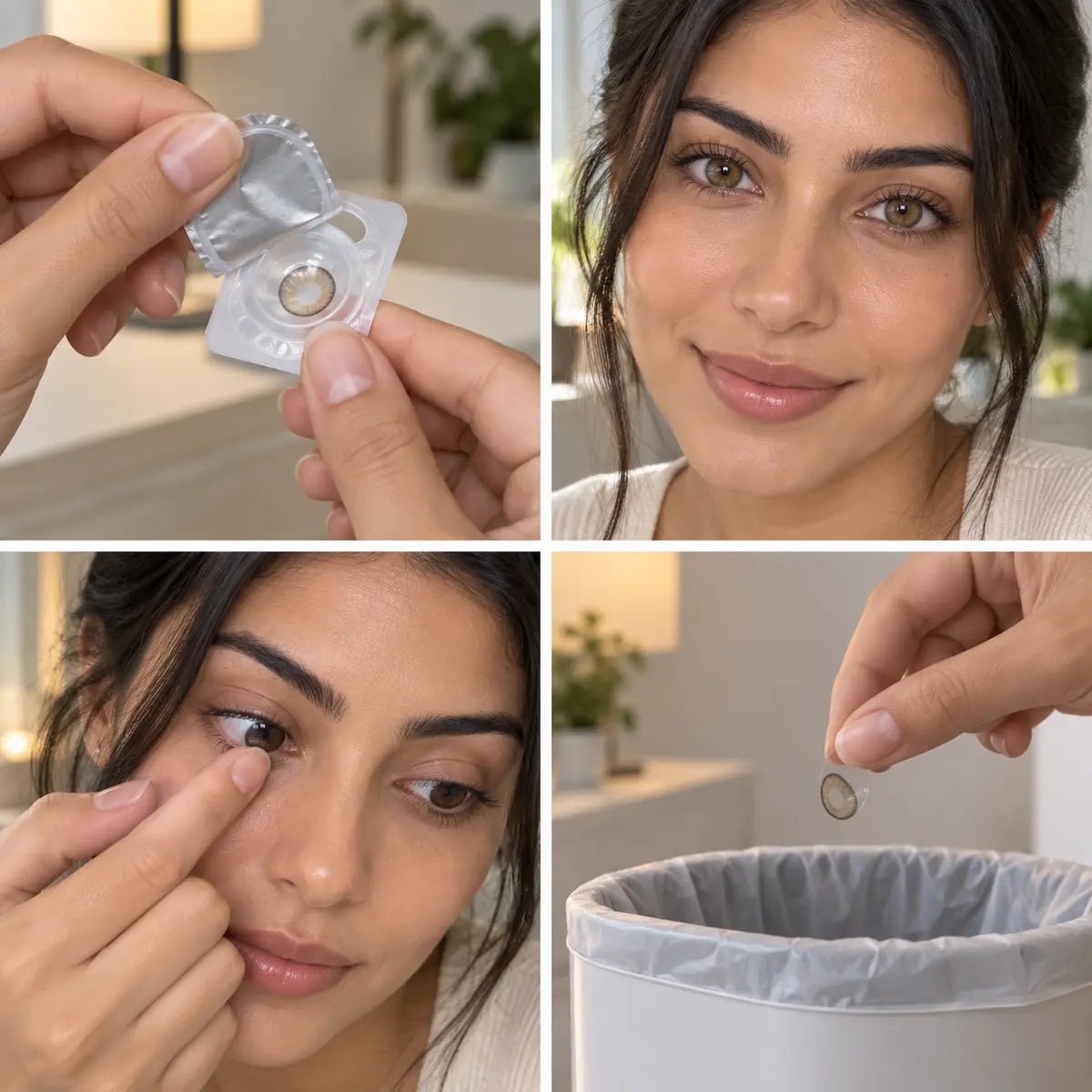
The simplest practical sequence is: confirm the correct unopened blister, wash and dry your hands, insert the lens as taught, wear within the advised plan, remove it before sleep or water exposure, and discard it after use. If symptoms develop, stop wear and seek professional advice rather than treating a fresh lens as a test.
Before opening, verify the exact daily product
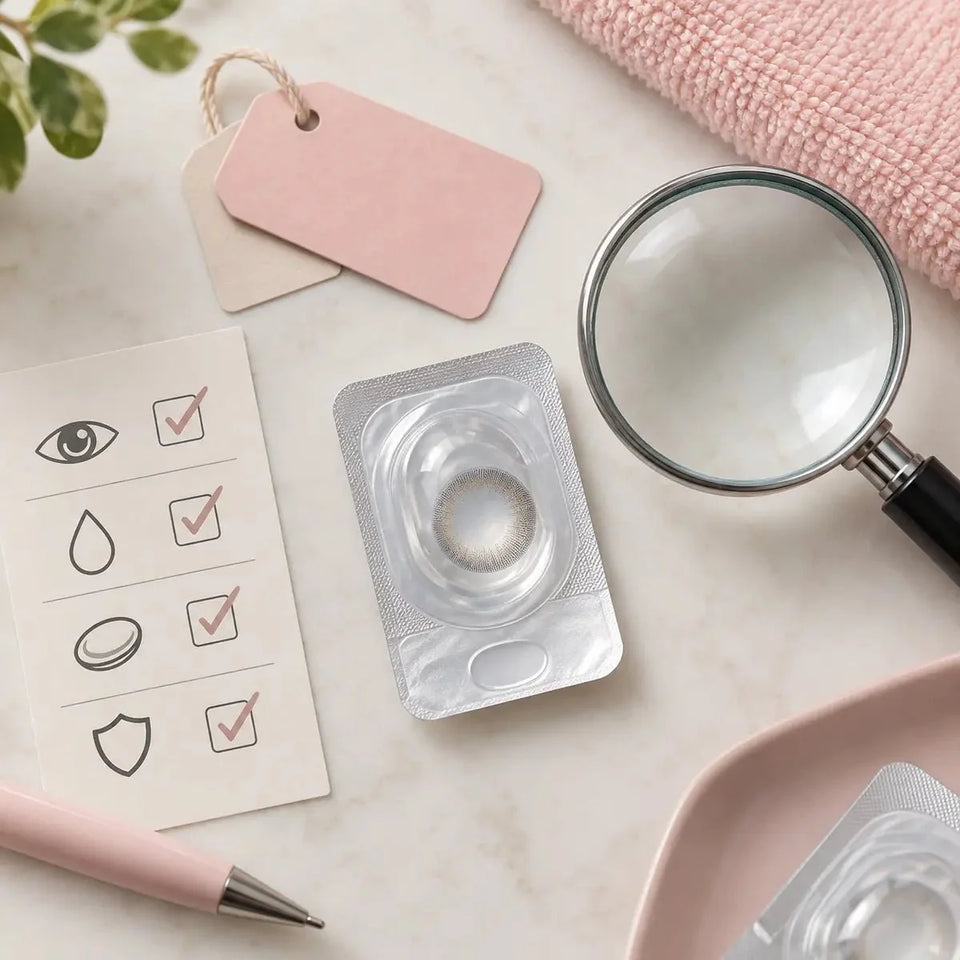
Read the full brand, model, color and replacement version on the box and blister. Compare the power and any other fitted parameters for each eye with your contact lens prescription. A monthly and daily version may share a shade name but have different specifications or instructions. A correct-looking color is not enough if the replacement format or power is wrong.
Check the package expiration date and inspect the blister seal. If the packaging is damaged, opened or inconsistent with the ordered product, do not improvise by using it. Keep the packaging and contact the seller or eye-care professional as appropriate. If your right and left eyes use different powers, place the blisters so you can distinguish them before opening either one.
Understand the package count. Boxes may list individual lenses rather than pairs. If both eyes need a lens for each wearing occasion, two individual lenses are used each time, possibly from different power boxes. Plan your supply from the actual count and your prescribed schedule rather than a marketing phrase such as “ten-pack.”
The FDA's buying guidance emphasizes an accurate, current contact lens prescription. This is U.S. guidance; follow the applicable process where you live. Do not switch to another colorful daily product merely because the same power is available. Discuss the exact alternative with your eye-care professional.
Plan around the day's activities
Before opening a blister, ask when you will be able to remove the lens cleanly and how you will see afterward if you use vision correction. Bring backup glasses when needed. A spare unopened daily lens can help if a lens is dropped before wear, but it is not a reason to continue wearing contacts when your eye is irritated.
Consider water and sleep plans. The CDC's prevention guidance advises avoiding water with contact lenses and following the prescribed wear schedule. If you expect to swim, shower or nap, plan removal beforehand and use glasses or another suitable option. A daily lens removed for that activity is not stored and reinserted later.
For a long day, resist the assumption that “daily” guarantees all-day comfort. Wearing time is individual and product-specific. Follow your eye-care professional's plan rather than aiming to keep a color on for the entire itinerary. A photograph, event or outfit is not a reason to continue if you should remove the lens.
Identify a clean place for removal before leaving home. This is especially useful during travel or events, when a bathroom may be crowded or you may not have dry hands and a stable surface. The plan can be simple: leave the lenses out of a planned water activity, keep glasses available, and know where you can wash and dry your hands.
Understand replacement versus wearing time
Replacement schedule and wearing schedule answer different questions. Replacement tells you when a lens is discarded or exchanged. Wearing schedule concerns when and how long the fitted product may remain on the eye under professional instructions. “Daily disposable” means a one-use replacement format; it does not mean every person should wear the lens from waking until bedtime or that it is appropriate for overnight wear. Ask your eye-care professional to explain both schedules for the exact model if the packaging seems unclear.
That distinction also prevents confusion between “daily wear” and “daily disposable.” A reusable lens may be worn during the day and removed at night, yet still follow a longer replacement cycle with cleaning and storage. A daily disposable is opened fresh, used according to the prescribed wearing plan and discarded after the wearing session. If a product title merely says “daily,” read the manufacturer's full replacement description before assuming what happens after removal.
The same separation applies to color. A daily blue print is not necessarily lighter or safer to wear longer than a reusable blue print. The printed design affects appearance; the prescribed material and schedule determine handling. Compare colors only among lens options appropriate for your eyes and your routine.
Pack for the actual routine, not for reuse
For a planned day away from home, pack your glasses if you need correction, a copy or photograph of the product details, and unopened spare blisters only if advised and practical. A spare can replace a lens dropped before wear; it cannot fix an irritated eye or turn a removed daily into a lens that should be worn again. If your two eyes need different powers, keep the spare blisters clearly separated.
Choose a removal location with access to soap, water for handwashing and a way to dry hands thoroughly. The water belongs on your hands during washing, not on the lens. If the only available setting makes clean handling difficult, use your backup plan and ask your professional for practical advice before a future trip. Do not invent a new cleaning or storage method in transit.
When planning an event with photography, estimate the time you will need lenses rather than aiming for the longest possible wear. You can take your color reference photo early under ordinary light and follow the removal plan later without waiting for discomfort. That approach lets the cosmetic question stay within the routine chosen for eye health.
Prepare clean hands and a clear workspace
Wash hands with soap and water, then dry them thoroughly before touching lenses. Water used for washing hands should not remain on your fingers when you handle a lens. Avoid rinsing the lens with tap or bottled water, and do not use saliva. Follow the insertion and removal method taught by your eye-care professional for the exact product.
Clear a stable space and open one blister at a time if your eyes need different powers. Check that the lens is intact and oriented as instructed before placement. If it falls onto an unclean surface, do not simply rinse it under a faucet and put it in your eye. Use a fresh unopened lens only when your eye is comfortable and further wear remains appropriate.
If a lens feels wrong immediately, remove it and assess the situation according to the professional instructions you received. A torn lens, an unexpectedly different product or a persistent symptom calls for more than another attempt at insertion. Do not assume the issue is merely that a dark-eye print feels unfamiliar because the color looks different in the mirror.
Keep handling simple. Daily disposables do not require a storage case for another wearing session. Carrying a case to “save” one after a short wear can blur the single-use rule. If you need a different schedule for your routine, discuss a suitable alternative rather than changing how the daily lens is used.
Assess the color without changing the wear plan
On a dark iris, look at the exact print's middle coverage, the visible brown near the pupil and any outer ring. A close-up can reveal details that disappear at conversation distance. A full-face view in ordinary indoor light can show whether the overall effect is as subtle or noticeable as you wanted.
Use unfiltered photographs with similar distance and camera settings if you compare before and after. Diffuse daylight and familiar indoor light are useful because studio flashes or ring lights may exaggerate the visible print. Treat the result as an observation on your eye under those conditions, not as a product guarantee for everyone with dark eyes.
You do not need to extend wear for a color test. Take a picture within the wearing plan your professional has given you, then remove the lens when the plan calls for it. A beautiful shade cannot validate a poor fit, and a still photograph cannot show all the movement or health information assessed during a fitting.
If a color disappoints, note the exact product and what looked different from your expectation: perhaps the green reads hazel, the gray is barely visible indoors, or the ring feels too dark. That observation can guide a future discussion about another appropriately fitted design. Do not solve the problem by wearing the lens longer or switching to an unapproved version.
What to do when the routine is interrupted
Shower or swim ahead: Remove lenses before water exposure. Do not save a used daily in a case for later. Plan glasses or another suitable way to see afterward.
Nap or overnight travel: Remove lenses before sleeping unless your eye-care professional has given specific instructions for another prescribed product and schedule. A daily disposable label does not authorize sleeping in the lens.
Lens dropped: If a lens contacts an unclean surface, do not use water as a rescue rinse. An unopened spare may be used only if the eye is comfortable and continued wear is appropriate under your plan.
Unexpected irritation: Remove the lens. Do not put a fresh daily lens into a symptomatic eye as a diagnostic experiment. Seek eye-care guidance, especially when pain, redness or visual change persists.
Short planned break: A removed daily lens is not cleaned and stored for another wear. If your day regularly requires removal and reinsertion, discuss that practical need with your eye-care professional while selecting a lens type.
These situations differ because a routine interruption and a symptomatic eye have different next steps. The presence of a spare blister solves a supply problem, not a medical question. Keep that distinction clear when traveling or getting ready for an event.
After removal: discard a routinely used daily
Remove the lens using the method you were taught, with clean, dry hands. Under an ordinary single-use routine, discard it after use. Do not disinfect and store it for tomorrow, even if you wore it briefly. A lens case or solution does not turn a daily disposable into a reusable product.
If you removed a lens because of a significant problem, tell your eye-care professional exactly which product you wore and ask whether to retain the suspect lens for assessment. Retaining a problem lens for a clinician is different from saving it for later wear. The safest next step for symptoms depends on professional advice, not the fact that the blister was opened only recently.
Keep the package information or a photograph of the box if you need to identify the exact lens later. That record is useful when you use different powers or have recently changed colors. It also helps separate a product issue from confusion over which version was opened.
Know when to stop and whom to contact
Remove contact lenses and seek prompt eye-care advice if you have pain, persistent redness, light sensitivity, discharge or blurred vision. The FDA's contact lens risk guidance explains why eye symptoms should be taken seriously. Do not assume a pleasing appearance or apparently centered lens means it is safe to continue.
Tell the professional when the symptoms began, which eye was affected, the exact product and whether water exposure, sleep or a handling problem occurred. Follow the advice you receive about the lens and future wear. Avoid treating a fresh blister as a way to “test” whether the eye has recovered.
The seller can help with an incorrect order, damaged package or return policy. The eye-care professional addresses fit and symptoms. These issues can overlap, but a store conversation does not replace a clinical assessment, and a refund discussion should not delay care.
A checklist before a planned wearing day
- Confirm the exact fitted daily product, shade and power for each eye.
- Check unopened blister seals, expiration dates and the number of individual lenses available.
- Plan how and when you will remove the lenses; pack backup glasses if needed.
- Wash and dry hands thoroughly before handling; keep lenses away from water.
- Assess color only within the prescribed wearing plan, using ordinary light as your reference.
- Remove before sleep or water activities, discard after ordinary use, and seek advice for symptoms.
Browse Daily Contacts to inspect currently listed options, then verify the exact product and your fitted parameters before ordering. KPOP2's Wear & Care page offers additional handling reminders. For a separate discussion of print opacity and lighting on brown eyes, read the daily colored contact appearance guide.
KPOP2 Editorial Team · Reviewed September 27, 2026. This guide summarizes the linked CDC and FDA guidance and does not set an individual wearing duration or replace fitting and hands-on instruction. Color observations are editorial, not controlled wear tests.