Care & authenticity
Daily Colored Contacts for Travel: Pack Counts and Spare Lenses
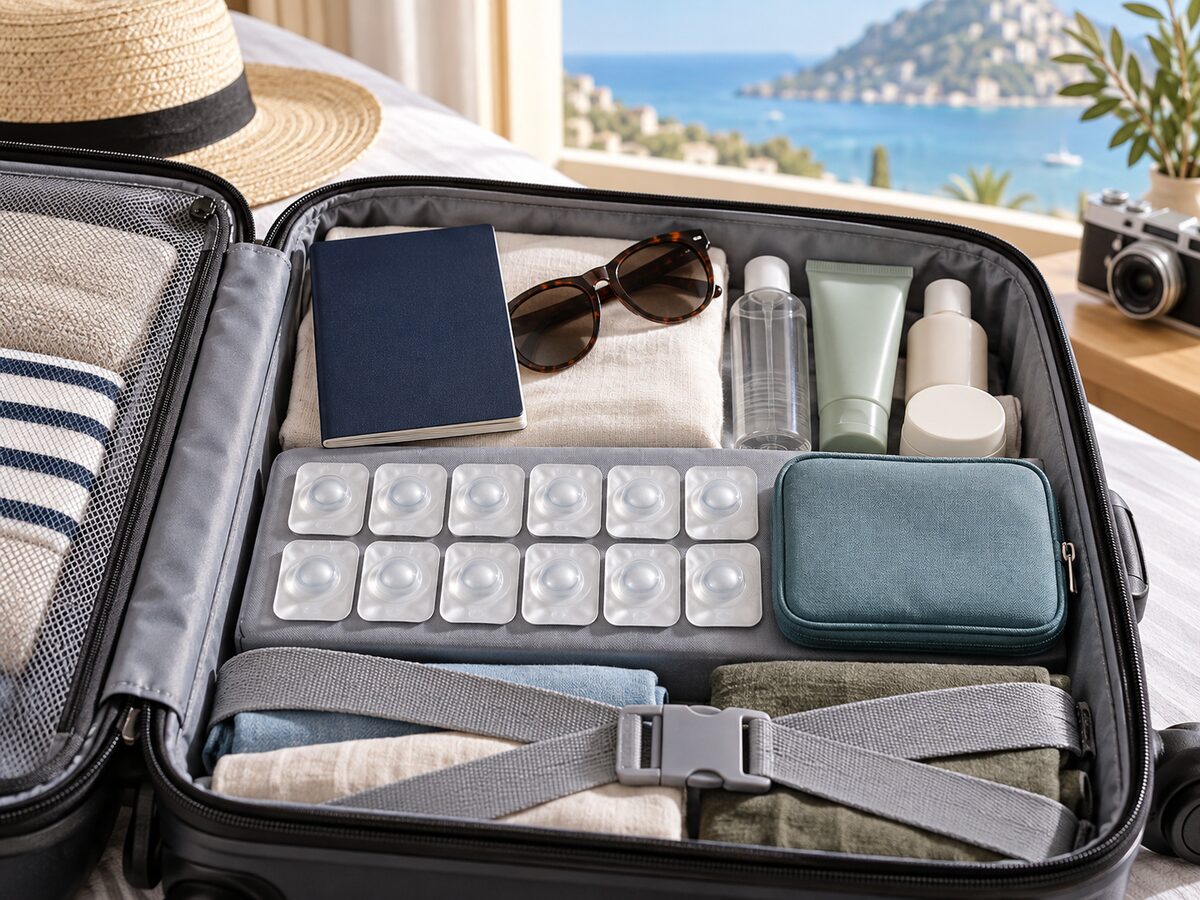
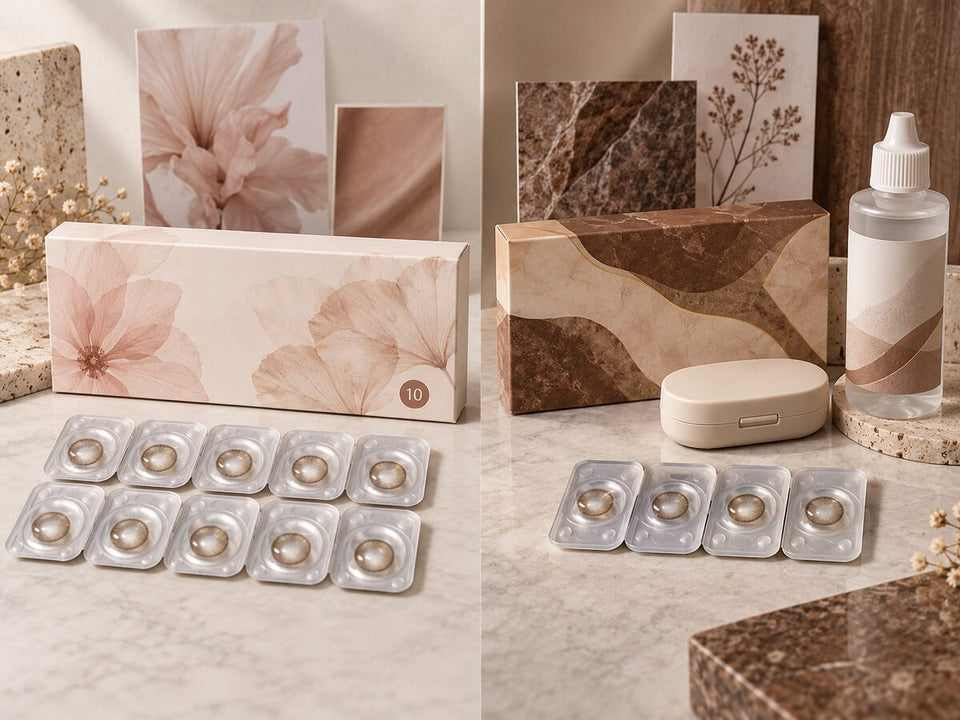
Daily disposable colored contacts can simplify a travel routine, but the packing count must follow the exact product, your prescription for each eye, and the number of planned wearing occasions. Five two-eye uses require ten individual fresh lenses before spares. A 10-piece box is a count of lenses, not necessarily ten two-eye days. The current KPOP2 listings for I-DOL Canna Roze Beige Brown 1Day (10p) and OLENS Misty Natural Choco (20p) illustrate how to compare pack sizes without assuming the two designs are interchangeable. Count, label, and pack for the trip you will actually take.
In this guide
Confirm the exact daily lens you are prescribed
Daily disposable is a replacement format, not a product identity. I-DOL Canna Roze Beige Brown 1Day (10p) and OLENS Misty Natural Choco (20p) are separate current Shopify products. Both are listed as daily disposable colored contacts, but they differ in brand, design, printed diameter, material, water content, and package quantity. Choose the lens your eye-care professional has fitted and prescribed; do not treat one as a backup for the other based on a similar brown appearance.
The current Canna Roze 1Day listing says 10 lenses per box, with a 13.2 mm graphic diameter, 14.2 mm overall diameter, 8.7 mm base curve, silicone hydrogel material, and 43% water content. The current Misty Natural Choco listing says 20 lenses per box, with a 13.1 mm graphic diameter, 14.2 mm overall diameter, 8.7 mm base curve, Puscon material, and 48% water content. These are current listing facts, not a fitting recommendation.
Matching base curve and overall diameter do not make the products interchangeable. Material, design, and other features differ, and a contact lens prescription is product-specific. If you normally wear a reusable version and want a daily version for travel, confirm the format change with your eye-care professional before departure. A related name or graphic does not establish that the daily lens will fit or correct vision the same way.
Read the prescribed power for each eye and the available options on the live product page. Both current listings show a general 0.00 to -10.00 range, but that does not prove a specific variant is in stock. If you have astigmatism or another optical requirement, a standard spherical daily colored lens may not meet it. Ask your professional about appropriate travel options rather than choosing from the pack size alone.
Check the boxes when they arrive: full product name, power, quantity, seal, and expiration date. Keep lenses in their original, labeled packaging until use. A blister without its box can be harder to identify later, especially if right and left powers differ. Do not pack unidentified lenses as emergency spares.
Read pack counts as individual lenses
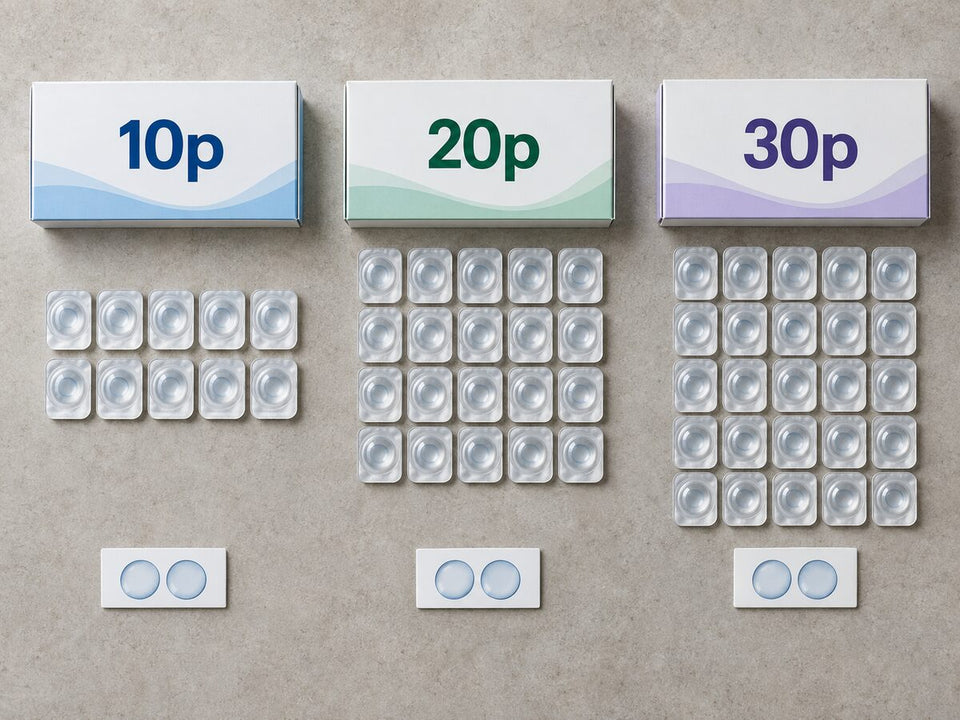
“10p” means 10 individual lenses in the current Canna Roze box. “20p” means 20 individual lenses in the current Misty Natural Choco box. If you wear a lens in each eye for one day, that occasion uses two individual lenses. A 10-piece box can therefore cover five two-eye uses when both eyes can use the same correctly prescribed variant. A 20-piece box can cover ten such uses under the same assumption.
Different powers change the packing calculation. A single box usually contains one selected power. If your right eye and left eye require different powers, you may need one box of each power. For a five-use trip, that would be five right-eye lenses and five left-eye lenses before reserves. You cannot count ten lenses of one power as a complete five-day supply for two different prescriptions.
The package count is not the same as calendar days away. A seven-day trip may include only four planned contact-lens days because you intend to wear glasses on other days. Conversely, a long event day may involve a planned fresh pair after removal, which would add another wearing occasion if your eye-care professional’s instructions permit it. Count planned uses, not just hotel nights.
Do not reuse a daily disposable lens to make a pack stretch further. The current product pages instruct a fresh lens for each day of wear and disposal after removal. If a lens is removed, follow the exact product and professional instructions; do not clean and store it as if it were a reusable lens. Pack enough fresh lenses for realistic changes and an unexpected damaged blister.
Count wearing occasions, not only travel days
Start with a simple formula: planned two-eye wearing occasions multiplied by two individual lenses. For five occasions, 5 × 2 = 10 lenses. Then allocate those ten by eye and power, and only then add a reserve. This order of calculation prevents a pack-size headline from obscuring a missing right-eye or left-eye supply.
Example: you travel for seven days but plan to wear contacts on days one, two, four, five, and seven. That is five planned two-eye occasions, so you need ten individual fresh lenses before spares. If both eyes use the same exact prescribed power and model, a current 10-piece box might supply that base count. If the eyes differ, you need five correctly prescribed lenses for each eye from their respective boxes.
Another example: you plan contacts for three days, glasses for two days, and a formal event where you expect to put in a new pair after removing the first. Count four wearing occasions, not three contact “days.” That means eight individual lenses before spares. Do not plan a second insertion casually if the wear schedule or eye health advice says otherwise; confirm the routine with your eye-care professional.
Think through the departure and return days. A very early flight may make glasses more practical than inserting lenses while tired. A late return may require a full day’s wear and a fresh pair. A disrupted itinerary can change the count, so add a reserve rather than packing exactly the mathematical minimum. The reserve should still be the exact prescribed lens for each eye.
Write the calculation on a packing note: dates or occasions, right-eye count, left-eye count, and reserve count. If you plan two different color styles, make two separate product rows. You may choose one color for an event and another for daily sightseeing, but the optical prescription and fit must be confirmed for both. Do not use a different color as an unapproved substitute if you run out.
Allocate the supply to each eye
The most common packing error is having enough lenses in total but not enough in the correct power for one eye. Count right-eye and left-eye blisters independently. If the prescriptions are different, label the two sets clearly and keep their original boxes or a copy of the label. Do not rely only on a case color or a handwritten “R” that could come loose in luggage.
Make a two-column check. For a five-occasion plan, write “right: five planned plus [chosen reserve]” and “left: five planned plus [chosen reserve].” Fill the reserve numbers according to your trip length, access to replacements, and professional advice. The article cannot set a universal spare count for every traveler. It can ensure the same logic is applied to both eyes.
If one eye has a different lens model or a toric prescription, keep its packing line separate. A standard spherical color lens for the other eye is not an automatic backup. Confirm the exact product name and parameters for each eye before departure. A trip is a poor time to discover that a cosmetically similar lens does not match the prescribed configuration.
For identical prescriptions in both eyes, a shared pack may simplify counting, but product identity still matters. Check that every blister belongs to the correct box and has a valid expiration date. Do not mix loose blisters from different brands in an unmarked pouch. A quick photograph of the box label can help you verify an item while away, but keep the physical packaging as well when practical.
Add a practical reserve without changing products
A spare is for a real disruption: a torn blister, a dropped lens, a delayed return, or an unplanned event. Decide how many extra two-eye occasions you want to cover, then add that many right-eye and left-eye lenses. For one additional two-eye occasion, add one correctly prescribed lens for each eye. This avoids packing two extras of the wrong power.
Keep the reserve sealed and identified. A spare lens is not useful if you cannot tell which eye it belongs to or whether it is expired. Pack a backup pair of glasses with a current prescription as the CDC recommends. Glasses can be especially helpful if eyes become irritated or a lens is unavailable.
Do not treat a related daily product as a universal spare. The current Canna Roze and Misty Natural Choco listings share a base curve and overall diameter, but they have different materials and designs. Matching two measurements does not establish fit or optical suitability. If you want both as travel options, have the exact products approved for you in advance.
If the trip is long or remote, ask your eye-care professional how to prepare for interrupted access to lenses. That conversation can help determine reserve quantity and a backup vision plan. An extra box may be convenient, but it should still be the right product and power and used within its expiration date.
Plan for flights and current airport rules
Keep enough correctly prescribed lenses and backup glasses where you can access them if checked baggage is delayed. Check the current carry-on and liquid rules for every airport and carrier on your route before packing solution or other liquids. Requirements can change and may vary by country. The official airport and security authority pages are the right source for your itinerary.
Daily disposables can reduce the need to clean and store a lens for reuse, but they do not remove every travel consideration. You still need clean hands, a safe place to insert or remove them, and a way to switch to glasses if you cannot wear the lens. Do not use tap water or an airplane sink to rinse a daily lens. If a lens needs to come out, follow the exact product’s disposal instructions.
Think through the flight rather than only the destination. A very long travel day can tempt you to sleep in contacts. The CDC advises removing lenses before sleep unless an eye-care provider directs otherwise. If you expect to sleep, plan a practical glasses period and a clean way to handle the lens. Do not wear a daily disposable overnight merely to avoid opening a fresh pair later.
Keep the original box or a readable label with the blisters. If security, a pharmacist, or an eye-care provider needs to know what you are wearing, the exact product and power are more useful than a color nickname. A copy of your current contact lens prescription can also help with a replacement question while away. Keep private health information stored securely.
For international travel, check destination rules for purchasing replacements and do not assume your usual brand or power is available locally. If you cannot obtain the exact prescribed lens, use your backup glasses and seek professional advice rather than choosing a similar color from a shop shelf. A visually close product may be a different lens.
Protect your wear routine away from home
Travel can disrupt ordinary hygiene. Wash and dry your hands before handling lenses, even when rushing to a tour or event. Insert a fresh lens according to your professional’s instructions. Avoid touching the lens with wet hands or placing it on an unclean surface. A small, organized pouch can make the routine easier without encouraging shortcuts.
Remove lenses before swimming or showering. The CDC warns against water exposure because it can increase infection risk. Do not wear daily contacts in a pool, hot spring, or beach water simply because you plan to discard them afterward. Follow your eye-care professional’s advice for the activity and have glasses or another approved option available.
A daily disposable lens is used once and then discarded according to its instructions. Do not save it in solution to wear the next day. That would turn a single-use product into an improvised reusable one. The product pages for Canna Roze 1Day and Misty Natural Choco both instruct a fresh lens for each day of wear and disposal after removal.
Check how your eyes feel. Dry cabin air, late nights, and long sightseeing days can make a traveler more aware of lens wear. If you have pain, redness, discharge, light sensitivity, or blurred vision, remove the lens and contact an eye-care professional promptly. Do not keep trying fresh lenses to push through a problem. Your backup glasses are part of the travel plan for that reason.
Maintain the prescribed schedule even when an event runs late. A beautiful eye look is not a reason to sleep in lenses or exceed the advice you received. If you are uncertain about a long flight or a photo event, ask your professional before departure how to manage wear time and when to switch to glasses.
Make a packing record you can use on the road
A useful packing note has separate lines for each product and eye. Include the full model name, power, number of planned lenses, number of reserve lenses, total packed, expiration date, and where the sealed blisters are stored. If you bring both Canna Roze 1Day and Misty Natural Choco, create distinct rows even if the color looks similar.
Before leaving, count physical blisters rather than assuming a box is full. A partially used 20-piece box might contain only seven lenses. Check the printed power on each pack or the original carton. If your two eyes differ, verify each stack against the correct prescription. This is a simple but important final check.
Keep a small record of what you use during the trip. A phone note can mark each opened pair and the remaining count. This is especially helpful if an itinerary changes or you decide to wear glasses for a day. Do not reuse a discarded daily lens to stretch the remaining supply. If you run short, rely on the backup vision plan or contact an eye-care professional.
At the end of the trip, count unopened, unexpired blisters and return them to a clearly labeled place. Do not mix them into a different product box. The next journey should begin with a fresh inventory and current prescription check rather than an assumption based on the old packing list.
When a travel plan changes
An extra event is added: Update the occasion count immediately. One additional two-eye wear usually means one new lens for each eye. Check whether the reserve still covers a damaged blister or delay after using that pair. If it does not, decide whether you can obtain more of the exact prescribed lens before the event or wear glasses instead.
A planned lens day becomes a glasses day: Keep the unused blisters sealed and labeled. Do not assume the lens you already inserted can be saved for another day. A daily disposable that has been worn and removed is not a fresh unopened lens. Update the remaining count in your note so you do not overestimate what is available.
A blister is damaged before insertion: Use another unopened lens of the same prescribed product and eye-specific option, if you have one. Do not use a lens with compromised packaging. Mark the damaged item as unavailable in your count. If the correct reserve is gone, switch to the backup vision plan rather than improvising with another brand or power.
A suitcase is delayed: Lenses and backup glasses carried where you can access them may bridge the interruption. That is why it is useful to divide supplies thoughtfully rather than placing every lens in one checked bag. Follow current airline and security rules for your route. Do not assume you can buy the same exact product at the destination.
You feel unwell or your eyes are irritated: Remove the lens and seek professional advice when symptoms warrant it. Do not use the remaining travel supply as a series of trials to see whether a fresh pair feels better. Your health, not the calendar plan, decides whether to continue lens wear.
Keep the product names tied to the math
A common error is to calculate correctly and then select the wrong box. “Twelve lenses” is not enough information when two products and two powers are involved. The order should specify the exact brand, full product name, power for each eye, and physical number of blisters needed. Match those details to the live listing and your prescription before checkout.
The current Canna Roze 1Day and Misty Natural Choco listings each show a 14.2 mm overall diameter and 8.7 mm base curve. Those shared numbers can be useful for reading a product table, but they do not make the lenses identical. Their graphic diameters, materials, water content, and package counts differ. More importantly, fit must be confirmed for the exact product rather than inferred from a matching pair of published measurements.
When the products arrive, do a pre-trip audit: count sealed blisters, verify the labels and powers, check expiration dates, and separate right-eye and left-eye supplies if needed. Keep a copy of your current contact lens prescription. This is the point to fix a mismatch; discovering it at a hotel or airport leaves fewer options.
At the destination, use the record as an inventory tool, not as an excuse to extend wear. A schedule can tell you what is packed and what remains. It cannot make a damaged lens safe or a different product appropriate. The exact product instructions and your professional’s advice still govern every wear.
A departure-day review
On the day before leaving, lay out the supplies for each eye. Read every box label rather than relying on packaging color. Confirm full product name, selected power, unopened blister count, and expiration date. Compare the totals with the occasion plan and reserve. If a box is partially used, count the remaining blisters rather than its original “10p” or “20p” headline.
Check whether the first wearing occasion is before, during, or after the flight. If you will sleep on the flight, plan glasses or another professionally approved routine. Keep a clean place and enough time for insertion or removal. An airplane restroom may be inconvenient; the answer is planning the timing, not skipping hand hygiene or sleeping in lenses without approval.
Pack backup glasses where you can reach them. If you cannot safely continue wearing a lens, glasses are a practical alternative while you seek advice. Make sure the prescription for the glasses is current enough for your needs. A spare colored lens cannot solve every problem, especially when symptoms make further contact lens wear inappropriate.
Review activities involving water. A pool day, beach outing, or spa visit is not an ordinary lens day without extra planning. The CDC advises removing lenses before swimming or showering. Decide in advance when glasses or another approved option will be used, then adjust your occasion count. Do not use a daily disposable lens in water because it will be discarded later.
Check the current transport rules rather than memorizing a general statement about liquids. The applicable airport security authority and airline may have rules for carry-on liquids and medical items. A rule verified for one airport may not govern a connection in another country. Look up the route shortly before travel and keep needed labels or documentation accessible.
Finally, write a contact plan for a problem away from home: your eye-care professional’s office, your prescription details, the exact product names, and where to seek local care if needed. This is particularly helpful if a lens causes pain or vision changes. Do not wait until symptoms appear to discover that you cannot identify the product you are wearing.
After the trip, note what was used and what remained unopened. If the plan consistently overpacked or underpacked, adjust your future reserve with your professional’s advice and destination circumstances in mind. The best packing method is the one that keeps the exact lens, eye side, and realistic wearing occasions clear from departure through return.
Daily colored contacts for travel: common questions
How many lenses do I need for five two-eye uses?
Ten individual fresh lenses before spares: one for the right eye and one for the left eye at each of five wearing occasions. Allocate the count by eye and prescribed power. A 10-piece box can cover that base count only when every lens in it is the correct product and option for the two eyes.
Does a 20-piece box mean twenty days of wear?
Not for a two-eye wearer. A 20-piece box contains twenty individual lenses on the current Misty Natural Choco listing. Two lenses per occasion would cover ten two-eye uses before reserves if both eyes can use the same prescribed variant. Different powers may require separate boxes.
Can I pack Misty Natural Choco as a backup for Canna Roze 1Day?
Only if your eye-care professional has fitted and prescribed the exact Misty product for you. Similar base curve and overall diameter do not make different brands and materials interchangeable. A backup must be appropriate for the intended eye, not merely a similar brown color.
Can I reuse a daily lens after removing it mid-trip?
Do not treat a daily disposable lens as reusable. Follow the exact product instructions, which on the current listings call for a fresh lens for each day of wear and disposal after removal. Pack enough fresh lenses for the wearing occasions you realistically expect, including an approved second pair if your professional advises it.
Should I bring contact lens solution for daily disposables?
You do not clean and store daily disposable lenses for reuse. Other approved eye-care supplies may still be part of your personal plan, and backup glasses are useful. Ask your eye-care professional what to bring. If you carry liquids, check current security rules for the specific airports and countries on your route.
What if my flight is delayed and I run out?
Use your backup glasses or another professionally approved vision option. Do not reuse a discarded daily lens or buy an unfamiliar product by color alone. A reserve calculated for each eye can reduce this risk, but no packing plan guarantees every disruption can be covered.
What if my eye becomes red or painful while away?
Remove the lens and seek prompt eye-care advice, especially with pain, discharge, light sensitivity, or blurred vision. Do not continue wearing contacts to complete the trip or switch brands to see if the problem disappears. Backup glasses can help you function while you get care.
For travel care guidance, see the CDC contact lens prevention page and the FDA contact lens buying guide. For cabin and liquid rules, check the official security authority for your actual route shortly before departure.
A sample five-use packing plan
Suppose you plan five contact-lens occasions, have the same prescribed product and power in both eyes, and choose one extra two-eye occasion as a reserve. The base need is ten individual lenses; the reserve adds two, for twelve total. A 10-piece box alone would be short for that plan. A 20-piece box would contain enough lenses in that specific shared-power scenario, assuming it is the exact prescribed product and all blisters are unopened and unexpired.
Now suppose the right eye and left eye require different powers. The same six-occasion total means six correctly powered right-eye lenses and six correctly powered left-eye lenses. You may need separate boxes of each option, even if the combined number of lenses in one box seems large enough. Check what each variant box actually contains before purchasing.
Finally, suppose you plan to wear Canna Roze for a portrait day and Misty Natural Choco for the remaining four occasions. Count the two products separately. Each still needs the correct lens for each eye, and both must be professionally approved. The boxes cannot be treated as one interchangeable pile of brown contacts. Your packing note should show the planned use and reserve for each exact model.
One final distinction makes the count easier: a spare is an unopened lens that matches a prescribed eye, while a backup is the broader plan for seeing safely if contacts cannot be worn. Extra blisters help with a damaged package or delayed trip. Glasses help when irritation makes contacts unsuitable. Pack both ideas deliberately.
Keep product packaging with the correct power and expiration details. If the packing record conflicts with a box label, resolve it before departure. The arithmetic is useful only when the underlying lens identity is correct.