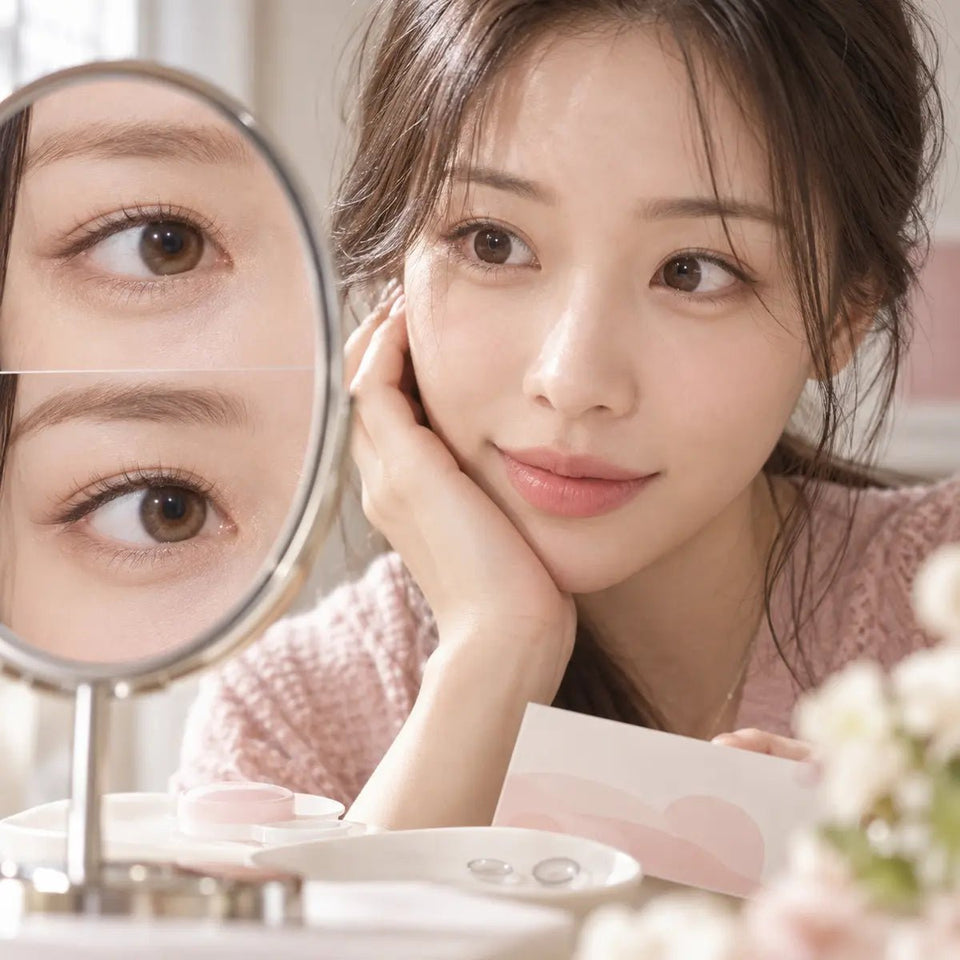
Toric & prescription
Where to Find Natural-Looking Prescription Contacts for Dark Eyes
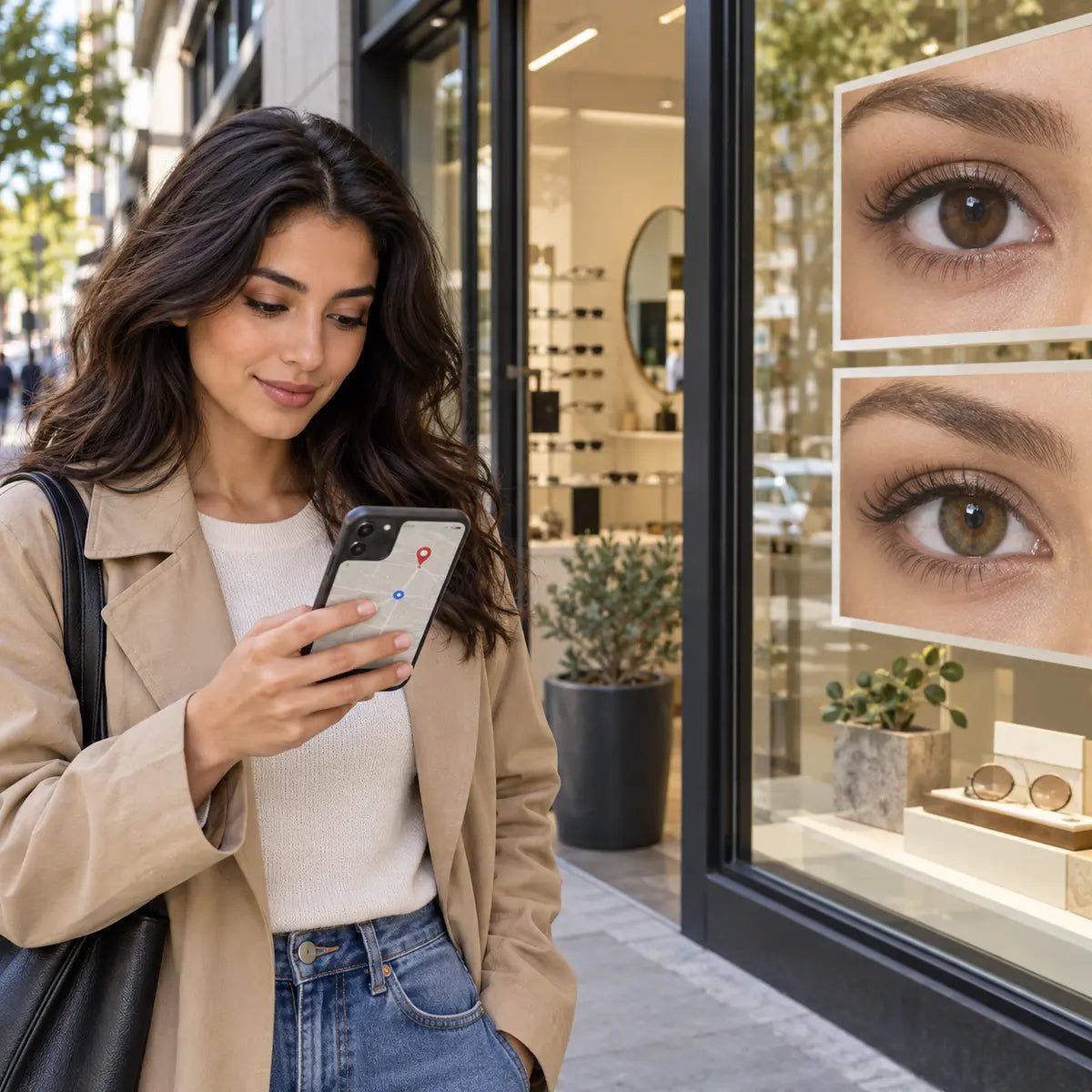
For natural-looking prescription colored contacts on dark eyes, first find a local seller that can supply the exact lens fitted for you. Before traveling, confirm the prescription process, full product identity and current stock by phone. At the counter, inspect the sealed box and compare its appearance with identified photos on a similar dark starting iris. A “near me” search locates possible retailers; it does not verify fit, authenticity, inventory or a natural-looking result.
In this guide

The short answer: verify the lens before the location
Search for optical retailers or other lawful contact lens sellers in your area, then narrow the list by what they can verify. Ask whether they handle the prescription requirements for your destination, stock the exact brand and model you have been fitted for, and will let you inspect an unopened box before purchase. If a seller cannot identify the precise version or offers an unfitted substitute solely because its shade is similar, keep looking or consult your eye-care professional.
The U.S. FDA buying guidance advises a current, valid contact lens prescription and accurate product selection. The FTC explains the U.S. seller verification process. These references describe U.S. requirements; rules and processes in other markets may differ. Confirm the requirements where you will buy and wear the lenses rather than assuming every local shop follows the same procedure.
Once a suitable product is identified, evaluate “natural” as a visual question. On dark eyes, a soft edge, a gradual transition around the pupil and a print that works with the brown iris may create a quieter result. Those are useful design clues, not guarantees. A photo of the exact lens on a similar starting iris is more informative than a shade name or the store's distance from your home.
Prepare the details you need before searching
Start with the current contact lens prescription or the exact fitted product information from your eye-care professional. Write down the complete brand and model, the required values for each eye, the replacement format and any instructions about suitable alternatives. If you need different powers in the two eyes, record them separately. Do not fill missing contact lens values from a glasses prescription.
Next, define your desired appearance. “Natural on dark eyes” might mean maintaining an overall brown look with a little more definition, adding a warm hazel note, or introducing muted olive that still blends at normal distance. Write one sentence about the change you want and one feature you want to avoid, such as a stark ring or obvious center boundary. This brief helps you evaluate a design without letting a promotional photo set the goal for you.
Make a shortlist of exact candidates before asking about local stock. KPOP2's Colored Contacts for Dark Eyes collection can help you inspect current listings, but an online category does not establish a nearby retailer's inventory. Record each exact product name and replacement version. Related shades in the same series may not have the same specifications or availability.
If you have not been fitted for a candidate, do not treat a familiar base curve or diameter as proof that it is interchangeable with your current lens. Those values are only part of the product identity. Ask your eye-care professional about a potential alternative before making it your purchase target.
A useful phone call before a store visit
Ask the retailer to read back the full product name, shade, replacement schedule and available prescription options for the specific box they can sell. Confirm whether it is physically in stock now, rather than merely orderable, and whether the powers or parameters you need are available for both eyes. Ask about the current prescription process and what documentation to bring.
A concise question is: “I have been fitted for [exact model and parameters]. Do you have that specific colored version in sealed boxes today, and what prescription information do you need?” The bracketed details are for your own use when calling; the seller's answer should identify a real product, not only a color family. If the staff member cannot confirm while you are on the phone, ask them to check and call back before you travel.
Ask whether you may inspect the unopened box for manufacturer, lot, expiry, lens count and specifications before paying. You can also ask whether the retailer has identified photographs of the exact design on dark brown eyes. A seller may not have that imagery, and absence of a photo is a limit on predicting the look rather than proof of a bad product.
Do not assume “available nearby” means it is appropriate for you. Online maps and marketplace listings can remain visible after inventory changes. Call again if the visit is time-sensitive. A longer trip to a store with accurate product identification and a clear verification process may be more useful than a nearby listing that cannot answer basic questions.
How to evaluate a contact lens seller
Look for accountable business contact details, a way to identify the exact manufacturer and product, original sealed packaging and an itemized record of what is sold. The seller should be able to explain the prescription process that applies in your market. In the United States, the FTC describes how a seller obtains a copy of a prescription or verifies prescription information with the prescriber when a copy is not supplied.
Be cautious if a seller says all decorative contacts are exempt from a prescription, suggests choosing any color without checking the fitted model, or offers a loose sample for a shared try-on. In the United States, FDA guidance says decorative lenses still require a prescription. Do not use another person's lens or a communal display lens to test a shade.
A retailer's willingness to answer questions matters, but a friendly explanation is not a clinical fit assessment. The store can confirm stock, labeling and sale terms. Your eye-care professional addresses whether an exact lens is suitable and how to respond to symptoms. Keep those roles separate during the decision.
Also check the seller's stated policy for an unopened product that does not match the order. Policies vary, so ask before payment rather than assuming a return will be available. Do not open sterile packaging simply to compare the printed color with a campaign photograph.
What looks natural on a dark brown iris?
A dark starting iris influences the print's final impression. Warm cocoa, hazel or muted olive patterns may visually blend with brown; a very pale opaque pattern can create a stronger contrast. A very translucent print may be subtle enough to disappear under indoor light. These are possible tendencies, not a ranking that works for every eye or brand.
Read the print in three zones. Near the pupil, note whether the colored pattern meets visible brown gradually or with a hard line. Across the middle, look at pigment density and transparent gaps. At the outer edge, decide whether a dark limbal ring creates the definition you want or looks more graphic than your brief. The shade name alone does not capture these design choices.
Graphic diameter concerns the printed area; overall diameter concerns the physical lens. One graphic measurement cannot establish how natural a lens will look, because ring contrast and center transitions also matter. Neither measurement alone establishes fit. Use product specifications for accurate identification, and leave clinical suitability to the fitting process.
Compare the look at normal face distance as well as close up. Tiny printed strokes may look elaborate in a macro photo and blend into a quiet tint in person. A hard ring can remain visible at a distance even if individual colors disappear. Decide which effect matters in the setting where you will actually wear the lens.
Grade the evidence behind the color claim
An identified photo of the exact product on a similar dark starting iris in ordinary light offers more useful evidence than a flat swatch. A before-and-after pair taken with similar camera settings is stronger still. A close-up helps with the center and edge; a full-face image helps you judge whether the result feels subtle during conversation.
Be careful with heavily edited images, strong ring lighting, flash and different exposure between the before and after views. Lighting can reveal or hide warm detail in the brown iris and alter the apparent color of the print. Camera processing can also move a shade toward gray, green or gold. Ask what the image actually establishes instead of expecting it to predict your individual outcome.
If a store shows a photograph of a similarly named daily or monthly version, confirm whether the replacement format and print are truly the same. A series-level image may be useful as inspiration but should not be treated as proof about a different exact lens. Keep an “unknown” note for details the seller cannot verify.
You can compare current online information before visiting, but the final purchase check belongs to the physical box and your fitted prescription. An appealing image does not override a mismatch in model, power or replacement format.
Inspect the actual unopened package
Read the manufacturer, full model, shade, right- and left-eye prescription values, base curve, diameter, replacement schedule, lens count, expiration date and lot information when shown. Confirm the packaging is intact and factory sealed. If a product has both graphic and overall diameter, note which number is which rather than assuming one label tells the whole story.
Compare those details with your fitting record before payment. Similar packaging across a series can make it easy to pick up a neighboring shade or a different replacement format. If the store substitutes another model because your choice is unavailable, pause and consult your eye-care professional. Matching shade names and numbers do not by themselves establish interchangeability.
Count the actual units. A box labeled with individual lenses is not automatically the same number of pairs. If the two eyes need different powers, ask how the order will be supplied and how long the boxes last under the stated replacement schedule. This is a practical cost and planning question, separate from color preference.
Keep the box and receipt details after purchase. They identify what you bought if the delivered or collected product differs from the order or if you later need professional guidance about the lens. Do not rely on a shelf tag or memory of the color name as your only record.
Plan wear, care and follow-up before purchase
Confirm whether the exact lens is daily disposable or reusable. A daily disposable is used once and discarded; a reusable product needs the cleaning, disinfection, storage and replacement routine instructed for that lens. The CDC's prevention guidance covers clean hands, water avoidance and proper care. The store should help you locate the manufacturer's written instructions, while your eye-care professional can resolve questions about your specific wear plan.
Do not choose a lens merely because it is available today if its replacement format or care routine does not suit your life. Ask about an appropriate alternative and its fitting rather than planning to stretch a daily lens or guess how to store a reusable one. Color and convenience cannot make an incorrect care method acceptable.
If you experience pain, persistent redness, light sensitivity, discharge or blurred vision, remove the lens and seek prompt professional advice. A return conversation with the seller is different from a symptom assessment. Keep the exact product identity ready for the professional and do not continue wear just because the lens looks natural.
For more general options, browse Natural Colored Contacts, then read the exact listing and KPOP2's prescription verification information. For routine handling, consult the wear and care guide. These pages help you prepare; none verifies a nearby retailer's live inventory.
KPOP2 Editorial Team · Reviewed September 27, 2026. This is a shopping and visual comparison guide, not a local stock listing, individual fitting or independent wear test. U.S. prescription-process statements rely on the linked FDA and FTC guidance; check requirements in your own market.