Toric & prescription
Do Prescription Colored Contacts Make Eyes Look Bigger?
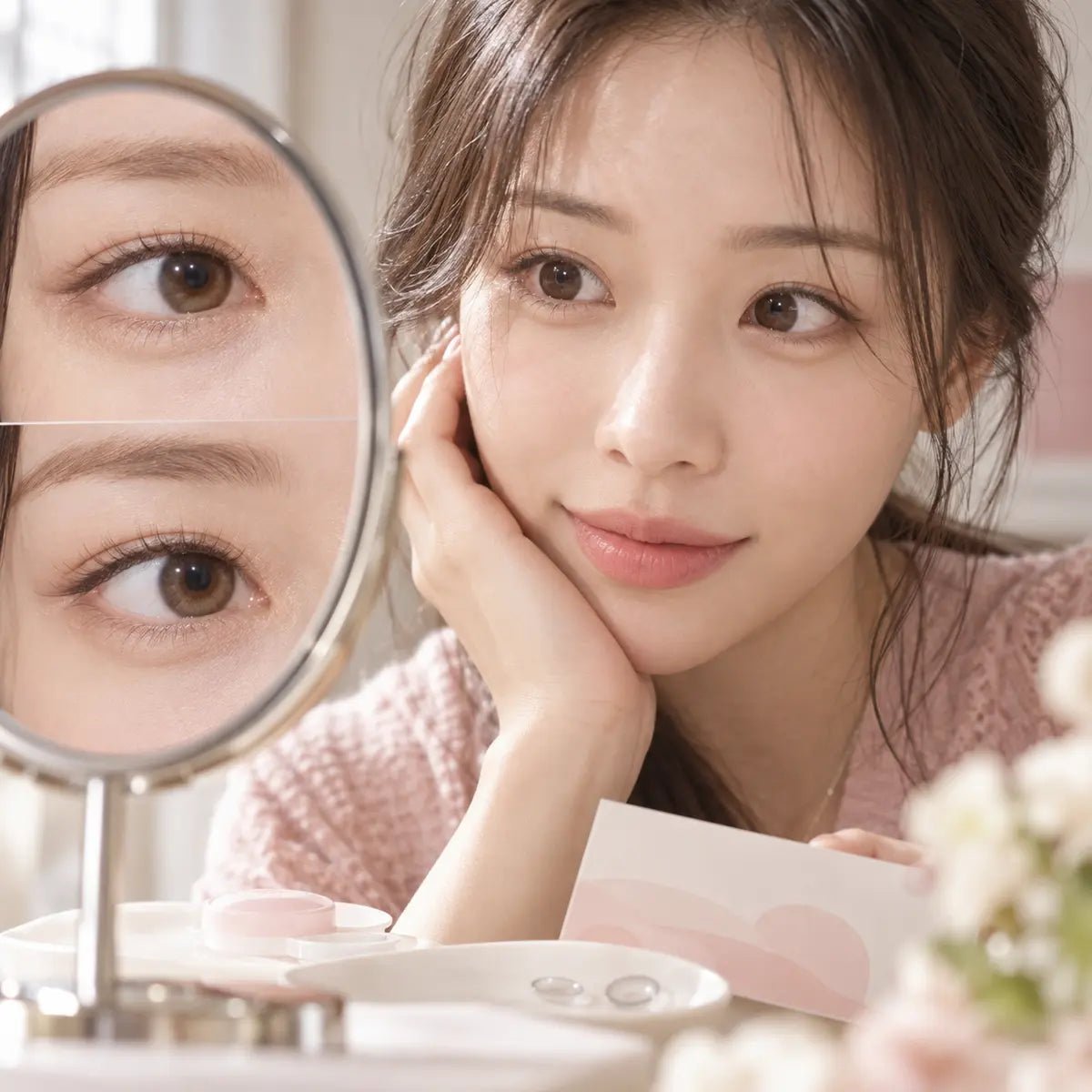
Prescription power does not make a contact lens look bigger. Power is for vision correction; a colored lens’s print and edge can make the iris appear more defined in a photo. Keep those decisions separate: match your current prescription and exact fitted product first, then compare cosmetic design among suitable options.
In this guide
Does prescription power change eye size?
No. Prescription power is an optical value, not a cosmetic enlargement setting. A stronger or weaker power does not determine how large the iris looks. A plano value such as 0.00 describes no spherical vision correction; it does not predict appearance, remove prescription requirements, or show whether a lens fits.
Printed color, edge contrast, pattern, and graphic diameter may affect how prominent the iris appears in a product image. That is a visual impression and varies with the exact design, natural iris, lighting, camera distance, and image editing. A lens does not change the physical size of the eye.
What contact lens prescription values mean
A contact lens prescription identifies optical correction for each eye. Sphere (SPH) indicates spherical correction; where needed, cylinder (CYL) and axis (AXIS) describe astigmatism correction. The right and left eye may have different values. Your exact prescription may also identify the brand or model and lens parameters selected for the fitting.
Use your current contact lens prescription, not a glasses prescription, a friend’s values, or a power chosen to achieve a style effect. Do not omit, round, or change a prescribed value to obtain a particular color or look. Ask your eye-care professional to explain any field that is unclear.
Which design features affect appearance?
Once the exact lens and prescription have been confirmed, compare the cosmetic print: base shade, color layers, pattern, outer ring, and center transition. A defined border or stronger contrast may look more outlined in a photo, while a blended print may appear softer. These are design observations, not promises about how a lens will look on you.
If your specific goal is a more enlarged-looking style, use our contact lens design guide for a big-eye effect to compare print and proportion. Review both close-up and face-distance images when available; photographs cannot verify a personal result.
Keep graphic and physical measurements separate
Graphic diameter (G.DIA) describes the colored printed area when the manufacturer lists it. Overall diameter (DIA) describes the complete lens. G.DIA may help compare cosmetic designs; DIA and other model parameters belong in a professional fitting discussion. Neither value should be used alone to select fit or prescription.
For a detailed explanation of DIA, G.DIA, and product size ranges, read our circle lens measurement guide. Do not substitute a similarly sized lens or transfer numbers from a different brand or model.
Match the exact listing to your prescription
A product page can display several colors, powers, and package choices. Check the exact brand, model, shade, lens type, and parameters selected for each eye. Confirm that the option includes every prescribed value that applies to you; a sphere dropdown alone may not describe a toric lens or another special design completely.
Also verify package quantity, replacement schedule, and care directions for the exact product. Similar shade names or appearance do not make lenses interchangeable. If a listing does not clearly identify the item or available prescription, ask the seller before ordering and your eye-care professional before substituting it.
What to confirm with your eye-care professional
Ask the professional who fitted your lenses to confirm the exact colored model and prescription for each eye. Check whether a fitting or updated prescription is needed for a different lens design. A prescription for one product does not automatically establish fit for another product, even when their power values look similar.
In the United States, decorative colored contacts require a prescription and professional fitting, including lenses that do not correct vision. Rules vary by location. Review the FDA’s colored and decorative lens guidance. For lens-type and replacement-schedule information, see the CDC contact lens types overview.
Follow the wear and care instructions for the exact lens. If you experience pain, unusual redness, light sensitivity, discharge, or blurred vision, remove it and contact an eye-care professional promptly.
Frequently asked questions
Do prescription colored contacts make eyes look bigger?
Prescription power does not. The printed pattern or edge may create a more defined visual impression in some images, but appearance varies by product and wearer.
Can I change contact lens power to change the appearance?
No. Do not change or select power for a cosmetic effect. Use the current prescription and ask an eye-care professional about the exact product.
Is 0.00 the same as no prescription?
No. 0.00 generally describes zero spherical correction. U.S. decorative colored lenses still require a prescription and fitting even when they do not correct vision.
Does G.DIA determine whether a lens will fit?
No. G.DIA describes the printed color area. It is not a fit test or a substitute for a professional assessment.
Can I use the prescription from another brand?
Do not assume lenses are interchangeable. Ask your eye-care professional to assess the exact brand and model.
Editorial note: This guide separates vision-correction values from cosmetic print details. U.S. decorative-lens prescription information is based on linked FDA guidance. Requirements may differ outside the United States. This article does not replace an examination, fitting, or prescription.