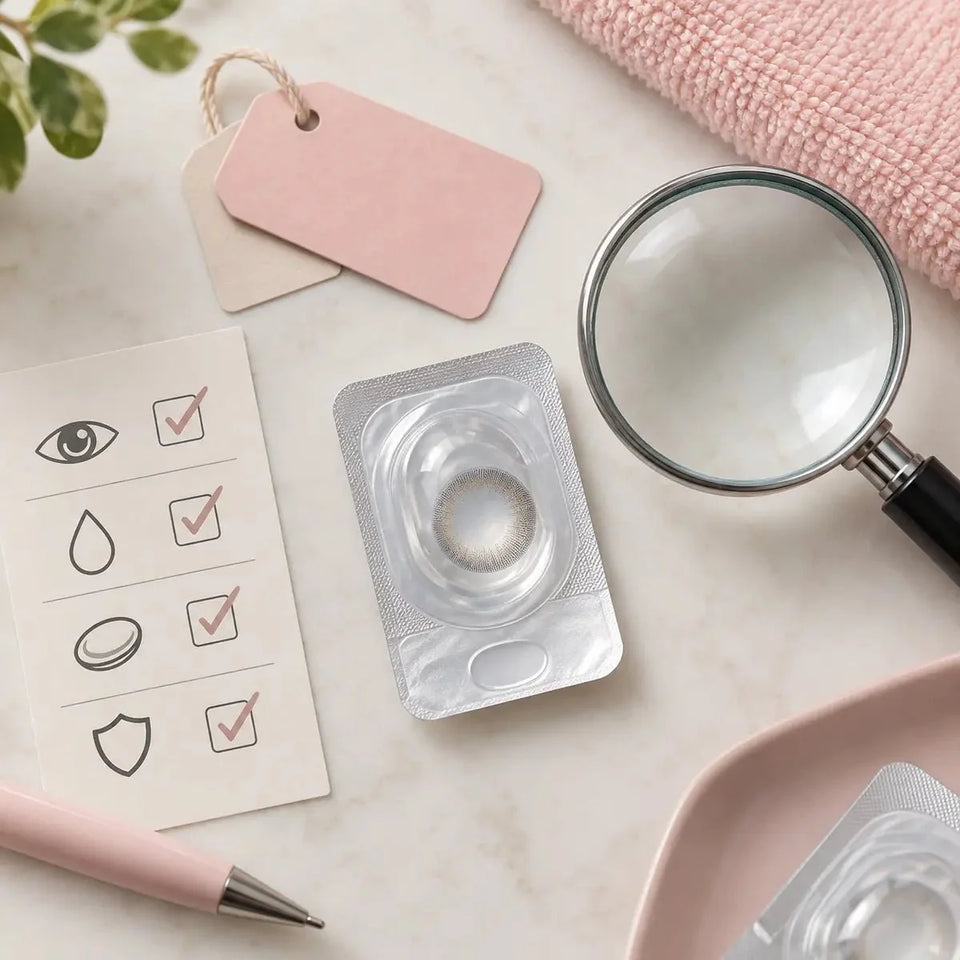
Care & authenticity
Daily Colored Contacts for Dry Eyes: Questions to Ask
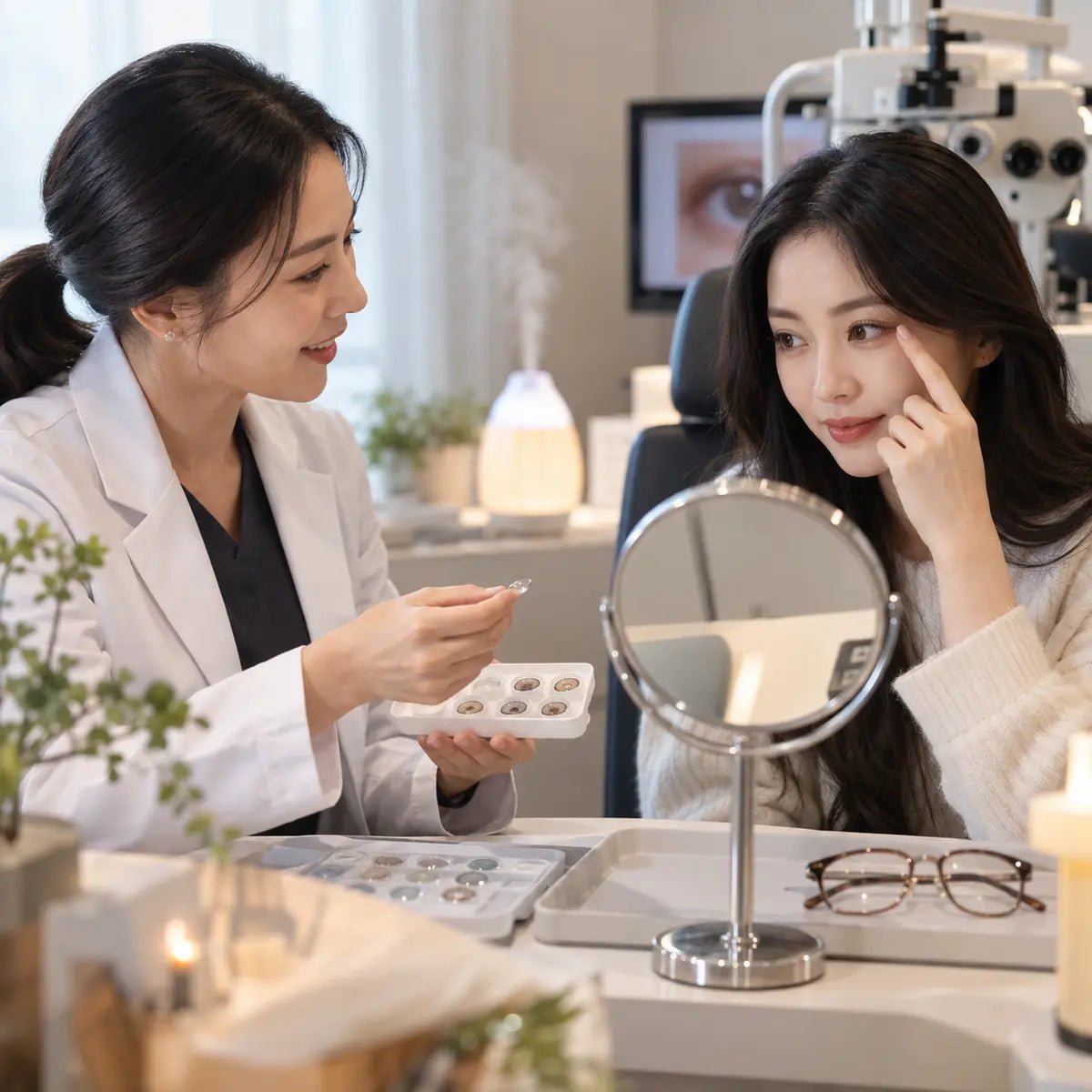
If you have dry eye symptoms and want daily colored contacts, begin with an eye-care appointment rather than a product ranking. A daily disposable schedule does not guarantee comfort or treat dry eye. Bring the exact lens details, describe when symptoms occur, and ask whether that product can be prescribed and fitted for your eyes.
In this guide

Why an appointment comes first
Dryness, burning, gritty sensations, watering, and fluctuating blur can have different causes. Contact lens discomfort can overlap with dry eye, allergy, a fit issue, irritation, infection, or another eye condition. A product page cannot diagnose the cause, and a daily disposable label does not tell you whether the lens is suitable for your eyes.
An eye-care professional can review your symptoms, examine your eyes, and assess whether contact lens wear is appropriate. If a colored lens is considered, the exact model may need to be fitted and evaluated. The clinician can also tell you whether to pause lens wear, follow a specific schedule, or return for follow-up.
If symptoms are persistent, new, or worsening, describe them rather than trying several lenses on your own. Do not use a longer wearing period as a test of whether your eyes will “get used to” a product. Follow your professional’s instructions and remove lenses if discomfort or vision changes begin.
Clarify what “daily” means
Product descriptions use “daily” in more than one way:
- Daily disposable means a new lens is used for its intended wear and then discarded. It is not cleaned or reused.
- Daily wear describes wearing the lens while awake and removing it before sleep according to its directions. It does not necessarily mean the lens is disposable after one day.
- Replacement schedule tells you how often a reusable lens is replaced. Follow the exact product instructions and the clinician’s advice.
A daily disposable may simplify cleaning because it is discarded after use, but it does not guarantee comfort, eliminate infection risk, or resolve dry eye. The fit, material, surface, tear film, eye health, environment, and time worn can all affect how the lens feels.
When speaking with a clinician or seller, use the exact phrase shown on the package: “daily disposable” or “daily wear.” Ask what the intended schedule means for that model. Do not infer the replacement interval from a color name or a product image.
Prepare for the visit
Bring the exact product page, manufacturer, model, shade, and package information for each lens you are considering. If you have worn contacts before, bring the box or label for your current lens and the care solution you use. This helps the professional distinguish the exact product from a similar shade or a different version in the same collection.
Write down your symptoms before the appointment. Include when they start, whether one or both eyes are affected, how long you had been wearing contacts, whether symptoms also occur with glasses, and whether removing the lens helps. Note relevant changes in environment, screen time, cosmetics, medication, or health. Do not stop prescribed medication without advice from the prescriber.
If you have photos or online references for the color you want, bring them as styling references only. Tell the professional whether the lens is for everyday use, a short event, or a specific photo. The visual purpose may help frame the discussion, but it does not replace the examination or fitting.
Keep your contact lens prescription available and check its date. A glasses prescription is not a substitute. Do not order using values copied from an old package if your prescription has changed or if the exact model has not been assessed.
Questions to ask your eye-care professional
- What could be causing my symptoms, and do I need an examination before wearing contacts?
- Should I pause contact lens wear while symptoms are being evaluated?
- Is this exact daily colored lens appropriate for my eyes and prescription?
- Does the product offer the complete correction needed for each eye, including cylinder and axis if prescribed?
- What wearing limit applies to this exact model and to my eyes?
- Does “daily” mean daily disposable or daily wear on this product?
- Which care products, if any, are suitable with the lens?
- What signs mean I should remove it and contact you promptly?
- Should I return for a follow-up after a trial, and what should I record?
Ask the clinician to explain the plan in terms you can follow: which lens, which eye, when to wear it, when to remove it, how to care for it, and when to return. If a recommended product is not available in the color you wanted, ask about other exact models that could be evaluated.
Compare exact daily colored lens options
Once your clinician has confirmed which products can be considered, compare the full product details. Record the manufacturer, exact model, shade, material description, lens type, replacement schedule, sphere power, cylinder and axis if applicable, base curve, diameter, and package quantity. Do not assume that all colors in a collection share the same specifications.
Product photos can help you compare hue, print density, edge definition, and center transition. On your natural iris, a color may appear more muted or more visible than it does in a studio image. Lighting, makeup, camera settings, and distance also change the result. Treat photos as references rather than promises of appearance or comfort.
A material label or water-content number alone cannot identify the best lens for dry eyes. Ask the professional whether the specific model’s material and design are appropriate in your case. Do not pick a product because an online review says it is comfortable for someone else.
Check the order selector carefully. If each box contains one power, your right and left eyes may require separate selections. Confirm the exact shade and model, prescription values, package quantity, and schedule in the cart. If the exact prescription is not available, do not choose the nearest value or drop a prescribed correction; ask about a different product.
Follow a trial or follow-up plan
If your professional provides a trial schedule, follow it exactly. Do not increase wearing time, sleep in the lens, or add extra trial days without asking. Pay attention to both clarity and comfort. Note which eye is affected, when symptoms begin, whether vision changes after blinking, and what happens after the lens is removed.
Remove the lens if it becomes uncomfortable or vision changes. Do not repeatedly reinsert it to test whether the sensation has passed unless your clinician has explained how to proceed for that specific lens. If a reusable lens is involved, keep it according to the instructions and ask whether the professional wants to examine it. For a daily disposable, do not try to clean or reuse it.
At follow-up, bring your notes and the product label. This helps the clinician review the exact lens and your experience. A brief, accurate record is more useful than a broad impression such as “it felt fine” or “it was dry.” If symptoms return outside the trial, contact the professional rather than restarting the product on your own.
Make a one-page appointment note
Before your visit, you can prepare a note with three small sections. In the first, write the symptoms and their timing: for example, whether discomfort starts soon after insertion or later, which eye feels affected, and whether the issue happens with glasses. In the second, list the exact lens and solution names and how long you wore them. In the third, paste the exact colored lens model you want to ask about, including the shade and schedule. This makes it easier to review the right product without relying on memory.
Keep this record factual. Avoid labelling the cause as “dry eye from contacts” unless a clinician has diagnosed it. Describe what you felt and saw, and let the professional interpret the pattern. If you develop a warning symptom, remove the lens and seek guidance; do not wait until the appointment to report it.
Check availability after the clinical discussion
Once you know which types or exact products your professional considers, contact the seller to confirm current stock and prescription options. Ask whether the listed shade is the fitted version, whether each box contains one power, and what care instructions accompany the package. Seller stock and product availability can change, so verify before ordering.
If the suitable model is unavailable, ask the prescriber about another exact product rather than substituting on your own. If no colored lens is appropriate while symptoms are active, use glasses and revisit the cosmetic goal after you receive professional advice. Product availability should not set the medical decision.
Handling and care basics
Wash and dry your hands before handling lenses. Follow the exact insertion, removal, wearing, and replacement instructions. Keep contacts and cases away from tap water, bottled water, swimming water, and saliva. Do not share lenses or top off used disinfecting solution.
Ask before using drops or other medicines while wearing contacts. Some products are not intended for use with lenses, and a drop should not be used to hide pain or redness so you can continue wearing a lens. Follow the label and your clinician’s advice.
Keep glasses available. If symptoms start at work, an event, or while traveling, having a backup makes it easier to stop wearing contacts and see clearly without improvising. Plan where you can remove a lens with clean hands if needed.
Know when to stop and seek care
Remove contact lenses if your eyes become painful, unusually red, swollen, light-sensitive, or your vision becomes blurred. The FDA lists discomfort, excess tearing or discharge, light sensitivity, redness, blurred vision, swelling, and pain among possible signs of irritation or infection. Contact an eye-care professional promptly.
The CDC advises removing lenses and calling an eye doctor immediately for worsening pain, light sensitivity, sudden blurry vision, unusual tearing, or discharge. Do not continue wearing the lens for photographs or a planned activity. If symptoms are severe or worsening, seek urgent professional guidance.
Do not put the lens back in to check whether the eye feels better. Use glasses and follow the professional’s advice before wearing contacts again. If removing a lens is difficult or painful, do not scrape at the eye or use tools; contact a professional for help.
Frequently asked questions
Are daily colored contacts better for dry eyes?
Not automatically. A daily disposable schedule can simplify care but does not guarantee comfort or treat dry eye. Ask a professional to assess the exact lens and your symptoms.
Can I try a daily colored lens before seeing an eye doctor?
Do not self-fit contact lenses. Arrange an eye examination and fitting for the exact product, and follow local prescription requirements.
Does daily wear mean daily disposable?
No. Daily wear describes when a lens is worn; daily disposable describes a lens discarded after its intended use. Confirm the exact product schedule.
What should I bring to an appointment?
Bring your contact lens prescription, exact product information, current lens and solution labels if available, and a concise record of symptoms and wearing time.
Can I use eye drops if a daily lens feels dry?
Ask your eye-care professional which drops, if any, are appropriate with your exact lens. Do not use drops to mask discomfort and continue wearing it.
This article is general educational information and does not diagnose or treat dry eye. It does not replace an eye examination, prescription, fitting, or individualized instructions from your eye-care professional.