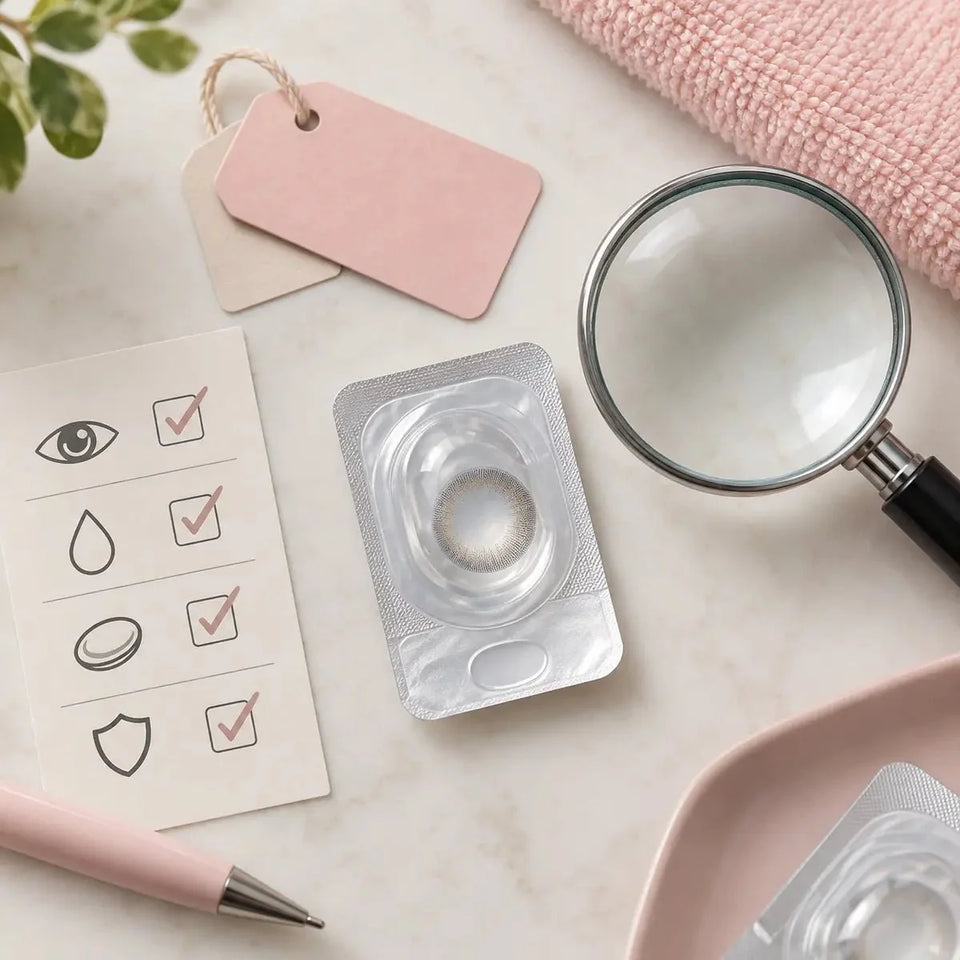
Care & authenticity
Can You Wear Colored Contacts Over Regular Contacts? What to Know

Do not place a plano colored lens over a clear contact lens as a do-it-yourself way to add color or correction. Contact lens combinations sometimes have specialist medical uses, but those are planned and supervised by an eye-care professional. For cosmetic wear, ask about one fitted lens that meets your vision needs, or wear glasses with a professionally fitted plano colored lens if your clinician approves that plan.
In this guide
- What “over regular contacts” can mean
- Why not to stack lenses on your own
- How to combine color and vision correction safely
- Three plans and their questions
- Switching between clear and colored lenses
- If you already layered two lenses
- Plan an event look without layering
- What product information to bring
- Questions to ask your eye-care professional
- Frequently asked questions

What does “wear colored contacts over regular contacts” mean?
The phrase can describe several different plans, and they need different answers:
- Stacking two contacts on one eye: placing a colored lens on top of a clear contact lens at the same time.
- Switching models: wearing clear contacts on one occasion and a fitted colored model on another.
- Using a plano colored lens with glasses: wearing one non-corrective colored lens while glasses provide vision correction.
- A clinician-directed lens system: a specific therapeutic arrangement selected and monitored by an eye-care professional.
These are not interchangeable. This guide is about consumer styling and safe planning. It does not teach therapeutic lens systems. If your clinician has prescribed a special arrangement for a medical reason, follow that clinician’s exact instructions rather than the cosmetic advice in this article.
Why not to stack lenses as a do-it-yourself styling method
A plano colored contact lens does not automatically become a fitted corrective lens when placed on top of a clear powered lens. The two separate products were not necessarily evaluated together for your eyes, and putting one over another is not a substitute for an appropriate prescription and fitting. Do not assume that two thin lenses, matching diameters, familiar brands, or a short photo session make a safe combined arrangement.
All contact lenses, including decorative lenses, need a prescription and proper fitting in the United States. The FDA explains decorative lens prescription and fitting requirements, and the CDC notes that colored lenses are not risk-free. A new lens should be evaluated as the exact product you intend to wear, not treated as an untested layer on top of another lens.
Some medical situations use more than one lens under direct professional supervision. That is different from adding a fashion lens to your own routine. If your eye-care professional has prescribed a particular therapeutic setup, ask them to explain the exact lenses, order of use, wear schedule, cleaning, and warning signs. Do not copy a specialized arrangement from a video or apply it to colored lenses without that direction.
How to combine color and vision correction safely
Start by telling your eye-care professional the vision correction you need and showing the exact colored lens or product listing you are considering. Ask whether that specific model is available in the correction and parameters prescribed for each eye, and whether it can be properly fitted. The answer depends on the product and your eyes; an attractive shade or a similar number is not enough to determine suitability.
If the product is only available in plano, ask whether wearing that one lens with glasses is appropriate for you. The colored lens still requires a suitable prescription and fitting where applicable, even though it does not correct vision. Glasses provide correction separately; do not add a clear contact underneath the colored one unless your clinician has specifically prescribed and demonstrated an appropriate system.
If the exact shade is not offered in your prescribed powers or cannot be fitted, ask about another single colored lens that can meet your needs. If no suitable lens is available, use your glasses or choose a different styling approach. A product gap is not a reason to combine unapproved lenses.
Three different plans, three different questions
You need correction and want a color change: Ask whether the exact colored lens is offered in the prescription and parameters for each eye, and whether your clinician can fit it. Do not assume that adding a plano lens over your current contacts produces the equivalent result.
You do not need contact correction and want a cosmetic color: Ask about a single plano colored lens and whether it is suitable for you. A plano label does not mean the lens is exempt from prescription or fitting requirements in the United States. If glasses are part of your vision plan, ask whether you may wear those with the single colored lens.
You have been prescribed a therapeutic lens system: Follow the exact clinical instructions from the professional who prescribed it. Confirm the order of lenses, duration, cleaning, removal, and follow-up directly with that office. Do not use a therapeutic plan as a general styling technique or adapt it to another lens.
Separating the plans helps you ask for the right information before buying. If your goal is only to match a photo reference, share the reference with your clinician and ask which safe, single-lens options can achieve a similar appearance.
If you mean switching between clear and colored contact lenses
Switching from a fitted clear model to a fitted colored model can be a different question from stacking. Before wearing the colored model, confirm its exact product identity and fit with your eye-care professional. Your experience with clear contacts does not automatically establish that another brand, material, or design is suitable.
Keep the products and their instructions distinguishable. Record the full brand and model, replacement schedule, and prescription for each. A daily disposable lens is discarded after its intended day, even if your other contacts are reusable. Do not transfer the wear schedule from one model to another or reuse a lens because it looks clean.
Plan your event routine before the day: which single model you will wear, when you will remove it, and where your glasses and lens supplies will be. Do not repeatedly switch lenses to extend the total time in contacts. Carry glasses so you can stop wearing lenses if your eyes become uncomfortable or your plan changes.
If you already put one contact lens over another
Stop wearing the combination and remove the lenses if you can do so comfortably using the method your eye-care professional taught you. Wash and thoroughly dry your hands first. Do not scrape the eye, use tweezers or other tools, or repeatedly pinch at a lens that will not move. If removal is difficult, contact an eye-care professional promptly for instructions.
Tell the clinician that you wore two lenses on one eye, which products were involved, how long they were in place, and whether you have any symptoms. If a lens is damaged, retain its packaging if available, but do not delay care while searching for it.
Remove contact lenses and seek prompt professional advice if you have eye pain, worsening redness, light sensitivity, unusual discharge, or blurred vision. Do not reinsert the lenses to see whether the discomfort returns. If symptoms are severe or rapidly worsening, seek urgent eye care.
Plan an event look without layering lenses
Build the look around one professionally fitted lens per eye or around your glasses. If a specific colored product does not provide the correction you need, ask about a suitable powered colored alternative or whether a plano lens with glasses is appropriate. If neither option is suitable, adjust the look using makeup, lighting, or other accessories rather than adding a second contact lens.
Before an event, make sure the exact product and wear schedule have been approved and that you know how to remove the lens. Follow the labeled replacement and care directions. Do not wait until the event to try an unfamiliar product or learn a new handling method.
For a change from your usual clear model, the guide to using a regular contact prescription for colored lenses can help you prepare questions for your eye-care professional. A product listing can help identify a candidate, but only the professional can determine fit and prescription for you.
What product information to bring
Product pages can use short names or shade labels that do not identify the full lens. Before an appointment, note the manufacturer, complete model name, color, prescription options, overall diameter, base curve or other stated measurements, and replacement schedule when they are listed. If the product information is incomplete, write down what is missing instead of guessing.
Ask the store or brand for the exact packaging or specification details if they are not available online. Then let your eye-care professional review the product itself. A similar color, matching number, or photo of a different version cannot establish that two lenses are interchangeable. Keep the product page date or screenshot so you can refer to the same version later.
After the clinician confirms a suitable option, check the prescription and the item you purchase against the same product identity. If the seller cannot supply that exact product or offers a substitute, pause and ask the clinician to review the proposed replacement before wearing it.
Questions to ask your eye-care professional
- Is this exact colored lens available in the correction I need for each eye?
- Does the prescription identify this brand and model, or do I need a separate fitting?
- If the lens is plano, would one plano lens with glasses be appropriate for me?
- What replacement schedule and maximum wearing time apply to this exact product?
- What care solution and removal method should I use?
- What symptoms mean I should remove the lens and call the office?
- If the product is unavailable in my parameters, which single lens alternatives can you assess?
Bring the package or a clear product link so the discussion is about the precise lens, not only a shade name. Write down the answer and the product version. If a retailer suggests a substitute, ask the prescriber to review that exact model before wearing it.
Check the schedule as carefully as the product. Make sure the lens’s approved wearing period covers the occasion, that you have time to insert and remove it without rushing, and that you can access clean hands, the correct case or disposal bin, and backup glasses. If any part of the plan is uncertain, resolve it before the event rather than improvising once the lenses are in.
Do not wear lenses past their replacement date because an event lasts longer than expected. If you need to remove a lens and have no appropriate way to store a reusable model, ask your professional in advance whether that lens should be discarded or what supplies to bring.
Frequently asked questions
Can I put a 0.00 colored lens over a clear powered contact for one photo?
Do not do this as a do-it-yourself styling method. A short photo session does not make two separate lenses a fitted combination. Ask an eye-care professional about a suitable single lens or glasses plan.
Can I stack two colored lenses to create a custom shade?
No. Do not combine contact lenses on your eye for a cosmetic effect. Choose one suitable design or create the color effect outside the eye.
Can I wear colored contacts on a day when I usually wear clear contacts?
Possibly, if the exact colored model has been prescribed or fitted as appropriate for you. Being comfortable in clear contacts does not confirm the fit of a different model.
Can glasses correct my vision while I wear plano colored contacts?
That may be an option for some people, but ask your eye-care professional to assess the specific lens and plan. The plano contact still needs to be suitable and fitted.
Are therapeutic piggyback lens systems the same as stacking fashion lenses?
No. A clinician-directed therapeutic arrangement is specific to an eye-care need and professional instructions. It is not permission to add a decorative lens to your personal setup.
What if I cannot tell whether both lenses came out?
Do not keep probing the eye. Contact an eye-care professional and explain that two lenses may have been present.
Do colored contacts still require a prescription if they are plano?
In the United States, FDA guidance says decorative lenses require a prescription and professional fitting, even when they do not correct vision. Requirements elsewhere may differ.
Editorial note: This guide covers consumer styling, not therapeutic multi-lens systems. U.S. decorative lens information is based on FDA guidance and CDC guidance. Follow your eye-care professional’s exact instructions. This article is general information and does not replace an individual examination, fitting, or prescription.