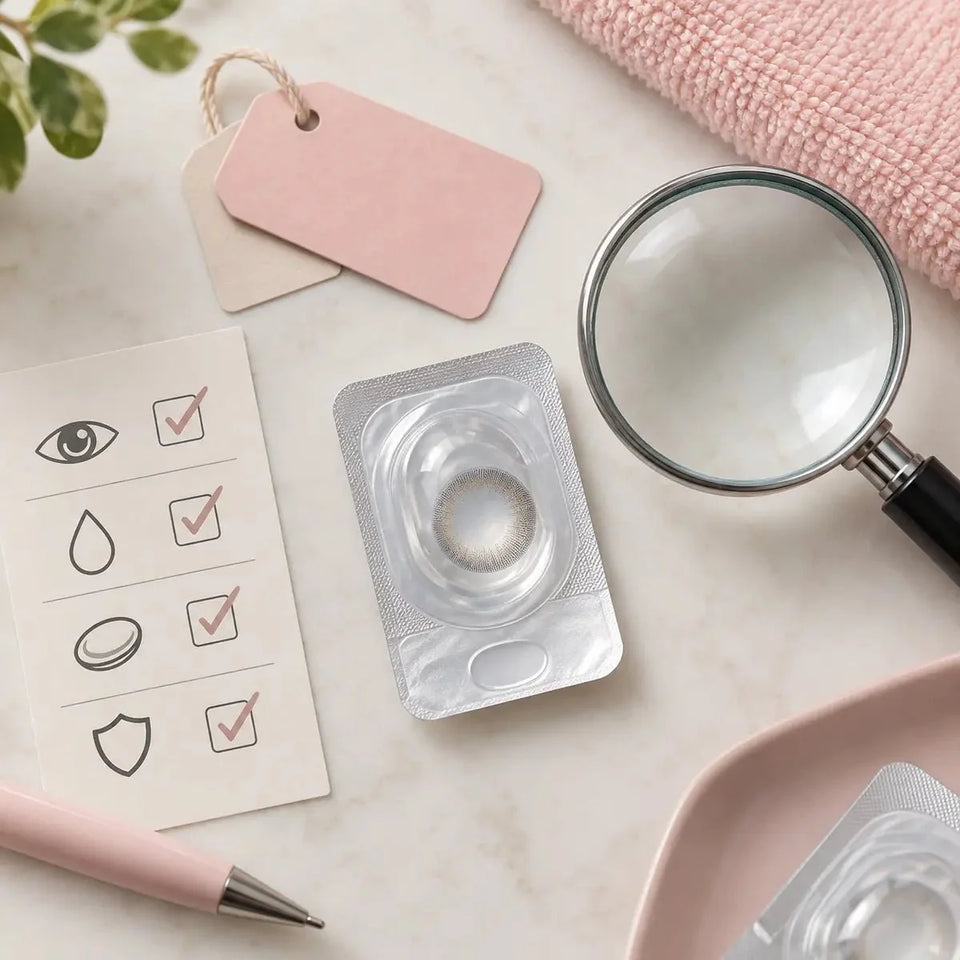
Care & authenticity
Colored Contacts for Dry Eyes: Comfort & Safety Guide

If you have dry eyes, no colored contact lens can be called the “most comfortable” for everyone. Comfort depends on your eye health, tear film, lens material and design, prescription, fit, environment, and wearing time. Before choosing a colored lens, discuss your symptoms with an eye-care professional and have the exact lens evaluated. Remove it if discomfort or vision changes develop.
In this guide
- Start with the direct answer
- What dry eye can feel like
- Why contacts may feel uncomfortable
- What changes with colored contacts
- Prepare for a professional evaluation
- Compare exact lens options
- Build a lower-friction wearing routine
- When to remove a lens and seek care
- Comfort claims to treat carefully
- Alternatives when contacts are not comfortable
- Frequently asked questions

Start with the direct answer
Colored contacts for dry eyes should be considered only after your symptoms and eye health have been reviewed. Dryness can have several causes, and a lens that feels acceptable to one wearer may feel irritating to another. A product’s color, material description, water content, or replacement schedule cannot predict comfort by itself.
Bring the exact product model to an optometrist or ophthalmologist and explain when your symptoms appear, how long they last, and whether they occur with glasses as well as contacts. Ask whether the lens is suitable for your eyes, how it should be fitted, and what wear limit and care routine apply. A professional can help distinguish lens-related discomfort from dry eye or another condition and recommend next steps.
Do not use a longer wear time as a test of whether you can “get used to” a lens. Follow the instructions for your specific product and your clinician. If the eye becomes uncomfortable, red, watery, light-sensitive, or your vision becomes blurry, remove the lens and follow the contact-lens safety guidance below.
What dry eye can feel like
People describe dry eye in different ways. Common sensations can include dryness, burning, stinging, a gritty feeling, watering, intermittent blur, or tired eyes. These sensations can fluctuate through the day. Some people notice symptoms while reading or using screens, in air conditioning, around smoke or wind, or after wearing contacts for a period of time.
Those symptoms are not enough to diagnose the cause. Contact lens discomfort can overlap with allergy, irritation, a lens fit issue, an eye infection, or another problem. A feeling that improves after removing a lens may still deserve attention if it recurs, worsens, or is accompanied by redness or vision change. Do not assume recurring pain or blur is simply ordinary dryness.
Make a simple record before an appointment: when symptoms start, whether they affect one or both eyes, how long you were wearing the lenses, the exact lens and solution, recent changes to cosmetics or medication, and whether symptoms also occur with glasses. This gives the professional useful context. It is not a substitute for an examination, and you should seek care promptly for warning signs rather than waiting to complete a log.
Why contact lenses may feel uncomfortable
A contact lens rests on the eye and interacts with the tear film. How it feels can be affected by fit, material, surface properties, lens movement, edge design, prescription, replacement schedule, and the condition of the eye’s surface. The surrounding environment and length of wear can also matter. These factors work together, so a single specification does not reliably predict comfort.
Other contributors may include dry indoor air, wind, smoke, long periods of focused screen use, dehydration, allergies, or a change in health or medication. This does not mean a wearer can fix the problem by changing habits alone. If symptoms are persistent or new, ask an eye-care professional to assess them and review the products you use.
Reusing a lens beyond its instructions, sleeping in a lens that is not approved for overnight wear, topping off old solution, or exposing lenses to water can create risks and irritation. Follow the exact product labeling and care directions. A lens that is technically within its replacement period still needs proper cleaning if it is reusable, and the schedule should never be extended because the lens looks clean.
What changes with colored contacts
Colored contacts combine vision correction, if any, with a printed cosmetic design. The printed area, edge pattern, opacity, and clear central zone differ by product. These features influence appearance, but they are not a substitute for a prescription or a fitting. Do not assume that a colored version of a familiar clear lens behaves identically, or that a similar-looking model from another brand is interchangeable.
“Colored,” “natural,” “high water,” “silicone hydrogel,” and “daily” describe different things. A color label describes appearance; a material label describes a product property; a schedule may describe how long it is worn or how frequently it is replaced. None of those words alone means that a lens is appropriate for dry eye or will feel comfortable.
In the United States, colored and decorative contact lenses require a prescription and professional fitting even when they do not correct vision. The FDA explains that the eye should be measured and its response evaluated. Requirements differ by country, so check the rules where you live. Buy only the exact lens prescribed and fitted for you through a legitimate seller that follows local requirements.
Prepare for a professional evaluation
Take the exact brand, product name, color, and model information to the appointment. A product photo can help explain the look you want, but provide a product link or packaging details as well. If you have worn a lens before, bring its box or label so the clinician can identify its material, parameters, and schedule. Tell the professional if the lens is colored and whether it is a daily disposable or reusable.
Describe symptoms in concrete terms: “my vision gets hazy after an hour” is more useful than simply saying “the lens is uncomfortable.” Mention which eye, what time symptoms begin, whether they improve after removal, and whether you have redness, discharge, light sensitivity, or pain. Share other eye products, lens solutions, and relevant health or medication changes. Do not stop prescribed medication without the prescriber’s guidance.
Useful questions include:
- Could my symptoms be related to dry eye, the lens, the fit, the care solution, or another issue?
- Is this exact colored lens appropriate for my eyes and prescription?
- What wearing limit applies to this product for me?
- What cleaning and replacement directions should I follow?
- Which products, if any, are safe to use while wearing these lenses?
- What should I do if symptoms start, and which symptoms require urgent care?
- Should I stop wearing contacts until the symptoms have been assessed?
Your clinician may recommend examining the eye, reviewing the lens fit, changing a product, treating an underlying issue, limiting wear, or pausing contact lens use. The right plan depends on the findings. Avoid self-selecting a lens based on a friend’s experience, an online comfort ranking, or a number that appears similar to your current product.
Compare exact lens options after suitability is established
Once your professional has confirmed which options can be considered, compare the exact products rather than general marketing claims. Confirm manufacturer, full model, correction for each eye, base curve and diameter as listed, lens material, replacement schedule, package quantity, and care system. Ask the professional whether a listed parameter is relevant to the fit of that model. Matching one measurement to an old lens does not prove that the new lens is a safe substitute.
If you have astigmatism, verify whether the specific colored product offers the correction prescribed for each eye. Do not drop cylinder or axis, use a nearby sphere value, or order a non-toric design without asking the prescriber. A seller’s product selector can only show what is offered; it cannot determine what correction or fit is appropriate for you.
Compare the visual effect separately. A shade name, graphic diameter, pattern, and product photograph can help you decide whether the look suits your preference. Natural iris color, lighting, camera settings, and the printed pattern affect how a color appears. A larger graphic area or a more opaque design does not mean the lens is more comfortable or more suitable for dryness.
Review the package quantity before ordering. Some boxes contain one power, and the right and left eyes may require separate selections. Verify the product and prescription shown at checkout, and keep the order confirmation and packaging. If the delivered lens differs from the prescribed model or power, do not wear it while you wait for the seller to resolve the issue.
Build a lower-friction wearing routine
Start with clean, completely dry hands and follow the insertion and removal method taught by your eye-care professional. Use only the solution recommended for your lens. Never use tap water, bottled water, saliva, or homemade saline on a lens or case. Do not top off old disinfecting solution. For reusable lenses, rub, rinse, disinfect, and store them exactly as directed; for daily disposables, discard them after their intended use.
Keep to the wearing schedule and maximum wear time recommended for the exact product and your eyes. “Daily wear” does not necessarily mean “daily disposable,” and removing a lens overnight does not reset its replacement schedule. Do not nap or sleep in contacts unless your eye-care professional and product instructions explicitly permit that use. Do not share lenses or use another person’s case, prescription, or solution.
During screen-heavy work, make regular visual breaks and blink fully when you can. This may make screen sessions more comfortable for some people, but it is not a treatment for every cause of dry eye and does not guarantee contact lens comfort. If symptoms persist, take the lens out and discuss them with a professional rather than relying on breaks to extend wear.
Ask your clinician before using eye drops while wearing contacts. Some drops are not intended for use with lenses, and a product suitable for one wearer may not be right for another. Do not use redness-relief or medicated drops to mask discomfort and keep wearing a lens. Follow the product label and individualized professional advice.
When to remove a lens and seek care
If you notice irritation or infection symptoms, remove the contact lens and do not put it back in. The FDA lists discomfort, excess tearing or discharge, light sensitivity, burning, gritty sensations, redness, blurred vision, swelling, and pain among possible warning signs. Contact your eye-care professional promptly for guidance.
The CDC advises removing lenses and calling an eye doctor immediately for symptoms such as worsening eye pain, light sensitivity, sudden blurry vision, unusual tearing, or discharge. Do not wait for a planned appointment if symptoms are sudden, severe, or worsening. If you are unsure how urgent a symptom is, contact a qualified professional for direction.
The FDA advises not to discard a lens involved in a possible problem; store it in its case and bring it to your eye-care professional if requested. Do not delay getting care to retrieve a package or case. Avoid reinserting the lens to test whether symptoms have passed. Use glasses and follow the clinician’s instructions before resuming contact lens wear.
Notice patterns without self-diagnosing
Before a routine visit, you can observe when the discomfort appears while continuing to follow your current care instructions. Note whether symptoms begin soon after insertion or later in the day, whether they happen only with one pair or across different lenses, and whether they are worse in a particular environment. If screen work, a fan, heating, or air conditioning seems to coincide with symptoms, record the circumstance rather than assuming it is the only cause.
Do not keep wearing a lens just to collect more data. If symptoms become painful, affect your vision, or include redness, discharge, or light sensitivity, remove it and contact an eye-care professional. You can make the note after the lens is out. A brief record of the lens model, solution, wear duration, and symptom timing may help the clinician evaluate the situation, but only an examination can assess the eye and lens fit.
If you are trying a new lens under professional guidance, follow the specific schedule you were given. Do not combine several new products at once or switch the lens, solution, and drops together without advice; doing so can make it harder to identify what changed. Keep the package labels so the exact materials and instructions are available for discussion.
Comfort claims to treat carefully
“This lens has high water content, so it must be better for dry eyes.”
Water content alone does not predict individual comfort. Lens material, surface, fit, tear film, wearing time, and eye health all matter. Ask a professional to evaluate the exact lens.
“A daily lens is always more comfortable.”
A daily disposable may simplify care because it is discarded after one use, but no replacement schedule guarantees comfort. Fit and suitability still need to be assessed, and daily wear should not be confused with daily replacement.
“If it feels dry, I can wear it for less time next time.”
Reducing wear may be part of a professional plan, but recurring symptoms should be discussed. Persistent dryness, redness, pain, or blur may have another cause and should not be managed through repeated trial and error alone.
“Colored lenses are less safe than clear lenses in every case.”
Color by itself does not tell you whether a product is safe or suitable. The exact lens, prescription, fit, source, handling, and care matter. Decorative lenses still require appropriate prescription and professional fitting under U.S. rules.
Alternatives when contacts are not comfortable
If your eyes are symptomatic, glasses may be a practical choice while you get advice or follow a treatment plan. If you want a temporary color change for a photo or event, consider makeup, lighting, styling, or image editing rather than wearing an unapproved lens. These options can support the desired look without asking an irritated eye to tolerate a contact lens.
Some people may be able to wear a contact lens after evaluation and treatment; others may need to limit wear or avoid a particular lens. Do not interpret a temporary improvement as proof that the underlying issue is resolved. Follow the professional’s plan and report returning symptoms before changing products or extending wear.
Frequently asked questions
Are colored contacts safe if I have dry eyes?
There is no universal answer. An eye-care professional should assess your symptoms and the exact lens. Colored lenses require the same careful prescription, fitting, and hygiene considerations as other contacts.
What are the most comfortable colored contacts for dry eyes?
No single product can be guaranteed to be most comfortable for every wearer. Ask your clinician to compare specific lenses based on your eye health, prescription, fit, material, and intended schedule.
Can I use eye drops while wearing colored contacts?
Ask your eye-care professional which drops, if any, are appropriate with your exact lens. Follow the label and clinician’s instructions; do not use drops to cover up pain or redness so you can continue wearing the lens.
Should I keep wearing a lens if my eyes become red?
Remove the lens and contact an eye-care professional, especially if redness persists or occurs with pain, discharge, light sensitivity, or blurred vision. Do not reinsert it to test the eye.
Can I switch to another brand with the same base curve?
Do not assume a matching base curve makes two lenses interchangeable. Ask your prescriber to evaluate the exact product and fitting characteristics.
This article is general educational information, not a diagnosis or individual treatment recommendation. It does not replace an eye examination, prescription, professional contact lens fitting, or product-specific care instructions. For symptoms, follow your eye-care professional’s advice.