Toric & prescription
Do Colored Contacts for Dark Eyes Need a Prescription?
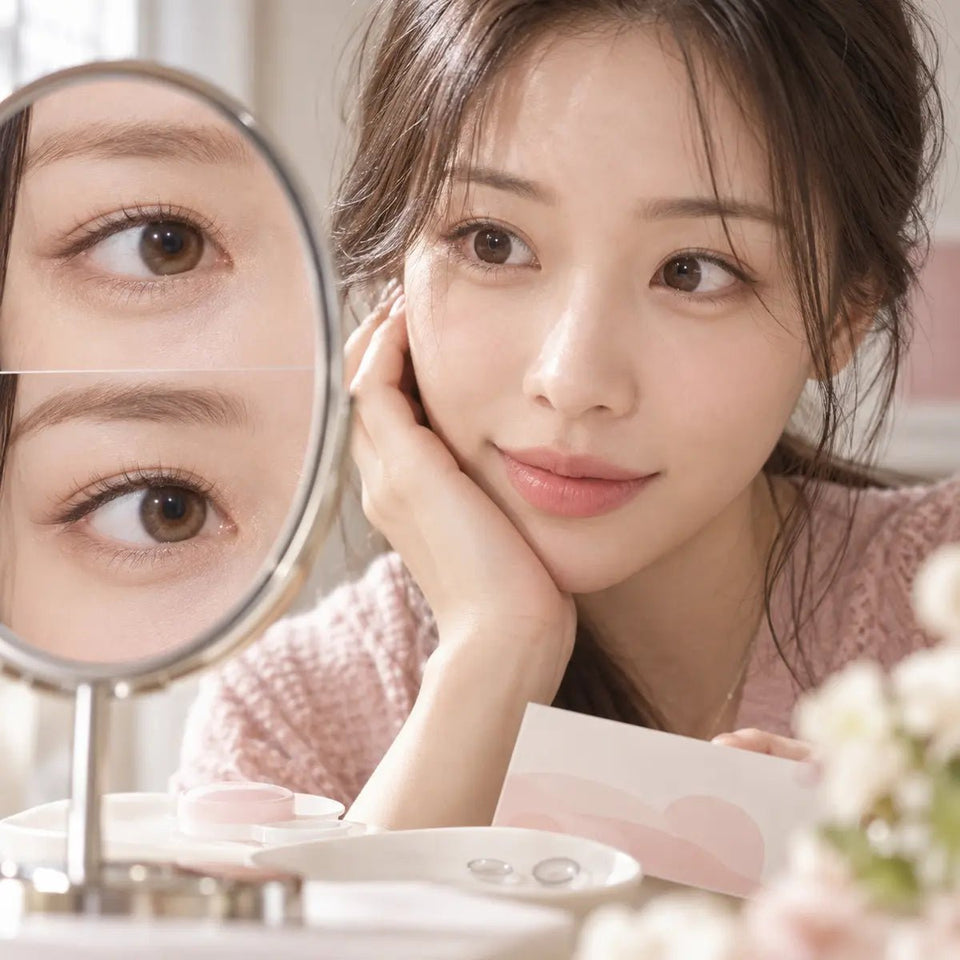
In the United States, yes: colored contacts require a valid contact lens prescription even when they are zero power and worn only to change the look of dark eyes. “Non-prescription” on a product page often means 0.00 optical power, not freedom from a fitting. The prescription question is separate from whether a brown, gray, or hazel print will show over your natural iris. Confirm the exact lens and local requirements first; compare color only among appropriate options.
In this guide

Do you need a prescription for colored contacts on dark eyes?
In the United States, decorative contact lenses require a contact lens prescription and proper fitting. The CDC states that colored and decorative lenses are medical devices, even when used only to alter appearance. The rule does not change because your eyes are dark, your natural vision is clear, or the lens has 0.00 power.
Requirements outside the United States can vary by destination. Check the local rules and the seller's current process rather than assuming a label written for another market applies to you. Regardless of destination, an appropriate lens and care plan matter because the product still rests on the eye. Avoid treating a website's “no prescription” phrasing as evidence of suitability.
If you already have a contact lens prescription, check whether it identifies or approves the exact colored lens you intend to buy. A clear lens prescription does not automatically authorize a different colored brand. If you have only a glasses prescription or have never worn contacts, arrange a contact lens evaluation before ordering.
What 0.00 power does and does not say
Plano, zero power, and 0.00 describe a lens without spherical distance-vision correction. They do not describe its print, fit, material, replacement schedule, or safe wearing time. A 0.00 gray lens and a 0.00 brown lens can look very different. Two products with the same zero-power option can also behave differently on the eye.
If you need vision correction, a 0.00 lens will not supply it. Do not place a zero-power decorative lens over a corrective contact to combine color and clear vision. Ask your eye care professional about an appropriate colored corrective lens or another vision plan. If you see clearly without correction, ask about an exact plano model that can be fitted for you.
Do not use 0.00 as a placeholder when a power selector lacks your required value. A color preference cannot justify rounding, omitting a prescription field, or switching products without professional approval.
Why the exact lens matters
A contact lens sits on the eye, so an examination and fitting consider the actual product, its movement and centering, eye condition, tear film, and the wearer's response. The FDA's buying guidance advises checking the exact brand, lens name, power, diameter, base curve, and other relevant details of the lens supplied. It cautions against unapproved substitutions.
Base curve and diameter numbers are not a self-fitting formula. Two brands can share numbers while differing in design and on-eye behavior. A photo showing a centered color ring does not establish a healthy fit or safe wearing schedule. The fitting process and the written prescription identify the appropriate exact lens.
Ask your eye care professional for the contact lens prescription and confirm its current validity. Note the brand and model, power for each eye, and any other required details. If a favorite shade is only available in a different model, ask whether that model can be assessed. Do not carry over your existing lens's approval merely because the color looks similar.
What a legitimate online process should make clear
A seller should identify the exact brand and model, shade, available power options, replacement schedule, package count, and how it verifies a prescription where required. Its contact information and current terms should be accessible. A site that encourages shoppers to bypass a fitting because the lenses are “just cosmetic” gives you reason to stop and clarify.
Check the order screen after selecting a shade. A family page may show several versions, and a 0.00 badge may not describe the power currently in your cart. Compare the final variant with your contact lens prescription. If a required field or version is unclear, ask the seller or prescriber before payment.
Read current shipping and return terms, particularly for sealed products. If you receive a different model or a damaged seal, do not open or test the lenses to see whether they appear close enough. Contact the seller with the order and package details.
Color coverage is a separate question
A dark iris can make a sheer print look subtle. A denser or layered print may create a more visible change. The pupil transition and outer ring also affect the result: a soft center can blend with natural brown, while a defined edge may make the iris appear more outlined even when the middle color changes little.
| Visual goal | Design clue | Evidence to seek |
|---|---|---|
| Subtle enhancement | Warm brown or hazel, soft edge | Normal-distance indoor view |
| Visible color shift | Layered or denser middle field | Before and after on similarly dark eyes |
| Defined iris | Outer-ring contrast | Full-face view in ordinary light |
| Cool contrast | Gray or olive print with sufficient coverage | Unfiltered daylight and indoor views |
The shade name alone cannot predict the look. A blue label does not guarantee bright blue on a nearly black iris, and a brown lens may produce definition rather than lightening. Compare only the exact product version that has passed the separate prescription and fitting decision.
Read photos without mistaking them for fit evidence
Look for the same wearer's bare eye, the exact lens name, consistent lighting between before and after, an unfiltered close-up, and a normal-distance view. Daylight can reveal printed detail; ordinary indoor light shows how quiet or visible the shade may be in routine settings. Ring lights and camera white balance can exaggerate or shift color.
A product photo can show the middle print and outer edge. It cannot tell you whether the lens moves appropriately, how your eye will respond, or how long it is safe for you to wear. Keep a short note: “Deep brown starting iris, exact gray monthly version, cool effect in daylight, indoor result unknown.” That makes the missing evidence clear instead of filling it with an assumption.
Graphic diameter, when listed, describes the printed area. Overall lens diameter is a physical fitting detail. Do not confuse them or infer either from a selfie. A narrow dark ring can create more apparent enlargement than a broader soft print; exact pattern matters more than one number.
A complete order-to-arrival checklist
- Confirm the current contact lens prescription and exact fitted or approved model.
- Check whether 0.00 or a corrective power is appropriate for each eye.
- Verify the full brand, model, shade, replacement version, package count, and current listing details.
- Compare visual evidence on a similar dark starting iris under ordinary lighting.
- Complete the seller's applicable prescription-verification process accurately.
- Review the cart for both eyes, quantity, power, and version before checkout.
- On arrival, inspect the sealed product, labeled values, expiration, lot, and package condition before wear.
If any stage cannot be completed, pause rather than substituting a similar shade or nearest power. Explore KPOP2's dark-eye collection as a style shortlist, then check its current prescription verification and wear and care information for the exact order.
Three situations that change the next step
You have never worn contacts and want color only
Begin with a contact lens examination and ask about an appropriate plano decorative lens. The 0.00 selector is not an invitation to guess a brand or fit. Bring the look you want—subtle brown definition or visible gray, for example—so the professional can explain which exact options may be assessed.
You already wear clear corrective contacts
Check whether an appropriate colored corrective lens exists for your prescription and can be fitted. Do not stack a plano color lens over your clear one. If your preferred shade is unavailable in a suitable model, ask about another professionally approved way to achieve the look and maintain your vision.
You are ordering across borders
Check the destination's requirements and the seller's current verification, shipping, and return process. Rules described for U.S. shoppers may not be identical elsewhere. The lens still needs an appropriate fit and care plan regardless of the market. A smooth checkout does not prove that the exact product is right for your eyes.
Care rules apply whether the lens corrects vision or not
The CDC advises against sharing contacts, storing them in water, or cleaning with water or saliva. Follow the product's recommended disinfecting and replacement instructions. Wash and dry hands before handling lenses. A daily lens is discarded after its prescribed single use; a reusable lens follows its own care and replacement plan.
Remove a lens and contact an eye care professional if discomfort occurs. Pain, unusual redness, swelling, discharge, light sensitivity, or a vision change call for prompt advice. Do not continue wearing a symptomatic lens to finish a photo session or event, even if the color looks ideal.
Sources: CDC decorative lens guidance and FDA buying guidance. Local rules and current product details should be verified at the time of purchase.