Toric & prescription
Prescription Colored Contacts for Brown Eyes: Fit, Power and Color
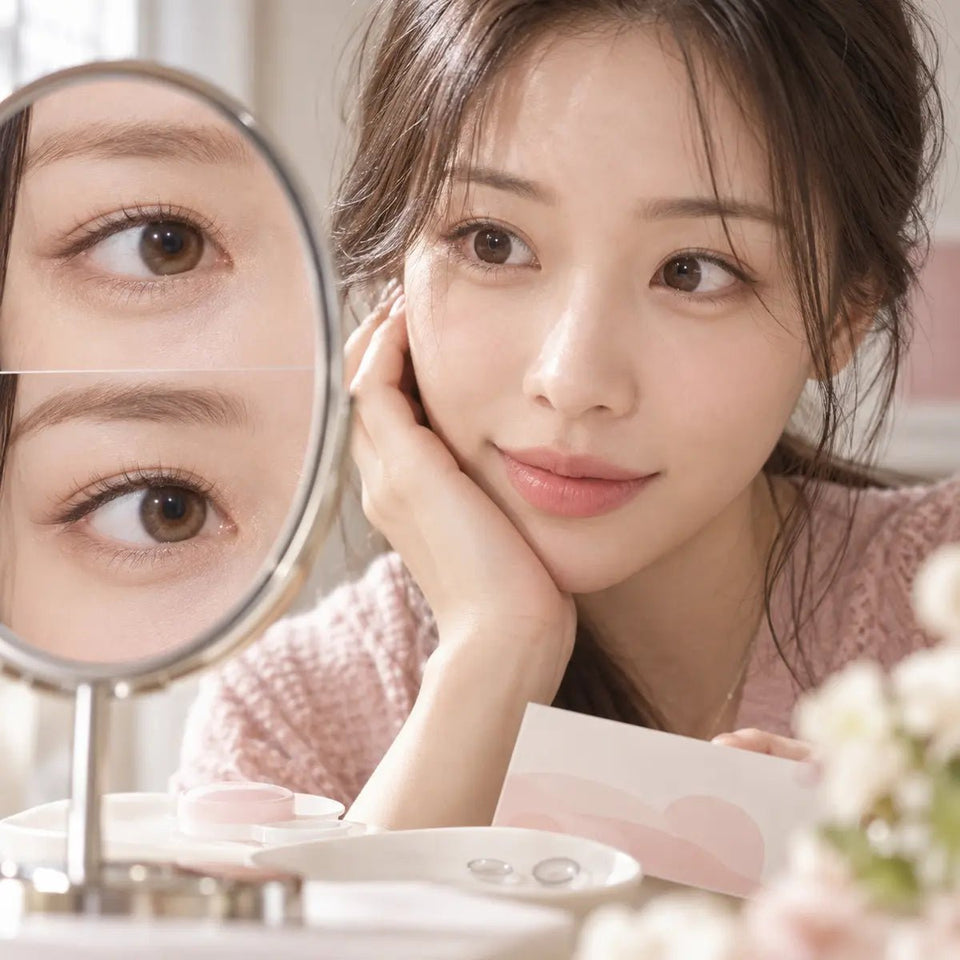
For prescription colored contacts on brown eyes, establish the exact fitted lens and current prescription for each eye before choosing a color. Power corrects vision; the printed design changes appearance. A lens that looks beautiful in a photograph is not automatically available in your prescribed configuration or suitable for your eyes.
In this guide

Start with a current contact lens prescription
Use your contact lens prescription, not the numbers on your eyeglasses prescription. The two documents serve different products and should not be treated as interchangeable. Check that the contact lens prescription is current under the rules that apply where you live and that it identifies the lens your eye-care professional fitted for you.
In the United States, the FDA's buying guidance advises using a current, valid contact lens prescription. It lists information needed to fill the prescription accurately, including power and the prescribed manufacturer or material, with base curve and diameter where applicable. The precise document and legal requirements can differ in other countries, so follow your local rules and professional advice.
A zero-power, or plano, colored contact is still a contact lens. The absence of vision correction does not remove the need for fitting and appropriate instructions. If you normally wear clear corrective contacts and want a colored version, do not assume that a similarly numbered color option is approved for you. Ask your eye-care professional about the exact colored model.
Before looking at shades, write down the exact lens identity and prescription details from the current document. This keeps a beautiful color photo from becoming a reason to alter a required value or choose a different brand without approval.
Read the right and left eye as separate selections
Many people have different prescriptions in their two eyes. For each eye, check the sphere power, often labeled SPH or PWR. If your prescription includes astigmatism correction, it may also specify cylinder (CYL) and axis (AXIS). Some prescriptions include add power (ADD) or other model-specific information. Do not guess which fields apply; use the document your prescriber issued for the fitted lens.
A web menu may offer only some values. If it lacks a prescribed CYL, AXIS, power or exact model, do not select the closest available number or omit a field. The menu tells you what that listing offers, not what your eyes need. Ask the seller about the exact option and discuss alternatives with your eye-care professional.
If both eyes have the same sphere number, still check the complete prescribed configuration. Brand, model, toric parameters or other details can differ. Record the right-eye and left-eye choices separately in the cart, then read them back before payment. This simple step can prevent a common ordering mix-up.
Lens power does not determine the printed shade. An available color in one power does not prove that the same color is offered in every prescription option. Check the live product page and cart for the actual combination you need.
Why exact lens identity and fit matter
Contact lenses differ in material, shape, replacement schedule and fitting characteristics. A base curve or diameter number that happens to match another lens is not proof of interchangeability. The FDA warns against unapproved substitutions and says lens choice should be based on an eye-care professional's examination. The exact prescribed brand and model matter alongside numerical parameters.
If you already wear a fitted colored lens and want a different shade within that same series, confirm that the shade is actually part of the identical prescribed version and offered in your values. Do not infer sameness from a shared collection name. Daily, monthly, spherical and toric products can have similar naming and photography while requiring different prescriptions or care routines.
If you want to switch from clear to colored contacts, bring the intended exact product information to your eye-care professional. Explain the visual goal, such as soft hazel on dark brown eyes or a distinct gray change. The professional can assess whether a suitable lens can be fitted. Style preferences are useful input; they do not determine the clinical choice.
If your favorite color is unavailable in the prescribed model, do not solve the problem by choosing a nearby power, another base curve or a different replacement format. Ask about an appropriate alternative that can be prescribed and fitted for you.
How to compare colors on brown eyes after fit is addressed
Brown eyes are not one uniform background. Some have amber detail, some are deep chocolate, and others have a dark outer boundary. A colored print can interact visually with those features. A product shade name alone cannot promise the finished result on your iris.
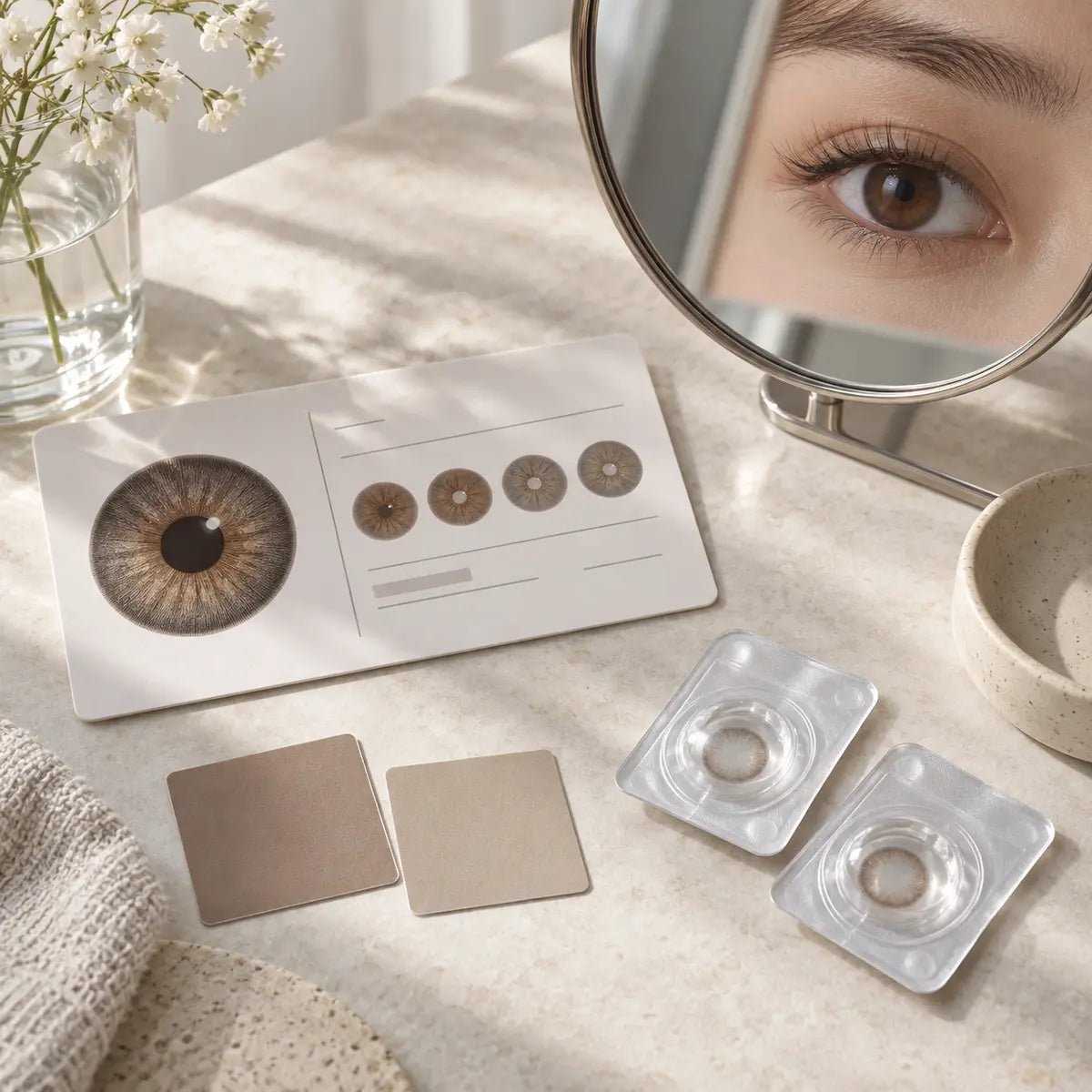
Look at opacity and placement. Transparent areas allow more of the natural brown to remain visible, often creating a layered result. Dense pigment may create a clearer color shift, but it can also make the print more obvious. Examine the outer edge, mid-iris pigment and inner fade separately instead of labeling the whole lens “natural” or “bold.”
For a subtle effect, compare related brown or hazel tones, a soft perimeter and an inner transition that lets the original iris participate. For a more visible change, inspect how much pigment sits in the mid-iris and whether identified photos on similarly dark eyes show that color at portrait distance. A catalog swatch on a white background cannot answer that question alone.
Lighting, camera exposure and pupil size alter the apparent color. Compare exact-product model images in ordinary indoor light and daylight when available. Use a close-up to inspect the print and a full-face portrait to see the overall effect. Keep the model's natural iris color in mind and avoid promising yourself an identical result.
Graphic diameter describes the approximate printed area when a brand supplies it; it does not establish fit or predict exactly how large the iris will appear. Overall lens diameter is a different physical specification. Neither should be changed independently to pursue a color or enlarging effect.
What to check on the live product page
| Field | What to confirm | Why it matters |
|---|---|---|
| Brand and model | Exact name and prescribed version. | Similar-looking lenses may not be interchangeable. |
| Prescription options | All required values for each eye. | The listing may omit a prescribed combination. |
| Replacement format | Daily, reusable or another prescribed schedule. | Wear and care instructions differ. |
| Shade and image identity | Image belongs to the selected version. | Collection photos may show another variant. |
| Pack contents | Individual lenses per box and boxes ordered. | Pieces are not automatically pairs. |
Read the current listing rather than relying on an old screenshot or a review. Product options and pack contents can change. If specifications conflict, ask the seller for clarification and show the information to your eye-care professional when it affects lens suitability.
Be especially careful with toric lenses. A spherical power field does not stand in for cylinder and axis when those are prescribed. An attractive product photo does not reveal whether that exact shade and toric combination are sold. Keep prescription availability and visual preference as separate checks.
Verify the cart and the delivered lenses
Before payment, read the full cart line for each eye: exact model, shade, replacement format, power and any required CYL, AXIS or other parameters. Count individual lenses and boxes. Confirm the shipping and prescription process displayed at checkout rather than assuming it is identical to a previous order.
When the order arrives, compare unopened outer boxes and individual container labels with your prescription and order confirmation. Check model, values for each eye, expiry and seals. Keep right-eye and left-eye supplies separate when their selections differ.
If anything does not match, do not wear the questionable lens to see whether it feels close enough. Keep it unused and contact the seller with the order reference and clear label photographs. The FDA advises checking with your eye-care professional if you think you received an incorrect lens and not accepting an unapproved substitution.
Keep a private reorder note with the exact product name, shade, prescribed values, pack contents and date checked. This helps the next order begin with facts rather than a remembered color photo.
Wear and care follow the exact product
Follow your eye-care professional's instructions and the manufacturer's approved wearing, replacement and care directions. The CDC's prevention guidance recommends clean, dry hands before handling lenses, keeping them away from water, correct solution use for reusable lenses and having backup glasses available.
Do not use a daily disposable for another day or stretch a reusable lens beyond its prescribed replacement schedule. Avoid sleeping in lenses unless your eye-care professional has directed an approved wearing schedule. A color choice does not alter these rules.
If you experience discomfort, pain, unusual redness, light sensitivity, discharge or blurred vision, remove the lens and contact an eye-care professional promptly. Do not continue wearing it because the color is flattering. This guide is a shopping and comparison aid, not a diagnosis or fitting tool.
Explore Colored Contacts for Dark Eyes for style ideas, then return to the exact prescribed product and its live listing before purchase. See Prescription Verification for KPOP2's current process.
KPOP2 Editorial Team · Reviewed September 27, 2026 against the linked FDA buying guidance and CDC prevention guidance. U.S. rules are identified as such; local requirements may differ. This article does not replace a professional contact lens fitting or current prescription.