Buying guides
Center-Gradient vs. Full-Color Contacts: Which Looks Bigger?

Neither center-gradient nor full-color contact lenses are automatically more enlarging. A center gradient describes a transition in the print near the pupil; full-color describes broader color coverage in the exact design. To compare the visual effect, look at printed area, edge contrast, and pattern together. These features may create a more defined impression in an image, but do not change the physical size of the eye or guarantee an individual result.
In this guide
Which design looks larger?
There is no general rule that one category creates a larger-looking eye. A lens described as center-gradient may still have a strong outer ring, and a full-color lens may have a soft edge or layered print. Compare the exact product rather than choosing from a broad design label.
People may use “larger-looking” to mean a more outlined iris, more visible color, stronger contrast, or a bolder pattern. Decide which effect you want before comparing lenses, because each may depend on a different feature.
What center gradient and full color mean
A center gradient describes how the printed color transitions near the clear pupil opening. The transition may appear soft, blended, or visibly patterned. It describes the inner portion of the print; it does not tell you how prominent the outer edge is or how large the printed area is.
Full-color is a broad design description for more continuous or extensive color coverage in the printed area. It does not specify a standard measurement or guarantee opacity on a particular natural iris. Brands may use these terms differently, so check the exact lens image and manufacturer information.
What affects the visual impression
- Graphic diameter (G.DIA): when listed, it describes the colored print area. It may help compare the design area, but does not predict an exact appearance or establish fit.
- Outer ring and edge contrast: a darker or more defined edge may make the iris look more outlined in an image. Compare its width and contrast against the rest of the print.
- Pattern distribution: spokes, flecks, dots, and color layers can change how bold or textured a design seems, even when two products list similar G.DIA.
- Natural iris and color coverage: the starting eye color can interact with the lens print. Product images may not predict the same effect for another person.
Overall lens diameter (DIA) is different from G.DIA: DIA describes the entire lens, while G.DIA describes the printed area when the manufacturer states it. A larger printed area is not a fitting recommendation. For a general comparison of print size and eye proportions, see our guide to lens designs for a big-eye style effect.
How to compare product images
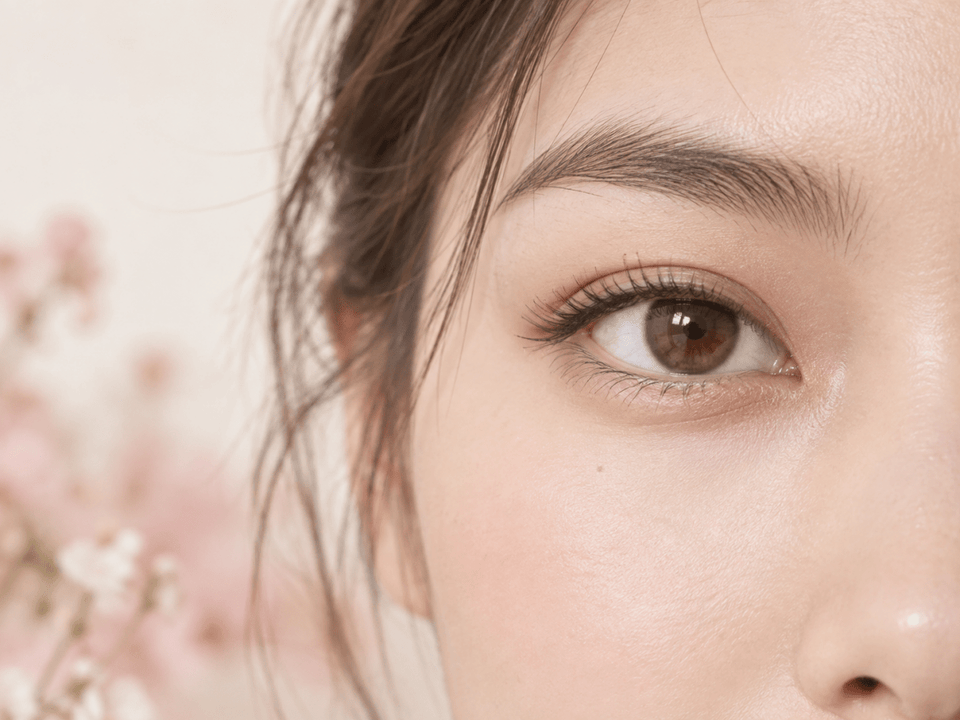
Use a close-up to inspect gradient, edge, and print pattern. Use an on-eye photo only as an example of how one design was presented on one person. Lighting, crop, distance, exposure, editing, and the model’s natural iris can all change the apparent effect.
When comparing two products, check that the images show the exact model and shade, and compare similar views where possible. Separate visible facts from predictions: “the listing shows a dark, defined ring” is verifiable; “this lens will make my eyes look larger” cannot be guaranteed from a photo.
For a more general guide to DIA, G.DIA, and pattern differences, see our circle lens measurement guide.
Keep design separate from prescription and fit
A cosmetic design does not show whether a lens fits your eye or matches your prescription. In the United States, decorative colored contacts require a prescription and professional fitting even when they do not correct vision. Requirements vary by country. Ask an eye-care professional to confirm the exact product and applicable parameters before wearing it.
Do not choose a lens or substitute another model from its gradient, color coverage, G.DIA, or appearance alone. Follow the product’s wear, replacement, and care instructions. If you experience pain, unusual redness, light sensitivity, discharge, or blurred vision, remove the lens and contact an eye-care professional promptly.
Review the FDA’s colored and decorative contact lens guidance for U.S. prescription information.
Frequently asked questions
Are center-gradient contacts more enlarging than full-color lenses?
No category is automatically more enlarging. Compare exact G.DIA, outer edge, coverage, and pattern for each model.
Does a center gradient tell me how large the print is?
No. It describes an inner color transition. Check the exact G.DIA if the manufacturer provides it.
Does full color mean the lens completely covers my natural eye color?
Not necessarily. Check the exact product details and treat on-eye images as examples rather than guarantees.
Can a lens make the physical eye larger?
No. A printed design may change the visual impression of the iris in some images; it does not change the eye’s physical size.
Does a larger G.DIA mean a better fit?
No. G.DIA describes the printed color area. Fit and prescription require professional assessment of the exact lens.
Editorial note: Design labels and photos describe appearance examples only and do not guarantee an individual result or lens suitability. U.S. prescription information is based on linked FDA guidance. This article does not replace an eye examination, fitting, or prescription.