Care & authenticity
Colored Contacts for Conventions: An Event Day Checklist
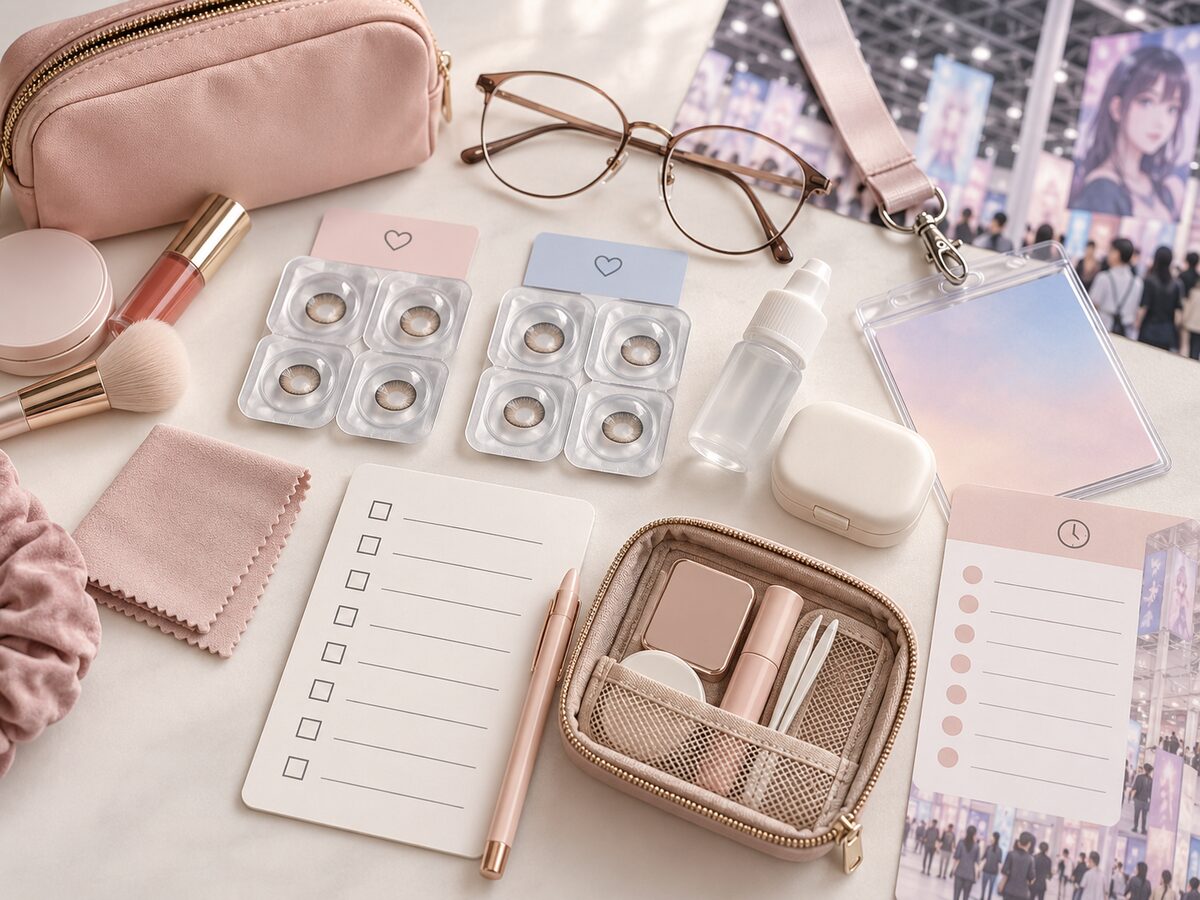
A convention is a long, changeable day: travel, queues, photos, crowded rooms, makeup, meals, and possibly a late trip home. If colored contacts are part of your look, plan their fit and care before planning the final photograph. Use the exact lens prescribed and fitted for you, count the individual lenses needed for each eye, practice insertion and removal at home, and carry glasses and the supplies appropriate to that lens. This checklist helps you keep a character-inspired style workable even when the day changes.
In this guide
- Begin before event week
- Confirm the exact lens and prescription
- Count lenses for each eye
- Map the whole event day
- Check venue rules and handling space
- Pack an accessible lens kit
- Rehearse costume, makeup, and removal
- Judge the look in real event light
- Prepare a lens-free version
- Know when to stop wearing
- Plan the trip home and aftercare
- Questions and answers

Begin before event week
Book the eye care appointment and complete the fitting before you count on colored contacts for a ticketed event. A decorative lens is still a contact lens. The FDA says decorative lenses require a prescription in the United States and should be fitted by an eye care professional. A character's exact eye color does not make a different lens model interchangeable with the one prescribed for you.
Allow time for a supervised insertion and removal lesson. First wear at a crowded convention is a poor way to discover that you cannot remove a lens reliably or that a case is missing. Practice on a normal day, following the wear period and care steps your professional gives. Ask what to do if a lens is uncomfortable, torn, or difficult to remove. Keep current glasses ready so the costume does not depend on the lens remaining in place.
Ordering time and wearing time are different. A product may be available online but still require prescription verification, shipping, and a fit assessment. Do not make a purchase decision based on a promised event arrival date unless the store actually confirms it. If the correct lens is unavailable, adjust the styling plan instead of switching to an unapproved substitute.
Confirm the exact lens and prescription
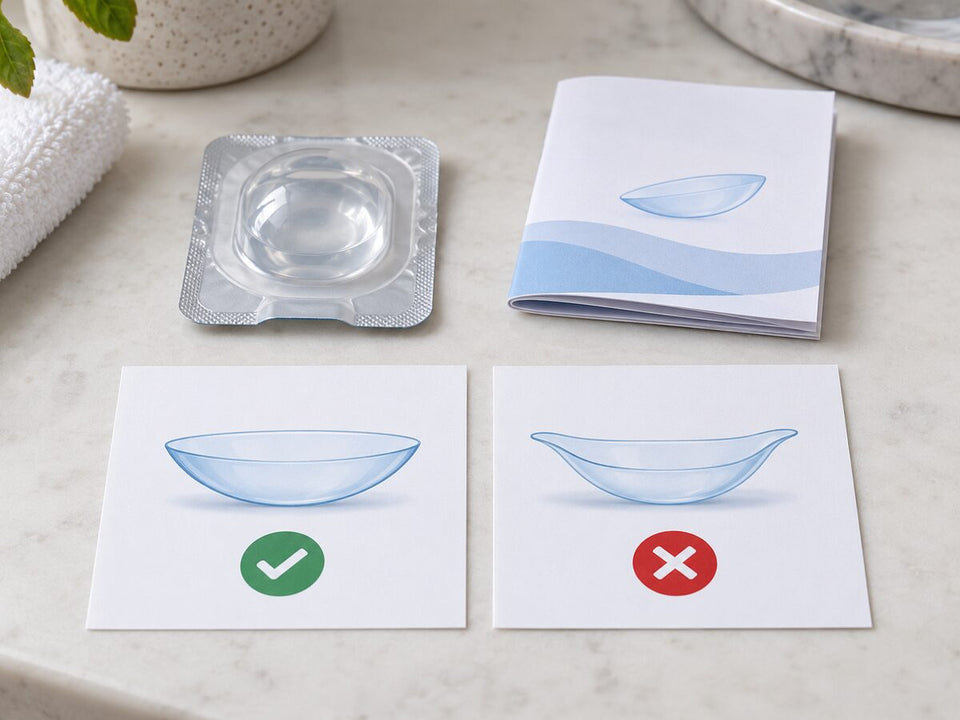
Write the manufacturer, full product name, color or design, power for each eye, replacement format, and package quantity in one note. Compare that note with the current prescription and the live product listing. Related lens versions may share a series name or print while differing in base curve, overall diameter, material, power options, or replacement schedule. A familiar thumbnail is not enough to establish product identity.
Open the product page and check the variant you are actually ordering. If your right and left eyes have different requirements, treat them as separate selections. If the lens is 0.00 power, it still needs the prescribed fitting. If the page does not offer the parameters shown on your prescription, pause and ask the eye care professional and seller rather than filling the gap by guessing.
Save a copy of your prescription and product information where you can reach it during the order process. The FDA advises checking exact brand and lens details when buying contacts. This is especially helpful when your convention notes include multiple names: a character name, the seller's color label, and the manufacturer's actual lens identity. Keep the medical product name clear.
Count lenses for each eye
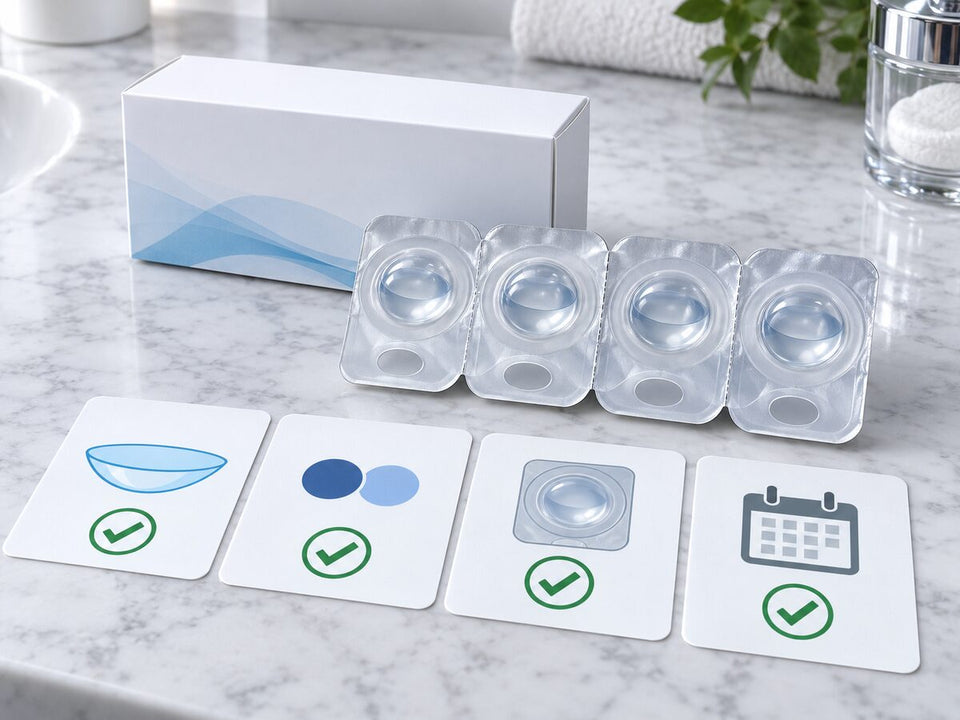
A box count refers to individual lenses unless the product explicitly says otherwise. It does not automatically tell you how many pairs or event days you have. For a daily disposable worn in both eyes for three separate occasions, the basic count is six individual lenses if the same power works for both eyes. When powers differ, count three of the correct lens for the right eye and three for the left, subject to package options and the actual prescription.
A reusable lens uses a different replacement schedule, so do not copy daily arithmetic into a monthly purchase. Read the exact product's “lenses per box” field and compare it with the cart. If a box contains one lens, two eyes may require two boxes, depending on the selections. If a box contains two lenses of one power, two different powers may require separate boxes. This is an ordering calculation, not a reason to change a fitted lens format.
For a multi-day convention, make a small table with day, planned wear, right-eye supply, left-eye supply, and backup glasses. Add spares only if they are the exact prescribed lenses and the professional's instructions support the plan. Do not borrow a friend's lenses when a package is short. A costume can be adapted; a fitted contact lens should not be improvised.
Map the whole event day
Write the day from departure to return, not only the time inside the hall. Include transit, waiting outdoors, photo sessions, meals, breaks, the final panel, and the journey home. Follow the wearing schedule provided for your exact lens; event opening hours are not a medical wearing-time recommendation. Build a planned removal point that remains realistic if the program runs late.
A long queue may leave no clean place to handle lenses. An elaborate costume may make glasses or a case hard to reach. A crowded group photo can create social pressure to keep the look unchanged. Identify these constraints before the event. The solution may be to put lenses in at home, wear glasses for part of the day, simplify accessories, or skip the lens entirely for that outing.
If the day includes outdoor travel, bring appropriate sunglasses and check weather. If it includes swimming, a spa, or a shower at the venue, plan removal before water. The CDC advises removing contacts before swimming or showering. The event timeline should include these transitions rather than assuming that the lens can stay in through every activity.
Check venue rules and handling space
Read the organizer's current rules for bags, liquids, costumes, props, and re-entry. Rules can vary by venue and by event, so an old convention checklist is not confirmation for this one. If your care products cannot enter or cannot be carried in the form you use, resolve that before event day. The FDA advises against transferring solution to an unlabeled smaller container because sterility and product identification can be affected.
Identify a place where you could wash and completely dry hands if a lens must come out. A restroom may be crowded or poorly suited for a careful routine. You do not need to identify a perfect space for every possibility; you need a safe fallback. If no suitable handling location exists, the plan should lean more heavily on current glasses and earlier removal rather than a promise to improvise later.
Ask whether staff can direct you to a first-aid area if needed. That does not make staff responsible for removing a lens, but it gives you a way to seek help. Keep your eye care professional's contact details accessible. If you are traveling to a city away from home, know how to find local eye care if a lens cannot be removed or symptoms develop.
Pack an accessible lens kit
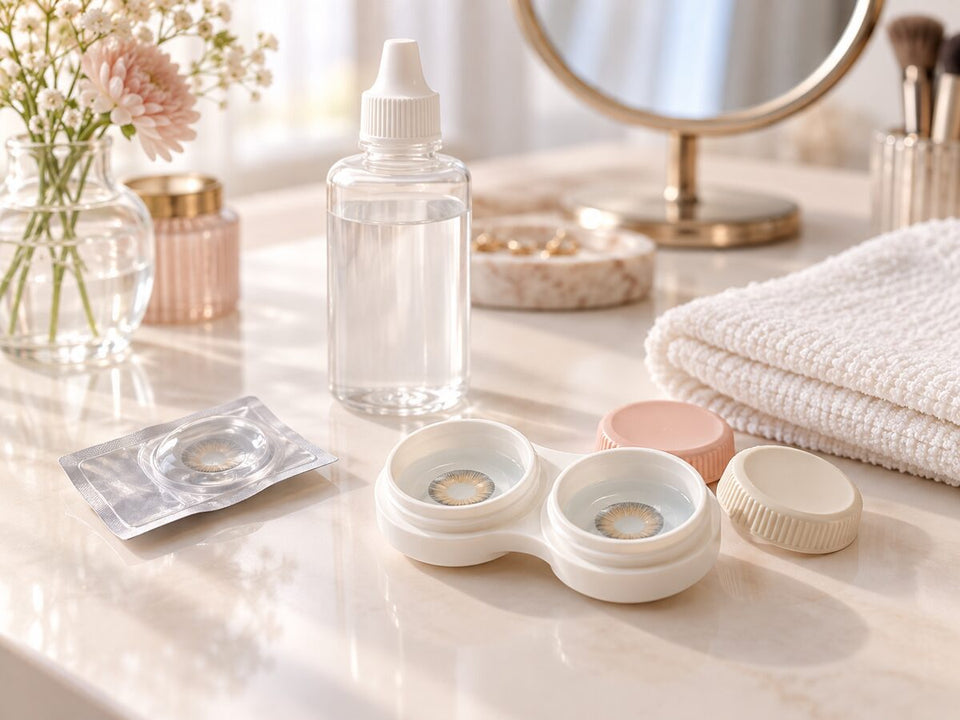
The essential items depend on the lens format. In every case, current backup glasses are valuable; the FDA recommends them for contact lens problems. For reusable lenses, carry the correct case and recommended solution in appropriate original packaging, plus the instructions for that care system. For daily disposables, carry only the exact prescribed spare lenses you may need and a safe disposal plan. The kit should match your professional's guidance.
Place the kit where you can reach it while wearing the complete outfit. A case buried beneath props, a wig stand, and a change of shoes is less useful than one in an accessible pocket or bag. Test retrieval during the rehearsal. A companion may know where the kit is and how to help you reach your glasses, but they should not be expected to choose or handle the lenses for you.
Keep lens supplies separate from glitter, adhesives, hair products, and costume paint. Label your own case if several cosplayers share a dressing table. Check that the solution has not expired and that the case belongs to the actual system. A hydrogen peroxide solution needs its supplied special case and full neutralization process; an ordinary travel case cannot replace it.
Rehearse costume, makeup, and removal
Put on the complete outfit before event day and practice ordinary actions: washing hands, accessing the kit, removing gloves, reaching a case, and putting on glasses. The costume may look effortless in a mirror yet restrict the movements needed for a safe lens routine. Adjust accessories so you can manage the lens without pulling at a wig or handling a dirty prop first.
The FDA advises putting contacts in before eye makeup and removing them before makeup removal. Plan that order with false lashes, eyeliner, face paint, and any cleansing products you use. Keep aerosols out of the handling step. If the makeup or costume prevents you from safely reaching the eye for removal, change the sequence or the styling plan before the event.
Use the rehearsal to decide which details carry the character. If the lens must come out, can the wig, brow shape, costume colors, or accessory keep the look recognizable? Having an answer makes it easier to respond to discomfort without feeling that the entire day is ruined. A lens-free alternative is a practical part of cosplay design.
Judge the look in real event light
Color inspiration often comes from a sharply lit eye close-up. Take a full-face photo in ordinary indoor light during your rehearsal to see how the lens reads with the wig and makeup. If the venue will include outdoor photos, compare daylight too. Your natural iris and camera white balance affect the apparent shade. A print that looks vivid in a campaign image may look softer in a hallway portrait, and that can be a styling decision rather than a defect.
Keep appearance assessment separate from comfort and fit. A lens may photograph beautifully and still be the wrong product for your prescription or uncomfortable to wear. The fitting professional decides suitability; photographs help you decide whether the approved look meets your creative goal. Do not swap to a similar lens with a larger printed area solely for a stronger close-up.
Ask a companion for a normal-distance photograph, not only a tight eye crop. At conventions, other people see the whole character: hair, costume, pose, and expression. A small difference in iris color may matter less than a clear silhouette or one recognizable accessory. That perspective can take pressure off wearing contacts throughout an entire day.
Prepare a lens-free version
Write a clear fallback before packing: “If the lens is uncomfortable or the required supplies are unavailable, I wear glasses and keep the wig and costume.” Choose glasses that allow you to see safely and can be worn with the outfit. If they differ from the character design, use a prop, pose, or accessory to communicate the character instead. A convention plan should still work when one visual element changes.
For a multi-day event, the fallback may vary by day. You might wear the prescribed lenses for a shorter photo session and glasses for a long shopping or panel day, within your professional's wear plan. You might skip lenses entirely when traveling or after a late night. These are choices about your schedule, not instructions to stretch the replacement period or reuse a daily disposable.
Tell a companion the simple logistics: where the glasses are and that you may step away to handle a lens. They do not need your complete prescription or medical history. A pre-agreed phrase such as “I need a lens break” can make it easier to leave a photo queue without debate. Group planning should support the wearer rather than treat the costume as a contract.
Know when to stop wearing
Redness, pain, discharge, light sensitivity, or blurred vision are reasons to interrupt the event plan. Remove the lenses if you can do so safely, keep them out, and contact an eye care professional promptly. The FDA advises prompt professional attention for contact-lens irritation or possible infection. A purchased ticket or scheduled photo is not a reason to keep wearing a painful lens.
If you cannot remove a lens, say that clearly when seeking help and do not keep increasing force or use a tool. If a lens tears or a piece may remain, tell the professional. Keep product details available, but do not delay care while searching for a package photograph. Wear your current glasses when the lenses must remain out.
Do not test another lens after symptoms to see whether the problem disappears. A replacement pair is a supply item, not a diagnosis. Ask the professional when lens wear may resume and whether the involved lens and case should be retained for assessment. The immediate goal is to protect the eye, not to preserve visual continuity between photos.
Plan the trip home and aftercare
Keep the kit accessible until you are home. A late train or rideshare may extend the day beyond the convention's closing time. If you need to remove lenses before travel, use the clean-hand method and correct disposal or storage routine taught for your lens, then wear glasses. Do not wait until you are exhausted and the only available surface is a crowded station sink.
At home, follow the exact replacement and care instructions. A daily disposable should be discarded as directed after its intended use. A reusable lens needs the recommended solution, case, and complete process. Do not top off old solution or use water to rinse a lens. If your product is a peroxide system, allow its full neutralization cycle before any future insertion.
After the event, note one practical change for next time: a bag position, a better handwashing location, a shorter planned wear window, or a lens-free styling alternative. Keep the exact product name with that note so you do not transfer a lesson to a different lens version. If there was discomfort, discuss it with your eye care professional instead of self-adjusting the wear schedule.
For a group costume, assign one person to check the organizer updates and share the practical details: entry rules, meeting point, and the timing of group photos. The wearer still controls the lens decision. A photo plan can be rearranged if the lens needs to come out. If you are coordinating several days, repeat the product and supply check each morning rather than assuming yesterday's packed kit is complete. That small reset catches used daily lenses, empty solution, or glasses left in a hotel room before you reach the venue.
Questions and answers
Can I pour contact lens solution into a smaller travel bottle?
No. The FDA advises keeping solution in its original container to help protect sterility and prevent mix-ups. Check current venue liquid rules and pack the labeled solution for your care system.
What if the venue will not allow my lens supplies?
Contact the organizer in advance and ask your eye care professional about your options. If you cannot follow the exact lens care routine, use the lens-free costume plan.
Can a friend wear my spare lens for a photo?
No. Keep contact lenses for your own prescribed use. A friend can complete the look with makeup or another non-lens detail.
Follow the eye care professional's directions for your exact prescribed lens. Check current venue rules and product details before each event.