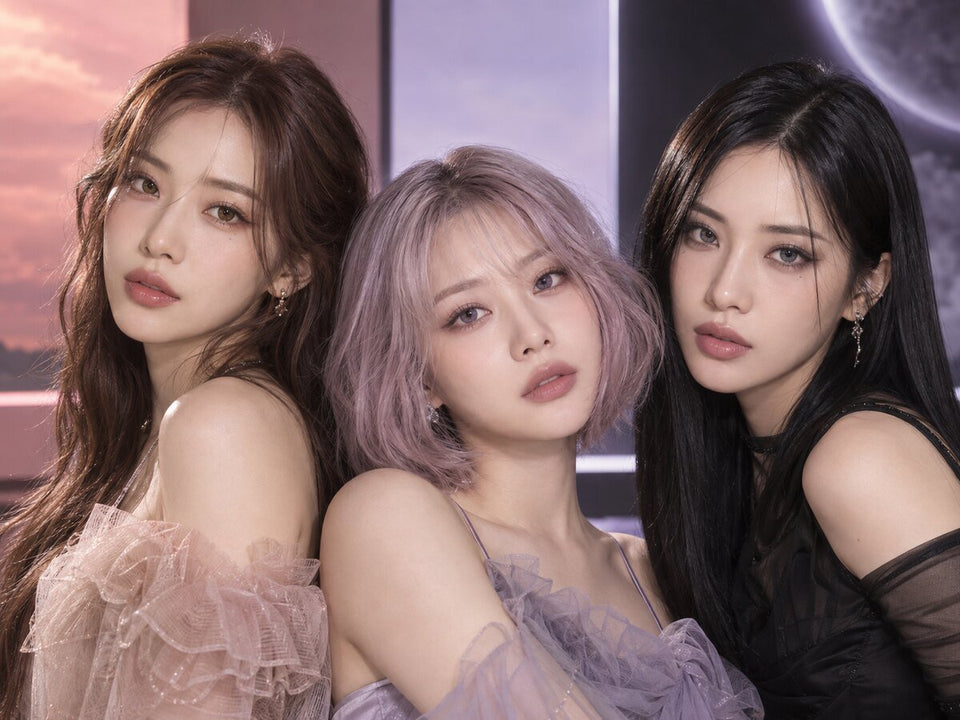
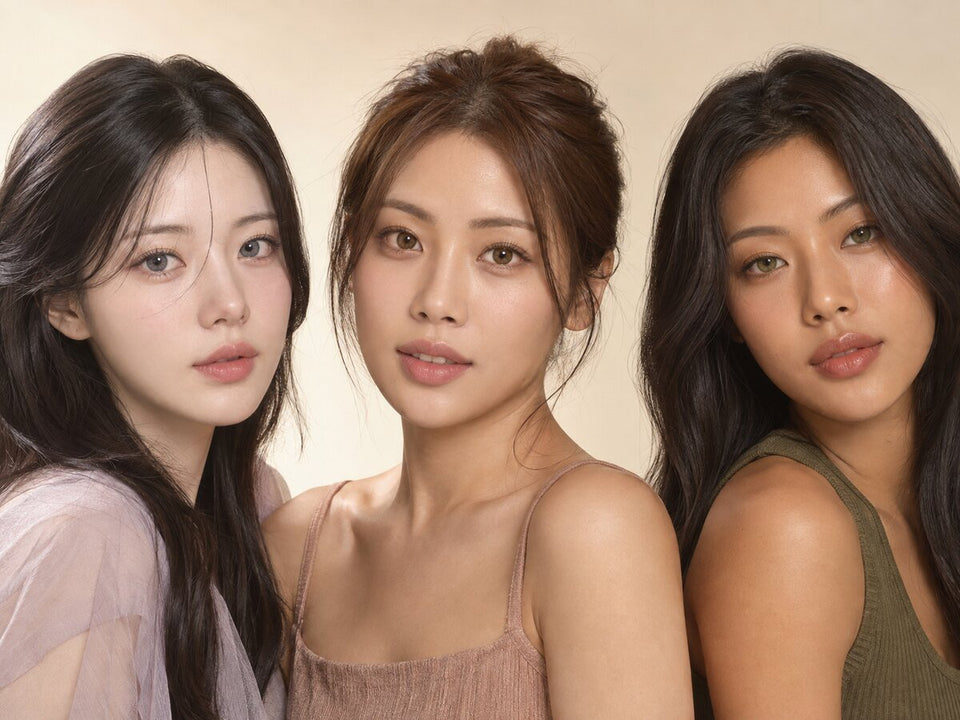
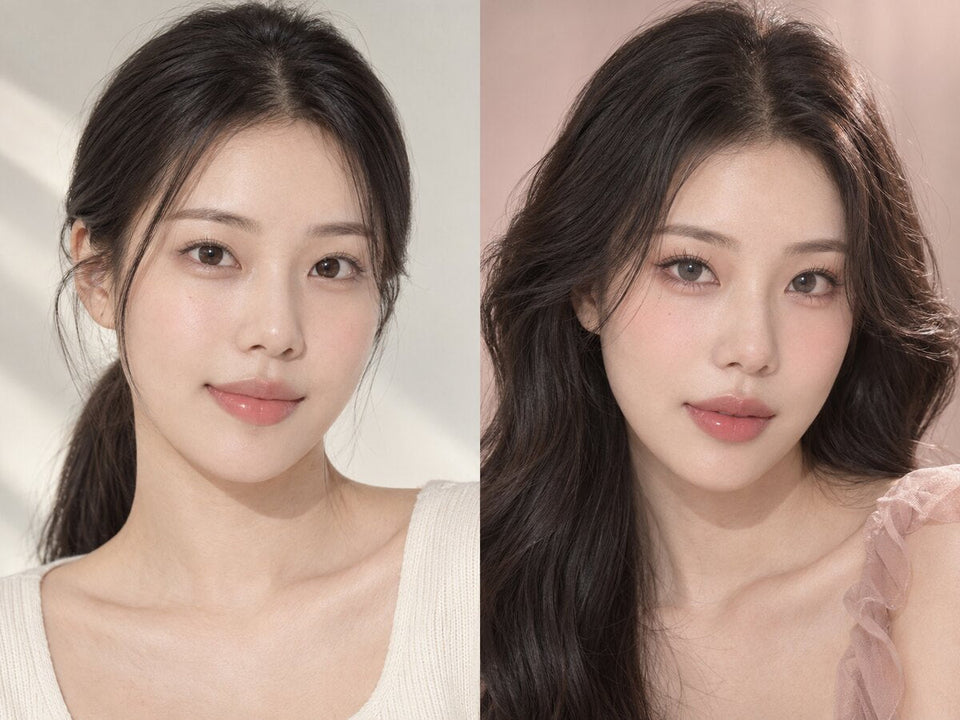
Style & occasions
Colored Contacts for Concerts and Festivals: Outfit, Photo and Care Guide
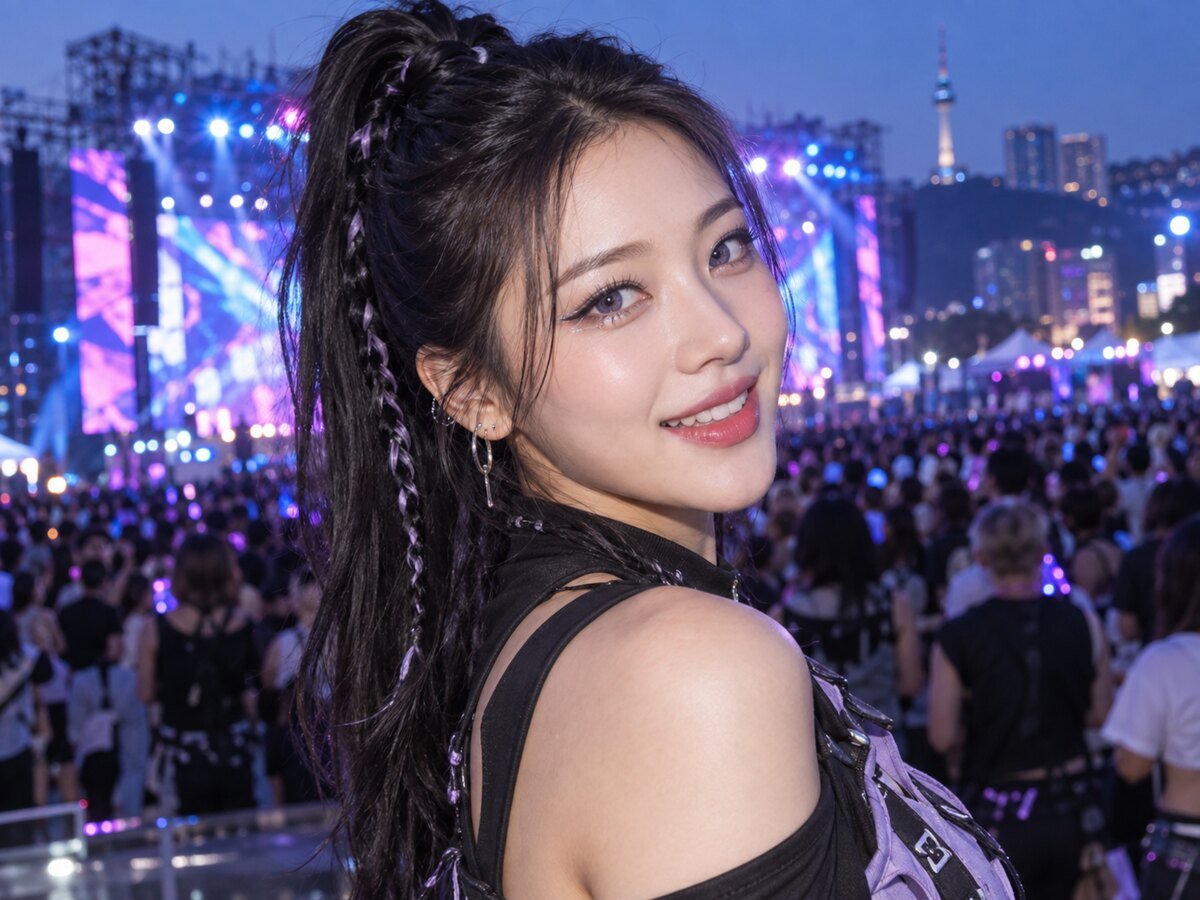
Choose concert or festival contacts for your own outfit and the photographs you expect to take, not for how an artist's eyes look on a stage screen. Start with one visual priority: repeat a color in your clothing, create contrast around the eyes, or keep the face understated beside a bold outfit. Then check whether the exact fitted lens and your event plans are compatible. A striking design is only useful if your plan also works when you decide to take it out.
In this guide

Start with the photo you will actually take
Concert and festival styling often begins with a stage photograph, but your own pictures will be made at very different distances. A group selfie may show little detail in the iris, while a close portrait can reveal the entire printed pattern. Decide which photograph matters most before choosing a lens color. If the lens is only one small detail in a full outfit image, it does not need to be the brightest color in the look. If you expect many face portraits, the boundary of the iris and its relationship to liner deserve more attention.
Write a one-sentence brief for the event: “The jacket is the focus and the eye stays soft,” “the eye repeats the olive accessory,” or “the gray eye contrasts with a warm lip.” This gives every styling decision a job. It also stops a wishlist from turning into several unrelated purchases. You can build a complete look with one contact-lens direction, one makeup adjustment, and clothing you already own.
Compare reference images cautiously. Stage LEDs, giant screens, filters, and promotional retouching can all change apparent eye color. Even two photos of the same person can disagree. Translate the mood of the reference into color, edge, and contrast rather than claiming to identify an artist's exact lens. A K-pop influence can be clear without copying a product that cannot be verified.
Three concert outfit palettes to test
Neutral outfit, colored eye accent
Black, ivory, and denim allow the contact lens to become one visible color note. Start with the clothes and makeup you already plan to wear. Then test whether a muted gray, olive, or warm brown lens adds something to the portrait. If the outfit has graphic accessories or a strong lip, the lens can be quieter. A contact does not have to carry the entire theme. Try one accent at a time and photograph the face and neckline together.
A black outfit can make a cool iris feel more distinct, but black eyeliner may become a second heavy border. If the eye looks crowded, soften the liner before changing the lens. An ivory top may reflect light toward the face and change how the iris appears in a photograph; keep exposure comparable when reviewing options. Denim offers a cool color nearby, yet exact blue contacts are optional. Gray, brown, or green can make a more nuanced contrast with the fabric.
One saturated garment, restrained makeup
If your jacket or top is the strongest color in the outfit, let it lead. Choose a lens that echoes that color softly or stays neutral enough to support it. A bright green garment does not require a bright green iris. An olive print can be a small connection, while a brown lens can keep attention on the jacket. Compare at portrait distance: can you still see the intended eye detail, and does it support the garment rather than compete with it?
Use a familiar brow and lip for the first trial. If you add a saturated cheek, matching eyeliner, and bright contact simultaneously, you cannot tell which element is helping. Test the lens and clothing first, then decide whether one makeup accent improves the result.
Statement hair or accessory, quiet iris
Hair color, glitter accessories, metallic details, and light sticks can already occupy the visual spotlight. A quieter contact can still make the face look intentional. If a bold lens is important to you, simplify another element near the face. The goal is not a rule about how much color is permitted; it is a clear hierarchy that reads in ordinary photographs.
Check both daylight and indoor versions if possible. Metallic accessories may reflect venue lighting, while your lens print stays the same. If a look works only under one edited or colored light, decide whether that lighting will actually be available where you plan to take pictures.
A green-lens comparison that separates appearance and logistics
The two green-category examples in this guide show why an event shortlist needs more than a color label. KPOP2 currently lists OLENS Scandi Olive as an 11.9 mm graphic, monthly, two-lens box. I-DOL Canna Roze Olive Green is listed with a 13.0 mm graphic and one lens per box. The Canna Roze page currently conflicts on replacement schedule: its title and top badge say monthly, while the details say 3–6 months and the specification field says six months. Verify the exact schedule against the package and manufacturer instructions before ordering or wearing it.
The graphic measurements describe printed area, not how bright the finished eye will look at a concert. Scandi Olive's smaller graphic does not automatically make it the most subtle choice. The pattern, its edge, your iris color, makeup, and lighting all affect the result. Look at the product's model image and close-up separately. The model photograph is useful for overall styling; the close-up is useful for understanding the print. Neither is a guarantee of your personal result.
Packaging is a different question. A one-lens box contains one physical lens. If both eyes need lenses, work out quantity and prescription for each eye before checkout. A two-lens box contains two pieces, but different left and right powers can still affect what you need to order. Do this arithmetic before the event week, when a missing lens or incorrect power leaves little time to resolve it.
Build an event-day plan around the full schedule
A concert is more than the performance. Count travel to the venue, queues, opening acts, the return journey, and any meal or rest stops when thinking through your day. Follow the wearing advice for your exact fitted lens and your eye care professional; a replacement schedule is not a daily wear-time allowance. Do not set a universal number of hours from a general blog article.
Carry backup glasses in a case you can reach. The FDA's everyday eye-care advice recommends backup glasses and says not to sleep in daily-wear lenses. That matters if travel runs late or the event changes. A glasses-friendly version of the outfit can use the same hair, lip, jewelry, and clothing. Plan that version before leaving so a lens-free evening still feels intentional.
Check the organizer's current bag rules and any liquid restrictions. Do not pour contact solution into a small improvised bottle to meet a venue limit. The FDA advises against transferring solution into smaller containers because this can compromise sterility and create mix-ups. If you need a care product, plan around an appropriate original package and the venue policy. If carrying it is not practical, discuss a suitable alternative routine with your eye care professional rather than improvising at the venue.
Know how you will respond if you want to remove a lens. You need clean hands, appropriate supplies for a reusable lens, and a place where you can handle it without rushing. The safe option may be to switch to glasses and stop wearing lenses for the rest of the day. Never let the outfit or a planned photograph pressure you to continue wearing a lens that is uncomfortable or causing concerning symptoms.
A rehearsal photo method that reduces guesswork
Use two basic setups: an ordinary daylight portrait and an indoor portrait. Keep the camera distance and angle similar. Turn off beauty filters and avoid comparing a close-up of one lens with a full-face image of another. Take an outfit photo too, especially if the eye color is meant to relate to clothing near your face. This rehearsal will not predict every stage light, but it can show whether you like the look outside one ideal photograph.
Record four observations: apparent iris color, outer-edge definition, makeup balance, and whether the outfit connection is visible. For example, “olive detail appears in daylight, but the jacket remains the main accent,” is more useful than “green lens looks good.” If you alter eyeliner or lip color, retake the picture in the same light. One-variable comparisons make a decision possible.
Look at the image on more than one screen if color is critical, but do not chase perfect consistency. Screens render color differently. Your goal is a robust look that you like in ordinary conditions, not an exact digital color match to a stage image. If two lens directions are equally appealing, favor the one whose fitted specifications and practical routine already work for you.
Before you order: a practical checklist
- Confirm the exact fitted model and power. Cosmetic appearance cannot establish fit or prescription.
- Read the current product page. Check colorway, graphic diameter, replacement schedule, box count, and any variant options.
- Resolve any conflicting listing fields. For Canna Roze Olive Green, confirm the replacement schedule before relying on it.
- Calculate physical lens quantity. Count separately for each eye when packaging contains one lens or your powers differ.
- Rehearse the full outfit. Photograph the lens with intended makeup, hair, and clothing in comparable light.
- Prepare the backup look. Keep glasses accessible and make sure the outfit also works without lenses.
- Check venue rules. Confirm current bag and liquid policies directly with the organizer.
For US orders, decorative contact lenses require a prescription even when they have no vision-correcting power. Read the FDA's decorative-lens guidance and KPOP2's prescription information. If an event is too close for a suitable purchase and a calm rehearsal, use the glasses or lens-free version you already know you like. A good concert look should fit your actual plans as well as your inspiration.
Questions and answers
Do contacts need to be bright to suit a concert?
No. A subtle eye detail can work with a strong outfit or hairstyle. Choose the level of contrast you want in your own photos, rather than trying to compete with stage lighting.
Should I match the artist's apparent eye color?
Use it as a mood reference. Stage light and the screen image make it unreliable as an exact product or color reference. Do not assume an artist wore a particular lens without a verified source.
Can I match contacts to a light stick?
You can use that color as inspiration, but exact matching is optional. Try repeating it in a small accessory first, then decide whether the eyes should repeat the color or balance it.
Why compare the same lens in two kinds of light?
It helps you distinguish a design you like consistently from a photograph you like only under one condition. It cannot predict every venue, but it makes the decision less dependent on one flattering image.
Is a one-lens box enough for both eyes?
No. One lens means one physical lens. Work out the quantity for each eye and the exact prescribed power; promotional wording should not replace checking the package-contents field.
What belongs on a short event checklist?
The exact lens, the intended look, your handling plan, accessible glasses and the venue's bag rules. Keep the detailed logistics in the convention and event checklist, separate from your styling inspiration.
Editorial scope: Concert and festival looks here are styling ideas based on the cited sources and current catalog fields. They do not report a controlled wear test or determine an individual lens fit.