Care & authenticity
Halloween Colored Contacts: Costume Color & Photo Guide
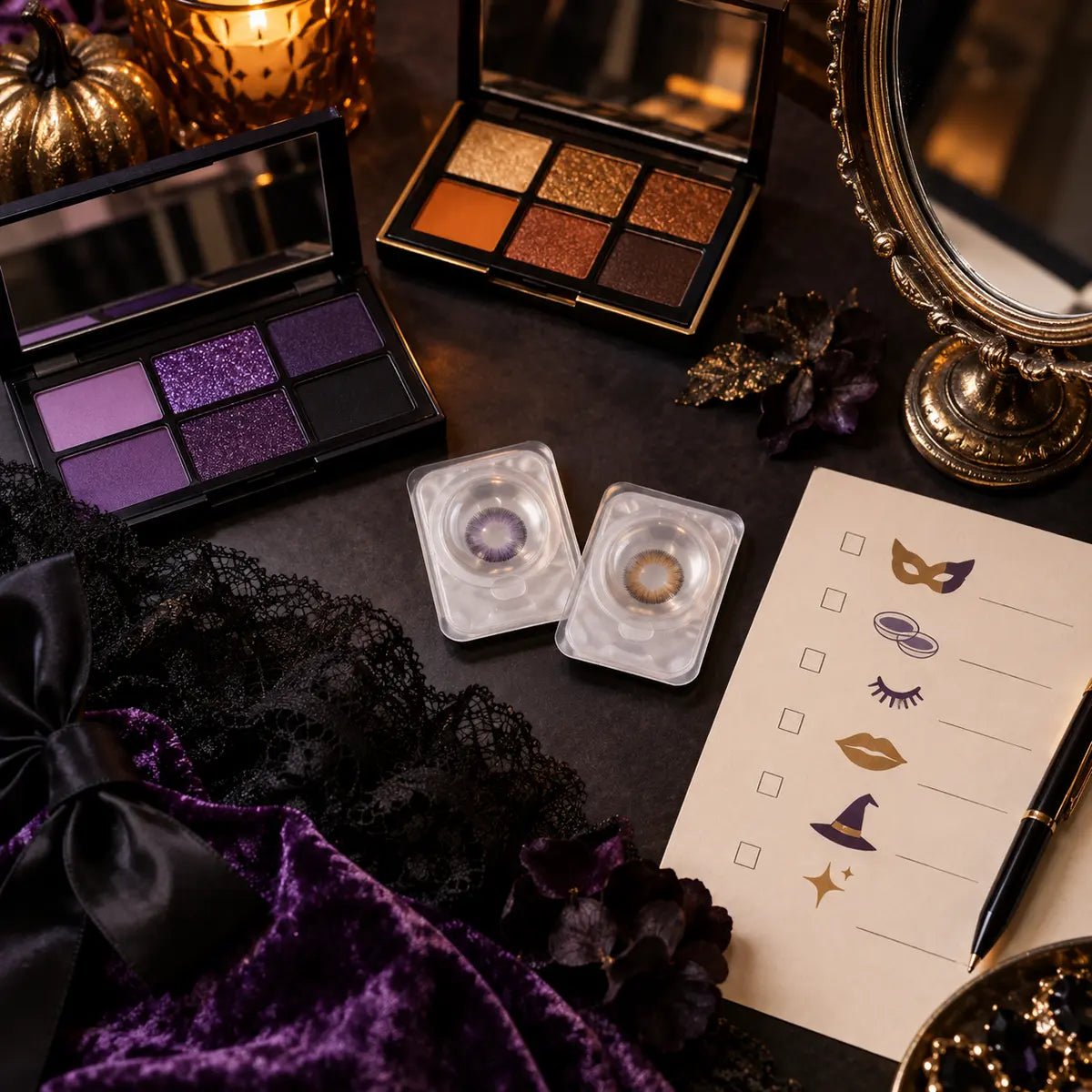
For a Halloween look, decide what the eyes should contribute to the costume: a coordinated color, a stronger iris outline, or a graphic focal point. Compare the exact lens shade and print with your outfit and the event lighting. Treat product photos as styling examples, and confirm prescription and fit well before event day.
In this guide
Choose the lens effect for the costume
Start with the character or theme and decide whether colored contacts are needed at all. Makeup, a wig, clothing, and lighting may create the look without a lens. If you do compare contact lenses, write down the eye detail that matters most: a cool shade, a darker outline, a subtle shift, or a more graphic iris pattern.
Then compare the exact product’s base color, undertone, print, center transition, and outer edge. Costume labels such as “vampire,” “cat eye,” or “white” do not identify the manufacturer, prescribed parameters, or how the design will appear on you. A shade name is only a starting point; check the exact lens and version shown in the listing.
Halloween color and pattern ideas
- Dark or gothic palette: Compare deep brown, gray, or muted tones by the printed pattern and edge. A distinct ring may read more graphic in a photo, while costume makeup and accessories can carry much of the character effect.
- Fantasy or ice theme: Look at the undertone of blue, gray, or violet designs rather than relying on the color name. Compare the lens against your costume palette and remember that bright studio photography may not match the event setting.
- Animal-inspired costume: Focus on overall color and iris pattern. If the character reference uses a slit pupil or unusual shape, treat that as an artistic feature and consider recreating it with costume styling instead of assuming a colored lens can safely reproduce it.
- Original character: Choose one visual focal point. A bold wig or makeup palette may pair better with a simpler lens print, while a restrained costume can leave more room for a patterned eye design.
These are styling directions, not rules tied to a particular eye color, skin tone, or face. You can adapt them to your own taste and to the exact products available in your prescribed parameters.
Plan for lighting and photos
Halloween settings can include dim rooms, colored lights, outdoor lighting, and flash. Each can change how a shade and pattern appear to other people or in photographs. A close-up makes fine print details more prominent; an ordinary-distance view shows a different impression.
When comparing listings, look for both a close view of the lens design and an on-eye portrait when available. Check that the image shows the exact shade and product version. Camera exposure, editing, crop, and the model’s natural iris can all affect the example, so do not treat a product image, filter, or digital try-on as a guaranteed preview.
If photos matter to your costume, test the makeup and outfit in similar lighting before the event. You can evaluate the color palette without wearing a lens that has not been prescribed and fitted for you.
Coordinate makeup and accessories
Build a small palette using the costume, wig, makeup accents, and intended lens tone. Decide whether you want the eye design to blend with the palette or stand out from it. Warm venue lighting can make cool shades read differently, and flash can increase contrast in a photo, so check the full styling under conditions similar to those you expect.
If you wear a contact lens, follow the insertion, removal, and cosmetic-use directions from your eye-care professional and the product instructions. Keep makeup, adhesives, and costume products away from the lens and eye surface. If you are unsure when to apply makeup relative to handling your specific lens, ask your practitioner rather than relying on a costume tutorial.
Plan the timeline before the event
Confirm the exact lens, prescription, fitting, product availability, and care instructions early enough to resolve questions. Do not make an unfamiliar lens or last-minute substitute the first thing you try on event day. Ask your eye-care professional how to handle the exact product and what to do if it feels uncomfortable.
Plan the costume around the wear and replacement schedule on the exact lens. A long event does not extend the permitted wear time. Make sure you have a clean place and enough time to remove lenses as instructed; bring the proper case and compatible care products if your lens requires them. If no suitable lens is available, adapt the look with makeup, accessories, or costume details.
Complete the exact lens safety checks
In the United States, colored and decorative contacts require a prescription and professional fitting, including lenses that do not correct vision. Rules differ by location. Do not share lenses or select one based on costume name, similar color, or another person’s prescription.
Before wearing, confirm the exact product and prescribed parameters, then follow its wear, cleaning, and replacement directions. If you experience pain, unusual redness, light sensitivity, blurred vision, excessive tearing, or another concerning change, remove the lens and contact an eye-care professional promptly. See our cosplay colored contacts fit and safety guide for a more detailed product checklist.
Frequently asked questions
Can I buy Halloween colored contacts without a prescription?
In the United States, decorative contacts require a prescription and professional fitting even if they do not correct vision. Check the rules that apply where you live.
Will a white or bright lens cover my natural eye color?
Do not assume full coverage from a color name or promotional photo. Check the exact product information and treat on-eye images as examples, not a guarantee.
Can I wear Halloween contacts all night?
Follow the exact lens wear schedule and your practitioner’s directions. An event does not extend the permitted wear time.
Can I share costume contacts with a friend?
No. Never share or swap contact lenses; each wearer needs their own prescribed and fitted product.
Editorial note: This is general costume-planning information. U.S. prescription and fitting guidance is based on the FDA’s information about colored and decorative contact lenses. Follow the instructions for your exact lens and seek individual advice from an eye-care professional.