Care & authenticity
Can You Sleep, Shower or Swim in Colored Contacts? Safety Guide
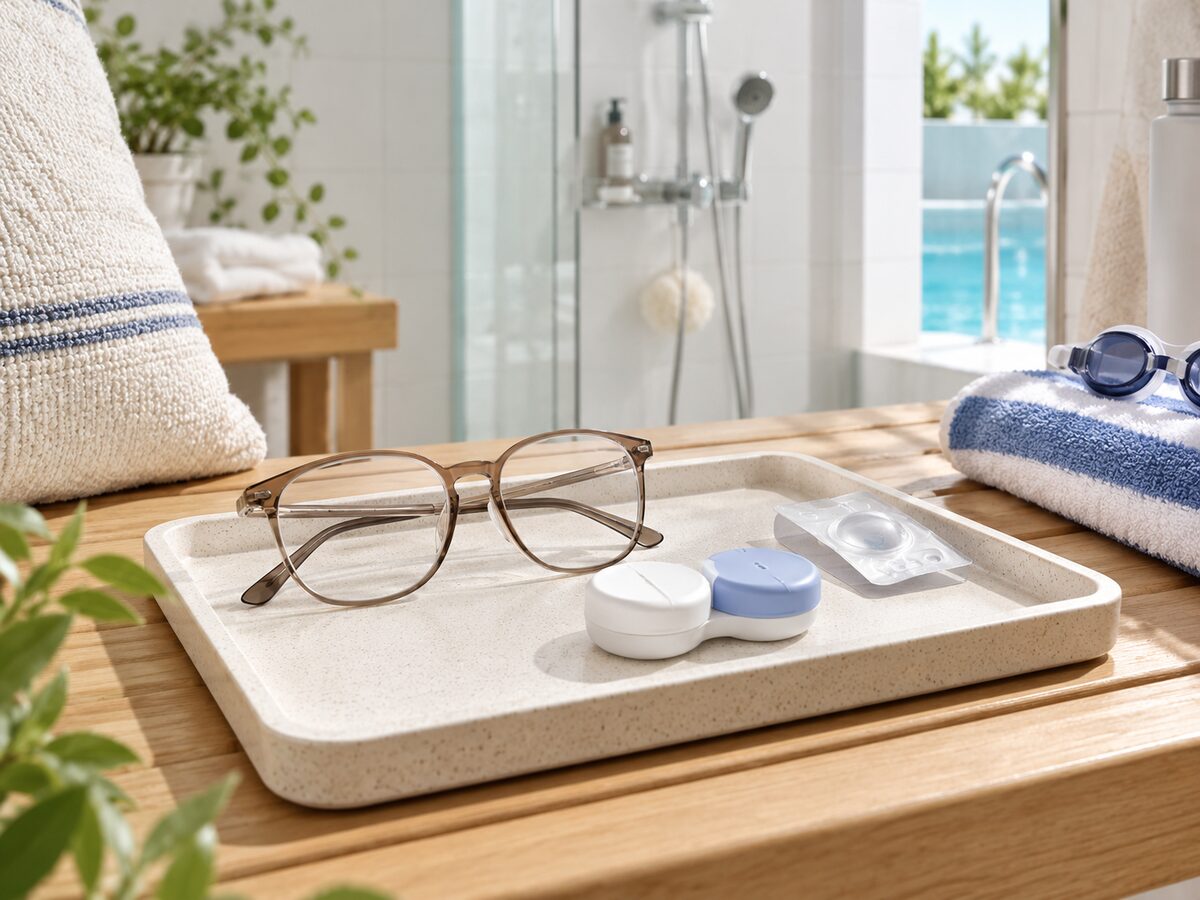
Plan to remove colored contacts before sleeping, napping, showering or swimming. A monthly replacement label does not authorize overnight wear, and a brief water activity does not make exposure a suitable part of lens care. Follow the instructions for your exact lens and your eye care professional's advice. If an accidental exposure is followed by discomfort, redness, pain or changed vision, remove the lenses, keep them out and seek eye care promptly.
In this guide
- A Quick Decision Table for Sleep and Water
- Why “I Only Slept Briefly” Is the Wrong Test
- Why Water Is Different From Contact Lens Solution
- What to Do When Water Reaches a Lens
- When Symptoms Matter More Than the Original Plan
- Pack for Removal, Not Just for Wearing
- Care Products Have Different Jobs
- Four Realistic Schedules
- A Practical Checklist Before the Day Begins
- How to Read the Words on a Lens Package
- Why Prevention Matters Even After Uneventful Wear
- Questions to Bring to Your Eye-Care Professional
- Related categories
- Questions and answers
- Editorial source check

A Quick Decision Table for Sleep and Water
| Situation | Plan before it happens | If it happens accidentally |
|---|---|---|
| Nap or overnight sleep | Remove daily-wear lenses before sleeping unless your eye-care professional has specifically directed otherwise for the exact lens. | Do not treat an accidental sleep as permission to continue wear. Remove when able without force and seek professional advice if discomfort or other symptoms appear. |
| Shower | Remove lenses before entering the shower. | If water contacts a lens, remove it as soon as possible and follow the CDC's water-exposure guidance and your professional's instructions. |
| Pool, hot tub, lake or ocean | Use a lens-free vision plan for water activities. | Remove water-exposed lenses promptly; symptoms call for professional assessment. |
| Lens care away from home | Pack the exact recommended solution, case when applicable and backup glasses. | Do not improvise with water, saliva, old solution or an unapproved container. |
The table is a planning aid, not a substitute for the patient instructions supplied with a particular lens. An extended-wear exception requires the exact product and professional direction. Water exposure and symptoms create different decisions from an uneventful daily removal.
Why “I Only Slept Briefly” Is the Wrong Test
People often ask whether a twenty-minute nap counts or whether a monthly lens can stay in until morning. The important distinction is the prescribed wear schedule, not a guessed safe number of minutes. A daily-wear lens should be removed before sleep. A monthly replacement period describes when a reusable lens is replaced; it does not authorize sleeping in it. The CDC's prevention guidance says to avoid sleeping in lenses unless directed by your eye-care provider.
Comfort is not a reliable permission test. A lens may feel acceptable late in the evening while still being unsuitable for overnight wear. Likewise, a marketing phrase about material or moisture does not replace the manufacturer directions or your practitioner's wear plan. If you are uncertain whether a particular lens has been prescribed for extended wear, assume you need clarification before sleeping in it.
Build the removal point before the moment of fatigue. If you expect to sleep on a flight, have glasses and supplies accessible before boarding. If you attend a late event, identify the point at which you can remove lenses and complete the correct routine. If the plan depends on keeping lenses in because the case is at home, the plan is incomplete.
For a daily disposable, the ordinary end of the scheduled single use is disposal. For a reusable lens, removal is followed by the cleaning, disinfection and storage procedure specified for that lens and solution. Do not turn a daily disposable into a reusable lens by storing it in a case. Do not use an old solution cycle to save time before bed.
Why Water Is Different From Contact Lens Solution
Water can contain microorganisms, even when it is safe for drinking or bathing. The CDC's water guidance explains that water can cause soft lenses to change shape and adhere to the eye, potentially irritating or scratching the cornea. It also identifies Acanthamoeba as one of the organisms associated with serious infection. The practical prevention step is to remove contacts before water activities.
Tap, bottled, distilled, pool, lake and ocean water are not interchangeable with sterile contact-lens care products. The FDA's risk guidance says not to expose lenses to water. Saline is not a disinfectant either. A lens that feels slippery after a rinse is not necessarily clean or safe to reinsert.
Goggles can help with vision needs during water activities, but ordinary goggles should not be treated as a guarantee that contacts will stay dry. The CDC suggests discussing prescription goggles as an option for people who need vision correction while swimming. Ask your eye-care professional what is appropriate for your activity before relying on a workaround.
Think beyond pools. A shower, hot tub, water park, beach, lake or accidental splash can create exposure. The goal is not to calculate which water source is safe enough or how many seconds are acceptable. The goal is to keep lenses out of the water activity and have a plan for unexpected contact.
What to Do When Water Reaches a Lens
If water touches a contact lens, the CDC advises taking it out as soon as possible. For an exposed lens, the CDC says to throw it away or clean and disinfect it overnight before wearing it again; this may reduce infection risk. The choice depends on the lens type and care instructions. A daily disposable is discarded after its single use. For a reusable lens, use the specific disinfecting system prescribed or recommended for that lens. If you are unsure, ask your eye-care professional before reinsertion.
Symptoms change the situation. If you have discomfort, pain, unusual redness, sensitivity to light, discharge or blurred vision, the FDA advises removing the lens, keeping it out and contacting an eye-care professional right away. The FDA also advises keeping the involved lens in its case for possible assessment rather than discarding it. Follow the professional's instructions about how to bring the lens and case to the visit.
Do not put a lens back in simply because the eye looks normal immediately after a splash. The CDC's discard or overnight-disinfection guidance addresses exposure even when there is no immediate symptom. Do not use tap water, bottled water or homemade saline to “clean” the lens. Do not shorten a peroxide system's required neutralization time to return to an event.
If the lens seems stuck or removal is difficult, do not force it or use a tool. Seek professional help and explain that water exposure or sleep may have occurred. The article cannot diagnose what is happening to the eye or determine the right treatment for a specific person.
When Symptoms Matter More Than the Original Plan
It is easy to keep thinking about the original schedule: a photo session, flight, pool party or commute. Once symptoms appear, that schedule should no longer drive the decision. Remove the lens and contact an eye-care professional promptly. The FDA notes that a wearer cannot determine how serious an eye problem is merely from symptoms. Pain, redness, discharge, light sensitivity and changed vision all deserve attention.
When contacting care, explain the exact lens and whether it is a daily disposable or reusable product, when it was last worn, what happened with sleep or water, whether the lens is out, and what symptoms are present. If possible, have the packaging or product name ready. These details help the professional understand the exposure. Do not delay a call to assemble a perfect record.
Keep the involved lens separate from ordinary uneventful disposal if a professional may need to assess it. This distinction is easy to miss: discarding a daily lens after normal use is routine, while the FDA tells people with symptoms to keep the involved lenses for their eye-care professional. Ask how the lens and case should be handled. Do not reinsert the lens while waiting for advice.
If your regular provider cannot respond promptly and symptoms are concerning, seek appropriate urgent eye care. Store support can identify a product or order, but it cannot examine an eye, judge an infection or approve a return to wearing lenses after a symptom.
Pack for Removal, Not Just for Wearing
Travel packing often focuses on the lenses themselves. Add the items that let you stop wearing them when needed: current backup glasses, the correct solution and case for reusable lenses, and enough sealed daily disposables when that format is prescribed. Keep supplies accessible rather than checked when you might need them in transit. A plan that requires retrieving a case from a suitcase at another location will fail at the moment of a nap.
Keep left and right products identifiable if their prescription values differ. Check the replacement schedule and box quantity before travel; a color name does not tell you whether a lens is daily disposable or reusable. If you are using a peroxide care system, pack its dedicated case and follow the full label neutralization time. Never pour solution into an unlabelled bottle or substitute water when supplies run out.
At a hotel, identify where you will remove lenses before showering or sleeping. Do not leave them in because the bathroom is inconvenient. For a beach or pool trip, arrange a lens-free vision alternative in advance. If you need vision correction while swimming, ask about appropriate prescription goggles rather than assuming ordinary goggles protect contacts from water.
Travel also changes time zones, sleep schedules and fatigue. A late arrival can make a careful routine feel optional. A written reminder or clearly packed supplies can help make the correct action simple. The goal is not to wear the lens for a fixed number of hours from an article; follow your own fitted product instructions.
Care Products Have Different Jobs
Contact-lens solution, saline, eye drops and water are not interchangeable. A disinfecting solution is used according to its labeling for the relevant reusable lens. Saline can have a role in some instructions but does not disinfect. Drops may be intended for comfort or another purpose and should be cleared with the eye-care professional for your lenses. Water is not a lens-care product.
The FDA advises against topping off a case with fresh solution over old solution. Empty and follow the case-cleaning and refilling procedure recommended for the care system. Peroxide products have special containers and neutralization steps; the liquid is not placed directly into the eye. If your supplies are missing or you cannot complete the required routine, do not invent a shorter procedure.
The case is part of the system for reusable lenses. Follow the cleaning and replacement instructions, and keep it away from water contamination. The CDC advises cleaning the case with solution, drying it appropriately and replacing it regularly. A daily disposable normally does not need storage between wearing occasions because it is discarded after its scheduled use.
When in doubt about which solution or case is compatible with the exact lens, ask the prescribing professional or follow the manufacturer patient instructions. A store category page cannot settle an individual care-system question.
Four Realistic Schedules
Morning shower before work: shower first and insert lenses afterward using clean, dry hands. If you prefer to insert before dressing, still keep the lenses out of the shower. Build the routine around the water activity rather than trying to protect the lenses from a few drops.
Evening gym and shower: decide where removal happens before entering the shower area. If the lenses are reusable, bring the proper care supplies and glasses. If they are daily disposable, follow the single-use discard instruction. Do not rinse a removed lens at the sink.
Long-haul flight: if you expect to sleep, plan lens removal before the nap. Keep glasses and appropriate supplies in your carry-on. A monthly replacement label does not grant overnight permission. If a lens has been worn beyond the prescribed schedule or symptoms develop, seek professional guidance rather than relying on the remaining flight time.
Pool or beach day: use a lens-free plan in the water and consider professional advice about suitable correction such as prescription goggles. Remove lenses before entering a pool, hot tub, lake or sea. If water contacts a lens unexpectedly, follow the CDC exposure guidance above and watch for symptoms.
A Practical Checklist Before the Day Begins
- Identify the exact lens and read whether it is daily wear, extended wear, daily disposable or reusable.
- Confirm the eye-care professional's specific wear instructions; do not infer overnight permission from replacement period or material.
- Mark the point before any expected sleep, shower, swim or hot tub when the lenses will be removed.
- Pack backup glasses and the correct care products for the exact lens.
- Keep water out of the lens and case; never substitute it for disinfecting solution.
- Know which symptoms require removing lenses and contacting an eye-care professional.
- After an accident, distinguish uncomplicated water exposure from symptoms; follow the CDC and FDA guidance relevant to that situation.
This checklist is designed to make the next action obvious while you are tired, traveling or preparing for an event. The exact patient instructions and professional advice still control your individual wear and care.
How to Read the Words on a Lens Package
Daily disposable refers to a single-use replacement routine. The lens is discarded after its prescribed wearing occasion. It does not mean the lens can be slept in for one night. Daily wear describes wearing the lens while awake and removing it before sleep under the prescribed schedule. These terms sound similar but answer different questions: one concerns replacement and the other concerns when the lens may remain in the eye.
Monthly replacement means a reusable lens is replaced according to the product's stated interval and professional instructions. It does not by itself mean thirty separate wears, permission to sleep in the lens, or permission to skip cleaning between wears. Extended wear is a specific wear schedule for certain products under an eye-care professional's direction. Do not infer that a lens has this status from its color, material, moisture description or online review.
If the packaging or product page uses unfamiliar terms, find the manufacturer patient instructions and ask your practitioner what applies to the exact lens you were fitted with. Keep a copy of those instructions. A shopping title may emphasize color and shade; the package and professional advice determine how the lens is worn, cared for and replaced.
When comparing daily and reusable colored contacts, consider how often you wear them, whether you can follow the required routine, and whether the full prescribed configuration is available. A format that seems convenient for travel is only an option if it is appropriate for your eyes. No replacement schedule removes the water-avoidance and symptom-response rules.
Why Prevention Matters Even After Uneventful Wear
Many people have taken a short nap in lenses or splashed water near an eye without a noticeable problem. An uneventful past exposure does not establish that repeating it is safe. The CDC and FDA guidance addresses risk across wearers and events; it does not promise that every exposure will cause harm. The sensible response is to prevent avoidable exposure and know what to do when it occurs.
Contact-lens-related eye problems can develop quickly, and the seriousness of an irritation cannot be reliably judged at home. The FDA lists pain, unusual redness, discharge, light sensitivity, blurred vision and other symptoms as reasons to remove lenses and get professional assessment. Do not wait for every symptom to appear together. If one eye feels different from the other after sleep or water exposure, communicate that difference when you seek care.
Water can change the behavior of a soft lens on the eye and can carry organisms that are not removed by a casual rinse. Disinfecting products have specific contact times and instructions. Shortening the routine because a lens appears clean is not the same as completing it. Likewise, replacing the solution in a case does not clean a water-exposed lens unless the required lens and care-system steps are followed.
Routine prevention is more effective when it is practical. A person who swims each week needs a reliable lens-free vision plan. Someone who frequently falls asleep during travel needs a removal point and accessible glasses. Someone who wears reusable lenses after evening events needs time and supplies for the full care routine. Choose the plan that fits actual behavior rather than an ideal schedule you seldom follow.
Questions to Bring to Your Eye-Care Professional
- What is the exact wear schedule for this brand and model, and may I sleep in it under any circumstances?
- What should I do if I fall asleep unexpectedly while wearing this lens?
- Which solution and case are appropriate for my reusable lens, and what is the full disinfection time?
- If water reaches the lens, should this specific lens be discarded or can it be disinfected under the product instructions?
- What vision option should I use for swimming, showering and other water activities?
- Which symptoms require immediate contact, and where should I seek help when the office is closed?
Write down the answers for the exact model and keep them with its patient leaflet. The questions are more useful than a generic promise that all colored lenses behave alike. If your product or care system changes, ask again rather than carrying an old routine forward.
Related categories
Browse Daily Contacts and Monthly Contacts only after your eye-care professional has identified appropriate lens options. Confirm the exact model, prescribed parameters, replacement schedule and patient instructions on the product page and packaging.
Questions and answers
Can I nap in monthly colored contacts?
A monthly replacement label does not grant sleep permission. Avoid sleeping in daily-wear lenses unless your eye-care professional has directed otherwise for the exact lens.
Can I shower in colored contacts if my eyes stay closed?
Plan to remove lenses before showering. Water exposure remains possible, and closed eyes do not make showering an approved lens-care practice.
What if pool water touches my lens?
Remove it as soon as possible. CDC advises discarding it or cleaning and disinfecting it overnight before reuse, following the exact lens and care instructions. Contact a professional promptly if symptoms appear.
Can I rinse a lens in bottled or distilled water?
No. FDA advises keeping all water away from lenses, including bottled and distilled water. Use the specified contact-lens care products.
What if my eye becomes red or painful?
Remove the lens, keep it out and contact an eye-care professional right away. FDA advises keeping the involved lens in its case for possible assessment.
KPOP2 editorial guidance using product fields and the linked CDC and FDA sources. Confirm the exact product instructions and professional advice for your eyes.
Editorial source check
Safety and prescription boundaries for “Sleeping, Showering and Swimming with Colored Contacts: Key Questions” were checked against CDC contact-lens guidance, FDA contact-lens safety information, and National Eye Institute guidance. Current stock, specifications, selectable combinations, prices and promotion terms must be confirmed on the live product and cart.