Care & authenticity
Colored Contacts Feel Uncomfortable? When to Remove Them and Seek Care
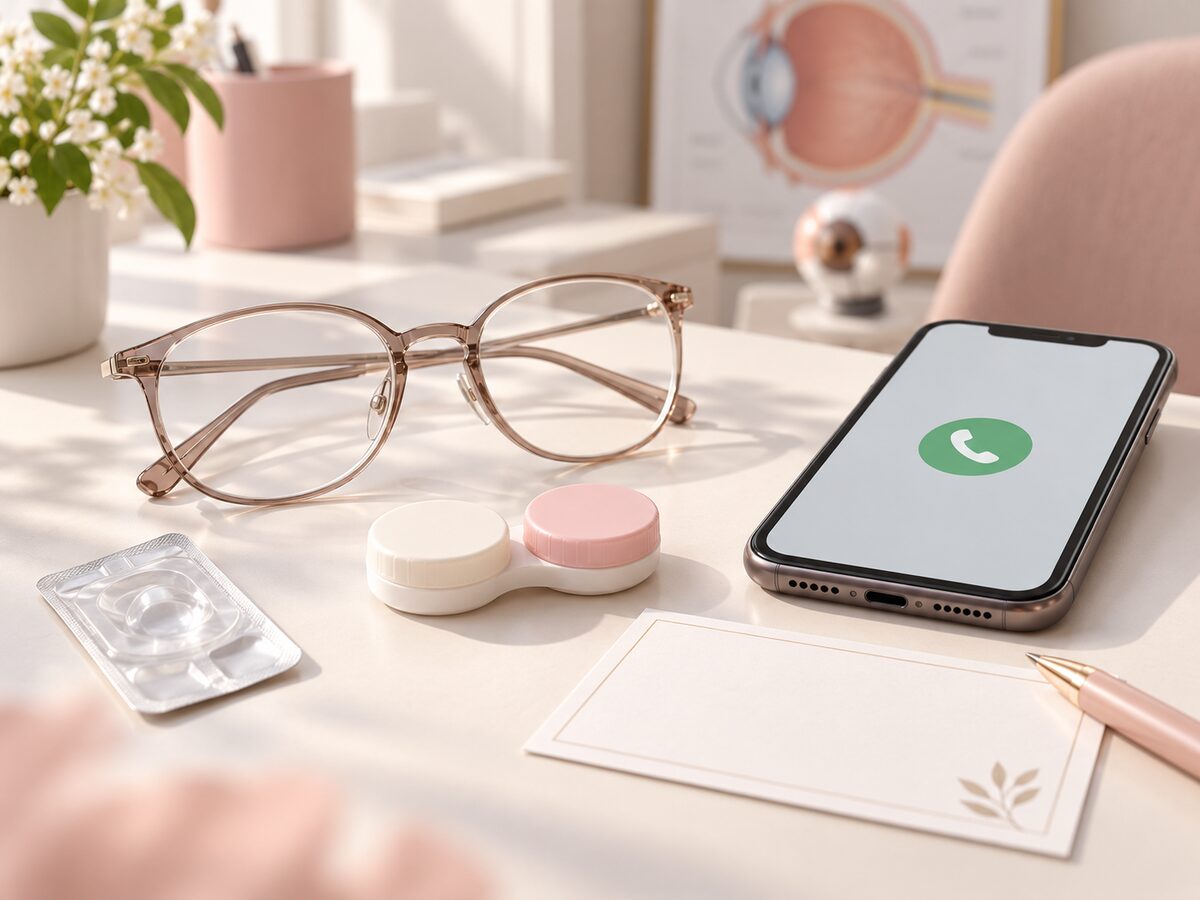
If colored contacts become uncomfortable, remove them, leave them out and contact an eye care professional promptly. Pain, unusual redness, light sensitivity, discharge or changed vision should not become a trial of another lens or solution. You cannot reliably judge the seriousness of a contact lens problem from symptoms alone. If removal is difficult, do not force it; explain that you need help removing a contact lens when seeking care.
In this guide
- The first minutes: remove, leave out, contact care
- How to describe symptoms without guessing the cause
- What to keep available for the clinician
- Do not run a product experiment on a symptomatic eye
- A call script for getting the right help
- When KPOP2 support is the right contact
- What to do when symptoms start away from home
- What a return-to-wear plan should clarify
- Build a routine after the problem is assessed
- A short safety check to remember
- Questions people ask after taking a lens out
- Situations that change the comfort plan
- Official guidance and scope

The first minutes: remove, leave out, contact care
When a colored contact becomes uncomfortable, the immediate question is not whether a different shade would feel better. The FDA advises removing a lens immediately, keeping it out and contacting an eye care professional right away if irritation or infection symptoms occur. It also warns that wearers cannot reliably determine a problem’s seriousness themselves. That applies whether the lens is colored or clear, powered or plano, daily disposable or reusable. The color of the lens does not change the response to symptoms.
If you can remove the lens using the method your clinician taught you, do so gently. If removal is difficult, stop repeated forceful attempts and seek direct assistance. Tell the service that you may still have a contact lens in the eye. Do not keep rubbing or probing to prove whether it is there. You do not need a diagnosis before making the call; describe the symptom and the removal status. If the usual practice is closed, seek timely urgent eye care or emergency guidance appropriate to your location.
Keep both lenses out until a professional advises what to do. One eye feeling normal does not automatically mean it should continue wearing a lens while the other eye is being assessed. The clinician can consider the full situation. Do not use the rest of a social event, a work shift or the cost of a new pair as a reason to delay. If vision is affected, avoid driving or other tasks that require reliable vision while arranging help.
How to describe symptoms without guessing the cause
Give a short factual account: which eye, when the sensation began, what changed, whether the lens is out, and whether vision, light sensitivity, redness, tearing or discharge changed. The FDA lists discomfort, unusual redness, blur, pain, swelling, light sensitivity, discharge, itching, burning and gritty feelings as possible symptoms. The CDC also lists red eyes, worsening pain, light sensitivity, sudden blurry vision, unusual tearing and discharge as warning symptoms. You do not need all of them for the situation to matter. Do not rate your own symptoms against a checklist to decide that the problem is “minor enough” to ignore.
Say “my right eye became painful after insertion” rather than “the pigment caused an allergy” unless a clinician has reached that conclusion. Timing is useful evidence, but it does not prove the cause. A lens can be uncomfortable for more than one reason, and different eye conditions can feel similar at first. Describe any water exposure, sleeping in lenses, product switch, handling difficulty or care-system change honestly. Those facts can help assessment without becoming a self-diagnosis.
Keep uncertainty in the story. If you do not know whether a lens tore, whether you slept briefly in it or exactly when a symptom began, say so. Do not replace an unknown with a confident guess to make the report sound complete. A clinician can ask follow-up questions. A simple timeline written after arranging care can help: insertion time, onset, removal, symptom changes, and relevant products used. It should not delay the first contact.
What to keep available for the clinician
The FDA advises not throwing away the lens involved in a problem because an eye care professional may want to examine it. Store it as directed and ask how to bring it to the appointment. Retaining a problematic daily disposable for assessment is different from reusing it; never reinsert it because it was kept. If you have already discarded it, tell the clinician rather than trying to replace it with a different lens and claiming it is the same one.
Keep the relevant package, blister or carton if available, along with the lens case and care solution information. The exact brand, model, shade, power, replacement type and lot information may help identify what was worn. Keep used and unused lenses distinguishable. Do not mix an involved lens with a spare or with the other eye’s lens. Ask the clinician how to handle the case or solution for assessment instead of cleaning everything away before they can advise.
An order receipt can help identify the product, but it should not delay urgent contact. If the carton and order disagree, keep the evidence and raise the catalog issue with the seller after arranging eye care. A store can investigate what it shipped; it cannot inspect the eye. If you are uncertain which specific lens was worn, say that plainly. A reliable unknown is more useful than guessing from a similar image on a shopping page.
Do not run a product experiment on a symptomatic eye
Trying another lens can complicate the situation and does not identify why the first lens caused discomfort. Do not switch from monthly to daily, clear to colored, hydrogel to silicone hydrogel, or one power to another as a home test while symptoms are unresolved. The same is true of changing brands based on a review that promises better comfort. A product parameter is a catalog description, not a treatment. Even a lens that previously felt comfortable does not establish what is appropriate during a current eye problem.
Do not rinse a lens or eye with tap water to make the product wearable again, and do not top off or reuse old solution in a case. The FDA warns against water exposure and reused solution for contact lens care. Likewise, do not pick an over-the-counter drop or medicine because it is labeled “for contacts” without checking the situation with an eye care professional. Different products have different instructions, and symptoms may require assessment rather than a shopping substitution.
If the lens feels better after removal, that is an observation to report, not a clearance to reinsert it. Symptoms can change over time. Do not decide that a few minutes of relief proves the lens was simply dry. Similarly, moving away from a fan or air conditioner might change how an eye feels but does not prove the absence of another issue. The clinician can interpret the complete history and advise on return to wear.
A call script for getting the right help
You can say: “I wear contact lenses. My left eye became red and painful while the lens was in. I removed it at about 2 p.m., and the pain or blur is still present. How soon should I be seen, and should I bring the lens, case and solution?” Replace the example with your actual facts. If the lens is still in, say that first. If you cannot see clearly, mention that too. You do not have to know the exact clinical term for the sensation.
If the office cannot see you promptly, ask where to obtain appropriate urgent eye care. Do not wait for a social-media reply, product review response or retailer support email. The timing of care depends on the clinical situation, and this article cannot triage a specific eye. Describe symptoms plainly so the service can direct you. If an appointment is arranged, ask whether you should bring your prescription, current glasses, product package and care supplies.
During the visit, ask what the clinician found, whether the involved lens can ever be used again, which supplies should be kept or discarded, what treatment or follow-up is needed, and when or whether contact lens wear may resume. Write down the instructions in ordinary language. If you are unsure about a direction, ask before leaving. A store article cannot set a universal number of hours or days before restarting.
When KPOP2 support is the right contact
Once the immediate eye-care need is addressed, contact the store for factual order issues: wrong variant, damaged packaging, unclear labeling, shipment discrepancy or a question about the listed product. Use the exact order number and full product name, and send clear package images through the stated support channel. Do not ask the seller whether a red or painful eye is safe to wear lenses again. The retailer can investigate the product or order; a clinician must assess the eye.
Separating the two tracks makes both easier. For the clinician, lead with symptoms and the lens in use. For the store, lead with the order and product discrepancy. The product problem could be relevant to the clinical assessment, so retain details, but do not let an order investigation hold up care. If the product you received differs from what was prescribed, do not open a second package to test whether it feels better. Ask the seller about the mismatch and the prescriber about any proposed alternative.
What to do when symptoms start away from home
At work or school, stop using the lenses and follow your removal plan. A clean place to remove lenses and a backup pair of glasses make this easier. If a lens cannot be removed or symptoms are concerning, seek direct help rather than improvising with someone else’s supplies. Do not drive through blurred or unstable vision just to get home. Let the appropriate service know where you are and what has happened.
During travel, the same stop rule applies. A plane cabin, hotel room or unfamiliar climate may be part of the history, but it does not establish a harmless cause. Keep the lens out and seek local eye care if needed. Do not assume a planned return flight is soon enough for assessment. If you are in a region where you do not know the care options, ask local medical services or travel assistance for an eye-care referral. Product customer service can help with later order questions, not urgent triage.
At a wedding, concert or photo shoot, a cosmetic deadline can create pressure to continue wearing an uncomfortable lens. Plan a glasses fallback before the event. Removing a lens may affect the intended look, but preserving the eye and obtaining advice comes first. A makeup artist or friend may help with a mirror or transportation; they should not prescribe drops, force removal or decide that symptoms are safe to ignore.
What a return-to-wear plan should clarify
Return to wear should come from the eye care professional who assessed the problem. Ask whether contacts are appropriate again, which exact lens is allowed, when to restart, whether you need a new prescription or fitting, and what symptoms should prompt another call. Do not resume because the eye looks less red in a photograph or because an older order is still available. The answer can depend on the diagnosis and how the eye responds to care.
If the clinician changes your lens or care system, record the product’s full name and instructions. Ask for a demonstration if insertion, removal or cleaning needs to change. Do not infer that a different brand with the same base curve and power can be used. If you use toric or multifocal correction, keep the complete prescribed configuration. A comfort concern does not authorize a self-chosen optical substitution.
Ask what to do with the involved lens, case and solution. A clinician may want to inspect items or may recommend discarding or replacing them. Do not apply a generic case-cleaning rule to a case involved in a clinical problem without asking. Keep the care plan and any follow-up appointment in your record. If symptoms return, use the contact plan rather than repeating the same lens experiment.
Build a routine after the problem is assessed
Once the clinician has addressed the immediate problem, review your ordinary lens routine. Confirm the prescribed product, wear time, replacement schedule, cleaning and storage instructions. The CDC notes that failure to wear, clean and store lenses as directed can raise the risk of eye infection. Prevention is a plan for future use, not a way to determine retrospectively which one action caused today’s symptoms.
Make the routine easy to follow: keep compatible products together, mark reusable-lens opening dates, replace the case as advised, and bring glasses when circumstances might require removal. Avoid water contact and follow the manufacturer’s and clinician’s directions about sleep and wear. If you use several prescribed colors, identify each case or set so you do not mix lenses or replacement dates. A simple system reduces uncertainty when reporting a future concern.
Do not use comfort marketing claims as the prevention plan. Water content, material family, graphic diameter and base curve each describe part of a product, but none guarantees that a person will be symptom-free. If you want to try a different design, discuss it at a fitting after the eye issue is resolved. This keeps style exploration within a suitable set of products rather than turning it into self-treatment.
A short safety check to remember
- Notice a new symptom while wearing a lens, including discomfort, unusual redness, pain, blur, light sensitivity or discharge.
- Remove the lens promptly if you can do so safely; if removal is difficult, seek direct help without forcing it.
- Leave lenses out and contact an eye care professional promptly. Seek timely urgent care if your usual practice cannot help.
- Keep the involved lens and relevant product information available as advised; do not reinsert the lens.
- Follow the clinician’s assessment and return-to-wear directions before considering another order or product change.
This sequence is intentionally simple. You do not need to choose between “dryness,” “allergy,” “scratch” or “infection” before acting. Symptoms can overlap, and only a clinician can examine the eye and decide what care is needed. A colored lens is a medical device worn for a style goal; when a new symptom appears, the immediate task is to protect the wearer and get an assessment.
Questions people ask after taking a lens out
“The discomfort went away. Can I try the same lens again?”
Symptom relief after removal is useful information for the eye care professional, but it does not identify the cause or establish that reinsertion is safe. Keep the lens out and contact the professional for advice. If they want to inspect the lens, follow their storage instructions. If they tell you to discard it, follow that direction. Do not use a successful few minutes of wear as a substitute for the assessment. The same caution applies if only one eye had symptoms.
“The lens looks intact under a bright light. Is it okay?”
Appearance alone cannot establish whether the eye is healthy or whether the lens caused the symptoms. A visible tear or debris is useful to report, but the absence of a visible defect does not clear the lens for use. Do not reinsert it just to check. Keep the involved product identifiable and let the practitioner decide what examination and handling are appropriate. If there is a packaging concern, save the box details for a later store conversation as well.
“Can I switch to glasses and wait until tomorrow?”
Switching to glasses is a practical way to leave contacts out, but the timing of medical assessment should be decided through professional advice. The FDA says to contact an eye care professional right away when irritation or infection symptoms occur. Tell the service about any pain, redness, light sensitivity, discharge or vision change and ask where and when to be seen. If your regular clinic is unavailable, seek an appropriate urgent service rather than making your own waiting rule from an article.
“Could screen time or a dry room be the only cause?”
A dry setting or long screen session can be useful context. It is not a diagnosis. Similar discomfort can accompany different problems, and a person wearing contacts cannot reliably assess severity from the sensation alone. Remove the lens, describe the room and timing, and seek the professional advice indicated for the symptoms. Later, after the immediate issue is assessed, you can discuss environmental changes, breaks or other routines with the clinician.
“Should I try a different eye drop first?”
This guide does not select a medicine or lubricating product for a symptomatic eye. Ask an eye care professional which products, if any, are appropriate and whether they should be used with contact lenses. Do not use the ability to buy a drop online as evidence that the condition is minor. Tell the clinician what, if anything, you have already put in the eye or used on the lens. That information can be relevant to the assessment.
“What if the problem began with a brand-new lens?”
The newness of the lens is relevant to the history, but it does not establish that the product is defective or that another new lens will be safe. Remove it and get clinical advice. Preserve the exact model, lot and package information for the clinician and for a later seller inquiry if there is a discrepancy. Avoid opening several additional lenses to compare them while the eye is symptomatic. A retailer can investigate a product issue after the immediate care need is handled.
“What if both eyes feel different but only one is red?”
Report both experiences and which lens was in each eye. Do not assume the less visibly affected eye is safe to keep wearing a contact. The clinician can decide whether both eyes need examination and what to do with each lens. Keep the right and left lenses identified, if possible, without delaying care. A photograph may document a visible change, but it cannot replace a clinical examination or show every relevant finding.
“Can customer reviews tell me whether the lens is safe?”
Reviews can describe individual buying or styling experiences. They cannot assess your cornea, diagnose a symptom or authorize a return to wear. A review saying that someone else solved discomfort by changing solutions is not evidence that the same action fits your situation. Use the professional assessment for care decisions. Later, if you want a different color or product, use reviews only as one input to style research within the choices your prescriber considers suitable.
These questions are educational prompts for a conversation with an eye care professional. They do not provide individual triage, treatment or permission to resume lens wear.
Situations that change the comfort plan
| Situation | Practical response |
|---|---|
| Airplane cabin | Carry glasses and the correct supplies; remove lenses if discomfort develops instead of extending wear for the flight. |
| Possible freezing or overheating in transit | Keep the package sealed and ask the seller or manufacturer for product-specific guidance; appearance alone is not enough. |
| False eyelashes or lash extensions | Keep adhesives, removers and cosmetics away from the lens and eye; follow professional instructions and use a glasses fallback. |
| Frequent movement with blinking | Stop using the lens and arrange a fit check rather than trying to hold or reposition it repeatedly. |
| One edge feels noticeable | Remove the lens and inspect only as instructed; persistent one-sided symptoms need professional assessment. |
| Comfort changes later in the day | Do not use an earlier comfortable period as permission to continue through symptoms. |
| Reusable lens feels different before replacement | Deposits, damage, care problems or eye changes are possibilities—not a self-diagnosis. Remove it and follow the appropriate care or professional advice. |
Pain, marked redness, light sensitivity, discharge or a change in vision are stop signals. Remove the lenses and seek prompt eye-care advice. Do not rinse contacts with water, sleep in them unless specifically prescribed, or use cosmetic timing as a reason to ignore symptoms. See the FDA’s contact lens risk guidance for general safety context.
Official guidance and scope
This article summarizes the FDA contact lens risk guidance and the CDC overview of contact lens-related eye infections. Both advise removing lenses and contacting an eye care professional when concerning symptoms occur. This consumer information cannot diagnose the cause, determine urgency for an individual case or authorize return to wear. Follow the clinician’s advice for your location and circumstances.