Lens reviews & comparisons
Can a 13.0 mm Graphic Look Larger Than a 13.4 mm One?
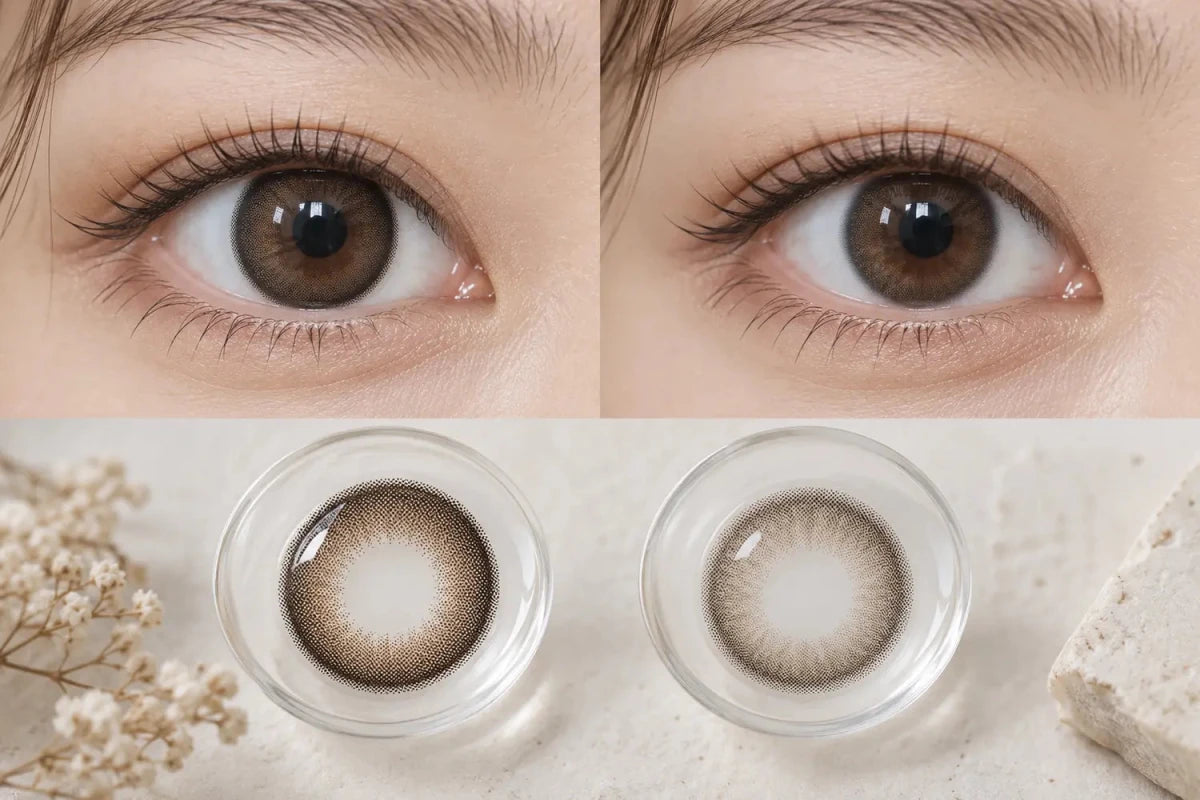

Yes—in appearance, a 13.0 mm graphic can look more defined or enlarging than a 13.4 mm graphic when its border is darker or sharper. The smaller number does not physically become larger; the viewer responds to the visible boundary and the complete print. Compare the exact designs under similar conditions before using the measurements to predict a look.
Graphic diameter describes the print
Graphic diameter is a product measurement for the colored area as the seller or manufacturer defines it. Total lens diameter (DIA) is a separate lens specification. Check which measurement a listing provides and confirm it belongs to the exact model, shade, and version. Neither number alone tells you how dark the ring is, how gradually the print fades, or how the design will appear on a particular iris.
Why the smaller graphic may look more defined
Imagine a 13.0 mm design with a continuous dark ring beside a 13.4 mm design whose edge fades into small, pale marks. In one matched photo, the dark boundary may attract more attention even though its stated graphic diameter is smaller. That example explains a possible visual effect; it is not a rule about every 13.0 mm or 13.4 mm lens.
Edge softness, center pattern, color contrast, and the wearer’s natural iris all matter. A narrow print with a crisp border may look more graphic. A wider print with a gradual edge may blend into the iris. Lighting, flash, camera distance, and cropping can change which boundary stands out. “More defined,” “more enlarging,” and “more natural” are separate judgments, so decide which one you are comparing.
Compare the two designs fairly
- Verify the exact versions. Match brand, model, colorway, and replacement format.
- Confirm the measurement label. Keep graphic diameter separate from total DIA and follow the listing’s definition.
- Inspect the full print. Compare outer-ring darkness, edge fade, center pattern, and main color field.
- Use matched images. Compare similar natural iris colors, lighting, angles, and face distances.
- Keep the result specific. Describe what the images show; do not assume the same visual scale on your eyes.
A close-up can help you inspect print detail, but a face-distance photo shows how the lens reads in context. If the product listing does not state graphic diameter, do not estimate it from pixels or a model photo with unknown scale. You can still compare visible pattern and edge definition, while leaving the number unconfirmed. Our guide to why small graphic designs can still look enlarging covers the same principle beyond this numerical example.
Use measurements for description, not fit
Graphic diameter is not a fitting recommendation. Choosing a lens requires the exact product and your current prescription. In the United States, the FDA advises buyers to verify the exact lens identity and prescribed details. Follow local rules and ask your eye care professional before changing lens models. Do not select a lens only because its graphic diameter promises a particular appearance.
Frequently asked questions
Does 13.4 mm always look larger than 13.0 mm?
No. The measurement is larger, but perceived size also depends on the full design, wearer, and viewing conditions.
Can I compare the number across two brands?
Only after confirming both listings use the same definition and refer to the exact lens versions.
Is graphic diameter the same as total DIA?
No. They describe different measurements. Check the product record for each field.
The takeaway
A 13.0 mm design can look more defined than a 13.4 mm design when its edge creates a stronger visible boundary. Treat the measurements as product descriptions, then compare print, natural iris, and matched photos for appearance. Neither number predicts fit or guarantees the same result on every wearer.