Care & authenticity
Colored Contacts and Makeup: The Right Order for Insertion and Removal
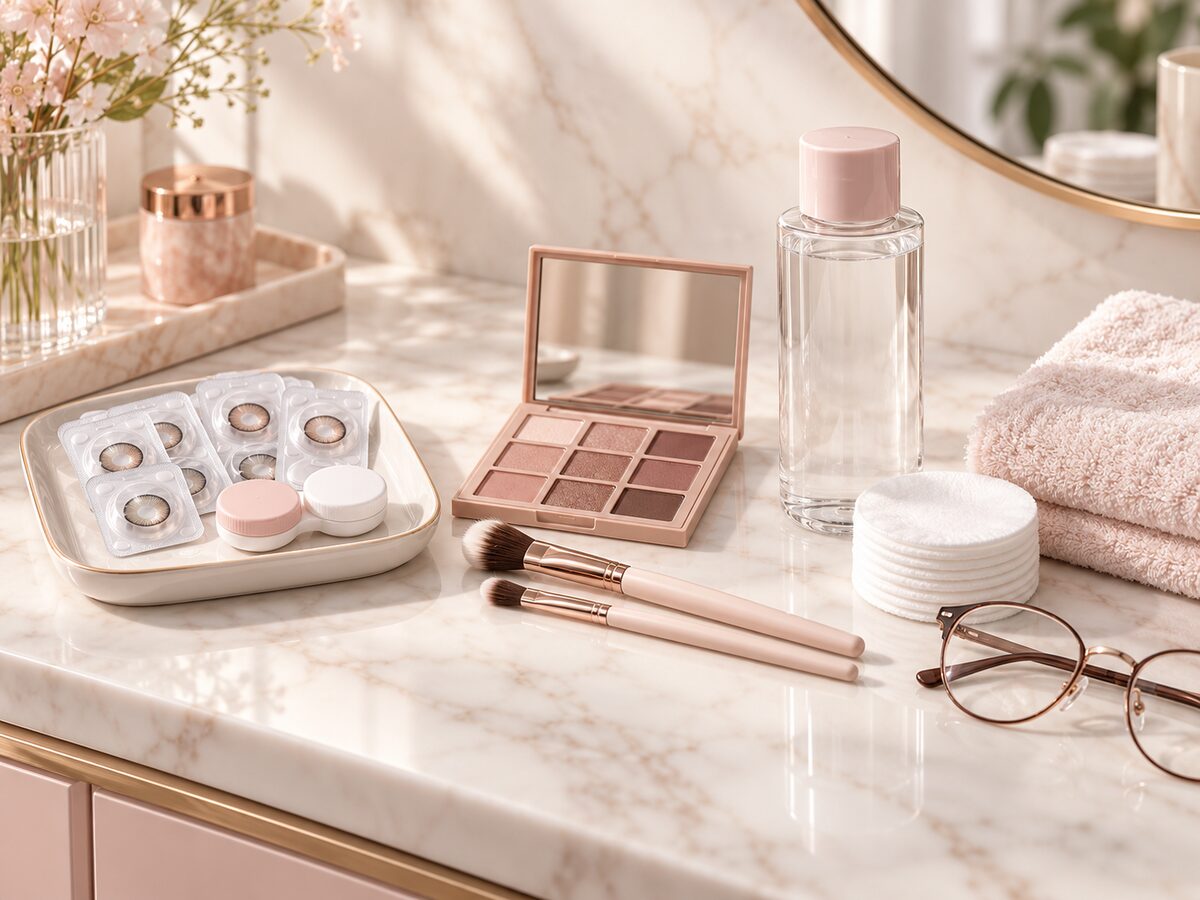
Insert contact lenses before applying makeup and remove them before taking makeup off. If you use aerosol products such as hairspray, apply them before inserting lenses. These steps follow FDA guidance and give you a simple framework: finish the earlier styling tasks, prepare for lens handling, insert lenses, then apply cosmetics; reverse the lens-and-makeup relationship at the end of the day.
In this guide
- The simple order for contacts, makeup and cleansing
- A practical morning sequence
- Choose eye cosmetics for their intended use
- Touch-ups while wearing colored contacts
- A practical evening sequence
- How to coordinate with a makeup artist or event schedule
- When a beauty routine needs to stop
- Common routine mix-ups and clearer decisions
- A two-part checklist to save
- Related categories
- Questions and answers
- Editorial source check

The simple order for contacts, makeup and cleansing
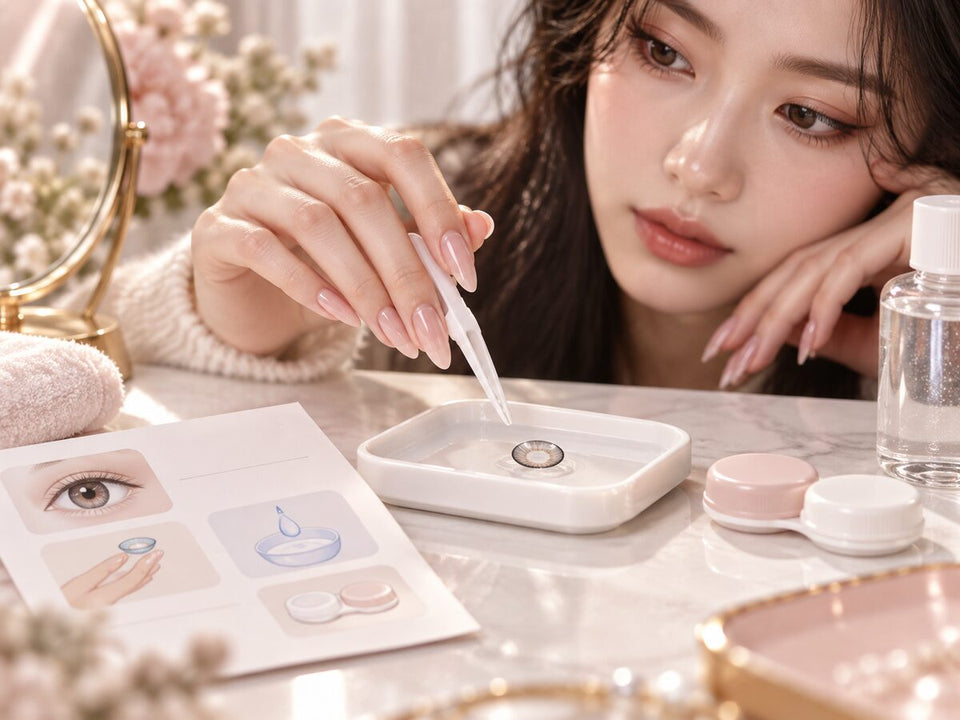
The most useful sequence is easy to remember: prepare for lens handling, insert the prescribed contacts, then apply cosmetics. At the end of the day, prepare your hands, remove the contacts, follow the lens’s after-use instructions, and only then remove makeup or cleanse the face. The FDA’s everyday eye care guidance recommends cosmetics after lens insertion and lens removal before makeup removal. It also recommends applying aerosol products before lenses are inserted. Plan these steps before you are holding an open blister or a makeup brush.
This order helps keep cosmetic products away from the lens during handling. It does not guarantee that any makeup is compatible with a particular eye or lens, and it does not replace manufacturer or eye care professional instructions. Use the exact lens you were prescribed, follow its wear and care routine, and adapt the surrounding beauty tasks to that routine. If a stylist or makeup artist is involved, tell them the sequence in advance so they can organize the appointment without asking you to reverse the lens steps.
Set aside enough time for lens insertion and removal. A rushed morning or a late-night event can invite shortcuts such as handling lenses after touching several cosmetic containers or postponing removal until after cleansing. A written two-line checklist on the vanity can make the sequence automatic. Keep backup glasses available, especially if you need vision correction while preparing or if a lens must be removed unexpectedly.
A practical morning sequence
- Complete any shower or water activity before lens insertion and follow the applicable lens instructions.
- Use hairspray or other aerosol products before inserting contacts, in line with FDA guidance; allow the area and hands to be ready for lens handling.
- Wash and prepare hands as directed for the lens. Identify the exact product and right and left selections.
- Insert the prescribed lenses using the method taught by your eye care professional.
- Apply eye-area cosmetics only as directed for those products, using clean applicators and a stable setting.
- Keep a plan for lens removal and backup glasses if discomfort or a change in vision occurs later.
These steps describe order, not a universal cosmetic technique. The FDA’s eye cosmetic safety guidance says products used near the eye should be intended for that area, and it cautions against sharing eye cosmetics. Read the labeling of eyeliner, mascara, shadow, adhesive or remover before use. Do not assume that a matching shade, “clean beauty” claim or retailer category guarantees suitability for contact lens wearers.
If you accidentally touch a phone or makeup container between hand preparation and lens handling, return to the appropriate hand-preparation step. Do not treat an applicator or fingertip as clean merely because it looks clean. Keep lens supplies and cosmetic tools in separate spots so that a case, bottle or blister does not become confused with a remover or skincare product. Avoid putting the lens down on a makeup-covered surface.
Choose eye cosmetics for their intended use
The FDA warns against using a cosmetic near the eye unless it is meant for that area. A lip liner is not automatically suitable as eyeliner simply because its color works with the contacts. Check ingredients and usage directions for the specific cosmetic. If you use false lashes or extensions, the FDA notes that their adhesives are cosmetics and that the eyelid area can react to them. Ask an eye care professional about concerns with an exact product rather than assuming an adhesive is harmless because it is popular.
Keep applicators clean and do not share mascara, liner or other eye cosmetics. The FDA also warns against using testers that have been shared without appropriate single-use applicators. These habits matter whether you wear colored contacts or clear ones. Contact lenses add another object being handled near the eye; they do not make a questionable cosmetic safer. If an eye cosmetic irritates the area, stop using it and seek professional advice if irritation persists.
Do not apply or remove eye makeup in a moving car, bus or train. The FDA cautions that a sudden movement can cause an applicator to injure the eye. Save the touch-up for a stable setting with a mirror and clean tools. A photograph deadline is not a reason to use a mascara wand near the eye while the vehicle is moving. If you need a long-lasting look, plan the products and timing before travel rather than treating the journey as preparation time.
Touch-ups while wearing colored contacts
A touch-up should stay within the original hygiene and intended-use plan. Keep cosmetics away from the lens and avoid touching the eye with an unclean applicator. If you need to handle or remove a contact, stop the cosmetic step, prepare hands as taught and follow the lens routine. Do not switch rapidly between a phone, shared brushes, eyeliner and lens handling without resetting the clean handling sequence.
Discard dried mascara rather than adding water or saliva. The FDA warns that these additions can introduce microbes or compromise the product. The same fluids are not acceptable contact lens care substitutes. A small beauty bag can contain several liquids with very different functions: cleanser, remover, sterile saline, multipurpose solution or peroxide. Read each label and keep them identifiable rather than relying on bottle shape or color.
If a cosmetic flakes, transfers or feels irritating, do not make a home diagnosis based on appearance. Stop using the product and follow eye care advice. If the lens itself becomes uncomfortable, unusually red, painful or associated with blur or light sensitivity, remove it and contact an eye care professional promptly. Switching to another eye makeup look is not a substitute for assessing a symptomatic eye.
A practical evening sequence
- Set out the correct lens case and care products if your prescribed lens is reusable, or prepare the discard plan for a daily disposable.
- Wash and prepare hands according to the lens instructions.
- Remove the contacts using the method taught by your eye care professional, before starting makeup removal.
- Complete the product’s after-use instructions: discard a daily disposable or clean, disinfect and store a reusable lens as directed.
- Remove eye makeup and cleanse the face with products intended for their stated use.
- Record any symptoms or handling problems and contact a professional when needed.
The FDA’s lens-care guidance says to follow the professional and manufacturer directions for cleaning, disinfection and storage. A makeup remover is not a lens solution, and sterile saline does not replace disinfection. Do not store a reusable lens in cleanser, water or an improvised liquid. If the required care products are unavailable, ask the eye care professional what to do rather than keeping the lenses in longer or inventing a storage method.
Removing lenses before makeup removal also helps avoid working cleanser or eye-makeup remover around a lens still on the eye. Do not treat this as permission to use any remover near the eye afterward; follow the cosmetic’s own instructions. If removal becomes difficult, stop forceful attempts and seek appropriate help. Do not start a vigorous cleansing routine with the lens still in place merely to finish the bedtime steps.
How to coordinate with a makeup artist or event schedule
Tell the artist that lens insertion must happen before cosmetics and that hair aerosols should be applied before insertion. Ask for a stable, clean space and enough time to handle the lenses without interruptions. The artist can arrange the styling order but should not choose a prescription, advise on lens care or decide whether a symptomatic eye is safe. If adhesives, glitter or unusual eye products are planned, check their intended use and discuss any eye-care concerns before the event.
For a wedding, performance or long photoshoot, plan the end of the day as carefully as the beginning. Identify where you can remove lenses, where the correct supplies are, and how you will see if you switch to glasses. A daily disposable and a reusable lens need different after-use steps. Do not prolong wear or sleep in a daily-wear lens because removing makeup and contacts feels inconvenient after the event.
If a manicure changes how you handle lenses, schedule a technique review with your eye care professional before the event. A stylist cannot determine whether your hand position is safe for lens removal. If the removal routine is unreliable, glasses may be the better event choice. The beauty plan should fit the lens plan, including a way to stop wearing contacts if discomfort occurs.
When a beauty routine needs to stop
Eye irritation can have more than one possible cause. Do not decide from a product photo or a single sensation that the cosmetic, lens, remover or environment is responsible. The FDA’s contact lens risk guidance says to remove lenses and contact an eye care professional right away if irritation or infection symptoms occur. Keep the lens out and describe the symptoms, products and timing. If removal is difficult, tell the service directly.
The FDA’s eye cosmetic guidance separately recommends stopping a cosmetic that causes irritation and avoiding eye cosmetics during an eye infection or inflamed surrounding skin. If contact-lens symptoms are also present, follow the prompt lens-care response rather than waiting to see whether removing a cosmetic alone solves the problem. Keep involved products and their names available for the clinician as requested, but do not delay care while assembling a perfect product list.
Do not reinsert an involved lens to test a different eyeliner, mascara or cleanser. Do not rinse a lens in water to remove visible makeup. If the lens was involved in symptoms, the FDA advises retaining it for possible professional assessment. Follow the clinician’s instructions about the lens, case and when wear may resume. A store can answer an order or product-identity question, but it cannot diagnose the eye.
Common routine mix-ups and clearer decisions
Hair spray after lenses. The FDA places aerosol use before lens insertion. Plan hair styling earlier or coordinate with the stylist before the lens step. Do not rely on closing your eyes as a substitute for planning the order.
Makeup first, then contact lenses. Reverse that sequence for future use. If you already applied makeup and are uncertain how to insert lenses cleanly, ask the professional about the appropriate approach rather than improvising with cosmetic-covered hands.
Late-night cleanser with lenses still in. Remove the lenses first using the taught method. Then complete the lens’s after-use routine and start makeup removal. If you cannot remove a lens, seek help instead of continuing forcefully or sleeping in it.
Shared mascara at a fitting or party. Do not share eye cosmetics. The FDA warns that shared products can transfer germs. Bring your own labeled products and clean applicators when a touch-up is planned.
Water added to dried mascara or a lens case. Do not use water as a quick fix for either product. Discard dried mascara as the FDA advises. Follow the correct lens care system, which does not use water as a substitute for cleaning or storage.
A two-part checklist to save
Before makeup: Confirm the correct prescribed lens and eye, complete any aerosol step, prepare hands, insert lenses with the taught method, then apply eye cosmetics intended for that area using clean tools. If the lens feels wrong, address that before building the makeup look. Keep glasses accessible.
Before cleansing: Prepare hands, remove lenses, discard or care for them according to the exact product instructions, then remove cosmetics. If a lens is difficult to remove or the eye has pain, marked redness, light sensitivity or changed vision, seek eye care promptly. The checklist is a scheduling aid, not a substitute for clinical or manufacturer directions.
Related categories
Use Colored Contacts to identify the exact lens you plan to wear with makeup, and review its handling instructions before following the sequence above. The collection is only a product-discovery route.
Questions and answers
Editorial scope: This guide describes a practical sequence for makeup and contact lens handling. Follow the exact lens package directions and professional advice for your product.
Editorial source check
Safety and prescription boundaries for “Colored Contacts and Makeup: The Right Order for Insertion and Removal” were checked against CDC contact-lens guidance, FDA contact-lens safety information, and National Eye Institute guidance. Current stock, specifications, selectable combinations, prices and promotion terms must be confirmed on the live product and cart.