Style & occasions
Cosplay Contacts and Wig Color: Match Character Eyes With Your Full Look
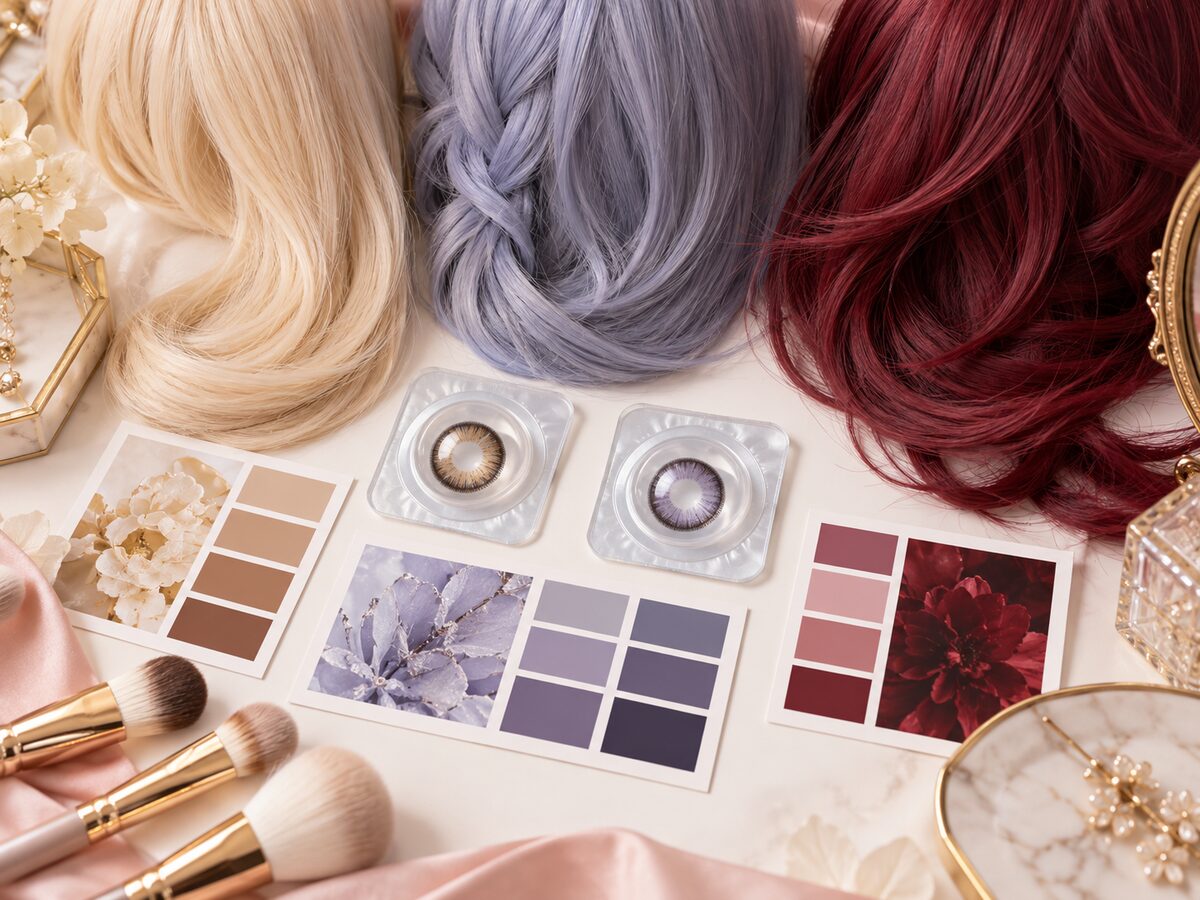
Choose cosplay contacts by identifying which eye detail makes the character recognizable, then compare that detail with your wig and makeup in ordinary photographs. The important feature may be a color family, a dark boundary or a contrast with the hair—not an exact match to one animated frame. Start with fitted lens options and decide what you can translate convincingly. A costume can stay recognizable even when the contact-lens design is an interpretation rather than a literal copy.
In this guide
- Start with the character’s strongest eye cue
- Compare the physical wig, not just its shade name
- Compare lens pattern, edge and center as separate features
- Build a shortlist without losing product identity
- Rehearse the full look in ordinary and event lighting
- Plan the convention day as well as the portrait
- Three ways to translate a character brief
- A final decision check
- Related categories
- Questions and answers
- Editorial source check

Start with the character’s strongest eye cue
A cosplay look rarely depends on matching a single pixel from one frame. Choose the version of the character you are portraying and collect two references from that same version: a neutral or ordinary-lighting portrait that shows the eyes, and a wider image showing hair, brows, costume and accessories. If the character appears differently in a game, animation, poster and live-action adaptation, identify which one is your target. This gives you a stable brief instead of changing the desired lens after every search result.
Look for the eye cue a viewer notices first. Is it a cool gray iris against a warm wig, a bright saturated color, a dark outer ring, a soft center transition or a very light impression? Write that cue in plain words. The illustrated eye may also have highlights, impossible gradients or lighting effects that no lens can reproduce. Decide which one or two features matter most for recognizability and which can be handled by makeup, lighting or costume design. This turns an unachievable exact copy into a useful styling plan.
Separate a character’s permanent design from scene lighting. A blue eye shown under red stage lights may appear violet in one frame. A wig may also look warmer or cooler depending on the photograph. Use several consistent references when possible, then settle on the source version that fits your costume. Do not let the most dramatic promotional image become the only evidence for a product that you will wear in ordinary light.
Compare the physical wig, not just its shade name
Once you have the reference, photograph the actual wig beside the costume in the light you expect to use. A product listing may call a wig “ash silver,” but the fibers in a room may read as beige, white or blue-gray. The eye color decision should respond to the wig you will wear. Include the brow color in the test because brows can change whether the face feels cohesive or whether the eyes look isolated.
There are two simple ways to relate the lens to the wig. An echo repeats a related undertone, such as cool gray with a silver wig. A contrast gives the eye a separate accent, such as green against warm copper hair. Neither approach is universally correct. The character design and the rest of the outfit decide which helps recognition. Record your choice so you can evaluate a shortlist against a clear goal rather than just picking the brightest swatch.
Consider the costume’s strongest color blocks. A vivid red cape, yellow wig and emerald lens can create three competing accents; that may be exactly right for one character and distracting for another. Look at a full-face and full-costume view before deciding. A lens that looks subtle in an enlarged eye crop can be enough at conversational distance, while a sharp ring that looks exciting in a close-up may dominate the overall expression.
Compare lens pattern, edge and center as separate features
Contact lens color is more than the label “green” or “gray.” Inspect the outer edge, printed density, color transition and center area in identified product images. A dark limbal ring can make eyes look defined even if the main hue is soft. A more open center can allow natural iris color to remain visible, changing the apparent result. A multitone pattern can look less like a flat animated fill and more like a blended real-eye effect. Decide which result serves the character before comparing products.
Do not infer coverage or opacity from a color name, a tone-count label or a heavily edited photograph. If the model has dark eyes and you have light eyes, or vice versa, the apparent color may differ. Use product images as examples of styling direction and seek identified wearer images when available, while acknowledging that lighting, camera settings and natural iris color change the impression. No photograph can guarantee the exact result on your eyes.
Graphic diameter describes the colored design area, while overall diameter describes the lens. Those numbers answer different questions. A larger-looking iris may support a doll-like character, but it does not prove better fit or comfort. A smaller graphic area may help a more human interpretation. Use measurements only after the eye care professional has confirmed the exact lens as suitable, and do not treat graphic diameter as a prescription substitute.
Build a shortlist without losing product identity
Give each candidate a row with the full product name, manufacturer or brand, shade, replacement format, package count, available prescription selections and link. Add styling notes such as “cool olive,” “soft ring” or “high contrast.” Keep factual catalog details apart from your visual impressions. Two lenses can share a green-family hue while differing in lens design, replacement schedule or number of pieces in a box. A dramatic look is not an excuse to overlook the exact product being ordered.
For each lens, verify whether the full prescribed configuration is actually available. Check right and left values separately, including toric or multifocal fields when relevant. A page with the desired color but no needed parameter is not a suitable order option merely because a nearby power is available. Ask the seller about catalog availability and the prescriber about any proposed product change. Do not alter a prescription to satisfy a costume brief.
Check the package quantity before calculating what to buy for a shoot or convention. One individual lens per box is different from two or ten, and different eye powers may require separate boxes. The count is an order-planning fact, not a wear-permission rule. Follow the exact lens’s replacement and care instructions regardless of how many pieces are in the carton.
Rehearse the full look in ordinary and event lighting
Once a professionally suitable candidate is chosen, try the wig, brows, makeup and costume elements together in a planned rehearsal. Use the lens only according to the prescription and the taught wear routine. Take a neutral indoor portrait, a wider costume image and, if relevant, a photograph in the event’s lighting. These views answer different styling questions: the close view shows iris design, the portrait shows expression, and the wider image shows character recognition.
Change one styling component at a time. If the eyes look too intense, try a softer brow or less heavy lash before concluding that the lens color is wrong. If the wig casts a deep shadow over the eyes, adjust the fringe or light. If the lens center lets more natural iris show than expected, record that fact rather than editing the photograph to hide it. This method teaches you which component actually changes the result.
Photograph without beauty filters when you need a faithful product comparison. Creative editing is valid for a final character image, but it should be labeled as creative work and kept separate from a neutral lens reference. A recolored iris in a finished portrait cannot establish how the lens will look at a convention or in daylight. Save both types of image for their proper purposes.
Plan the convention day as well as the portrait
A short photo session and a long convention day demand different logistics. Know the lens’s instructed wear schedule, where you can wash and prepare hands, what supplies a reusable lens needs, and how you will switch to glasses if you need to remove the contacts. If the plan depends on wearing a daily-wear lens through sleep or delaying removal until the next morning, revise the plan before the event. Style should fit the lens routine, not the reverse.
Do not share lenses with another cosplayer, even if you share a wig or costume. The FDA’s decorative-lens guidance says contacts are individually fitted and warns against sharing. In the United States, decorative lenses require a prescription even when they have no vision correction. Plan any fitting and prescription needs early enough to avoid last-minute purchases from a costume or novelty seller.
Keep a lens-free version of the character ready. The wig silhouette, costume, brows, accessory and makeup palette can preserve recognition when contacts are not appropriate or need to be removed. Photograph that version during rehearsal. It reduces pressure to keep wearing an uncomfortable lens for the sake of a complete costume. If redness, pain, discharge or changed vision occurs, remove the lens and seek eye care promptly.
Three ways to translate a character brief
Silver-haired character with pale eyes. Identify whether the critical cue is the pale value, a cool undertone or a sharp dark border. A fitted gray or blue-family lens may suggest the character without literally matching a high-key illustration. Try it with the physical wig in neutral light and a wider portrait. If the lens edge dominates, adjust brows and lashes before changing the optical product.
Copper-haired character with green eyes. Decide whether the eye should be a clear contrast or a muted echo of warm costume details. Compare identified green or olive product images for ring strength and center transition. Test the combination with the actual copper wig, since a cooler or redder wig can change the perceived balance. Keep the product’s replacement format and full prescribed options in the shortlist.
Fantasy character with impossible glowing eyes. A contact lens cannot create a self-lit animation effect. Choose a professionally suitable lens that captures the color family or outline, then use lighting, makeup and labeled postproduction to create the fantasy glow. Do not seek an unprescribed novelty lens simply to imitate a digital effect. The finished image can be more faithful to the character than the lens alone.
A final decision check
- Which version of the character is the reference?
- Which eye detail is essential for recognition?
- How does the actual wig look in planned lighting?
- Does the chosen lens’s pattern, edge and center support the desired expression?
- Is the exact lens prescribed and are all needed options available?
- Do package count, wear schedule and care supplies fit the event plan?
- What is the lens-free version if removal becomes necessary?
This order protects the practical decision while leaving room for creativity. The lens is one part of a larger costume system. A successful interpretation can use color, contrast, wig styling and photography without claiming that a product will look identical on every eye or that exact visual accuracy outweighs fitting and care.
Related categories
Browse Colored Contacts or Red Contacts for possible character-color references. Compare the exact model and real product images with the wig and makeup you plan to wear; a collection shade name cannot confirm a character match or fit.
Questions and answers
Editorial scope: Costume and character pairings here are styling interpretations of catalog images, not tested matches or controlled wear results. Confirm product specifications and suitability separately.
Editorial source check
Safety and prescription boundaries for “Cosplay Contacts and Wig Color: Match Character Eyes With Your Full Look” were checked against FDA contact-lens safety information, CDC contact-lens guidance, and National Eye Institute guidance. Current stock, specifications, selectable combinations, prices and promotion terms must be confirmed on the live product and cart.