Toric & prescription
Do 0.00 Colored Contacts Need a Prescription? U.S. Plano Lens Guide
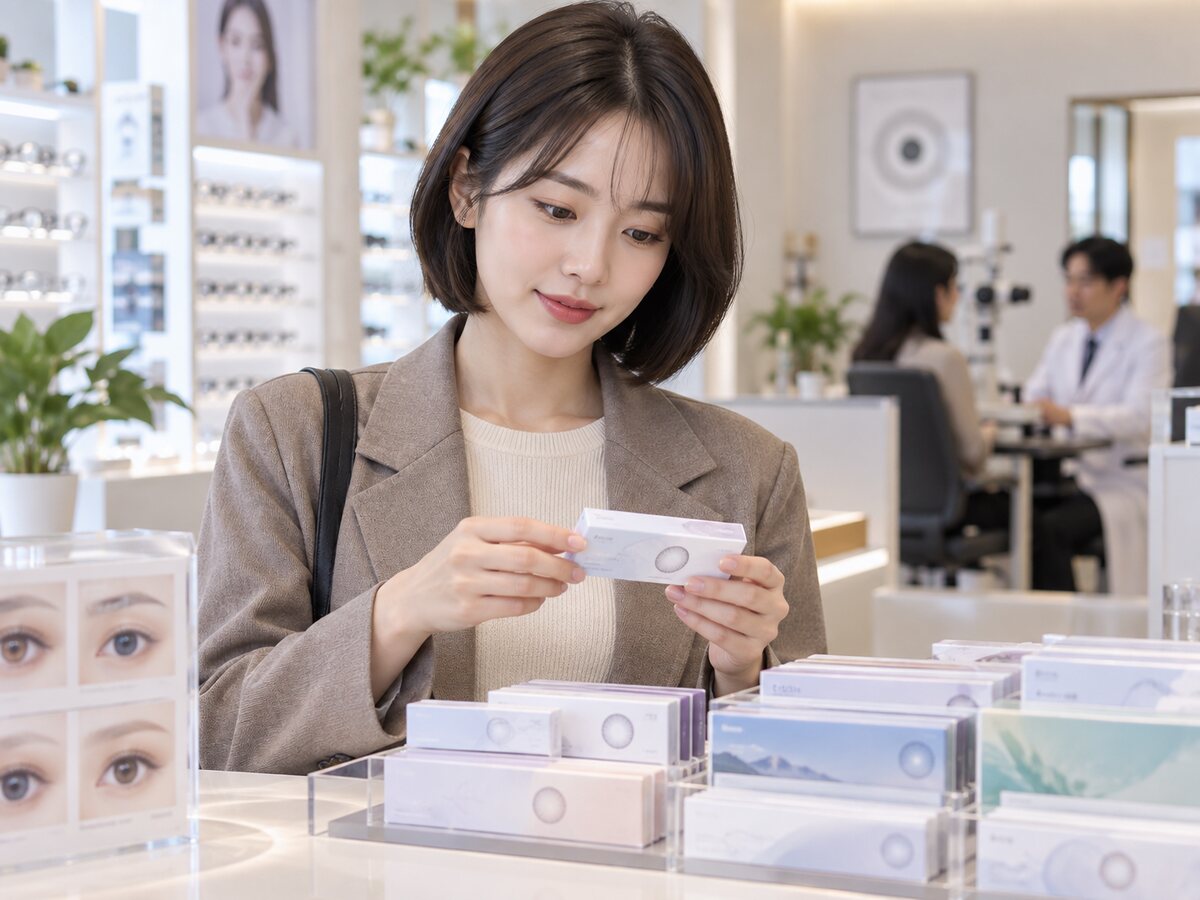
Yes. In the United States, 0.00 or plano colored contacts still require a valid contact-lens prescription. Zero power means the lens is not intended to correct nearsightedness or farsightedness; it does not mean the lens is a cosmetic accessory or one-size-fits-all.
In this guide
- Zero power is not the same as no prescription
- What a fitting adds for cosmetic lenses
- What the final contact lens prescription identifies
- What to expect when ordering 0.00 contacts online in the U.S.
- Common plano-lens scenarios
- A concise plano order checklist
- Ordering shortcuts to avoid
- Related KPOP2 guidance
- Frequently asked questions
- Primary sources

Zero power is not the same as no prescription
Plano, often shown as 0.00, describes the spherical power of a contact lens. It means that the selected lens does not add a plus or minus spherical correction. It does not describe whether the lens is fitted, whether it moves appropriately on your eye, whether it is a daily or reusable product, or whether a U.S. seller may dispense it without prescription information. The FDA’s decorative contact lens guidance states that all contact lenses, including decorative ones that do not correct vision, require a prescription in the United States.
This distinction matters because fashion language can make a lens sound like an accessory. A colored lens still rests on the eye and is regulated as a medical device. The apparent simplicity of a 0.00 dropdown is an interface choice, not evidence that the product is one-size-fits-all. Two plano colored lenses can differ in brand, material, dimensions, replacement schedule and care requirements. A wearer’s vision being naturally clear also does not establish that a particular lens fits.
What a fitting adds for cosmetic lenses
A fitting is the professional process for assessing a contact lens on the eye. The eye care professional can evaluate whether the candidate product centers and moves appropriately, how the eye responds, whether vision remains acceptable and whether the wearer can insert, remove and care for the lens. The process may include follow-up before the prescription is final. Ask the practice what services are included and whether it can assess the exact colored product you are considering.
If you already wear clear contact lenses, do not assume that the same power or base curve makes a colored version interchangeable. Bring the current lens package and the full name of the new candidate to the clinician. If you have never worn contacts, ask for handling instruction as well as fitting. A saved product image or another customer’s review cannot substitute for an on-eye assessment.
Plano lenses are not exempt from care. A daily disposable must be discarded after its intended single use. A reusable lens follows its specific cleaning, disinfection, storage and replacement instructions. Ask for the manufacturer’s patient information and keep the professional’s directions. The FDA’s everyday lens guidance recommends following the supplied directions and keeping a current pair of glasses available when appropriate.
What the final contact lens prescription identifies
The final contact lens prescription should contain enough information to fill the order accurately. The FDA lists power, manufacturer or material, base curve or fitting designation, diameter when appropriate, and identifying dates among the relevant details. “0.00” alone is not a complete product identity. Read the exact lens name and each eye’s information on the issued document. If the product page names a different lens, ask the prescriber about that change.
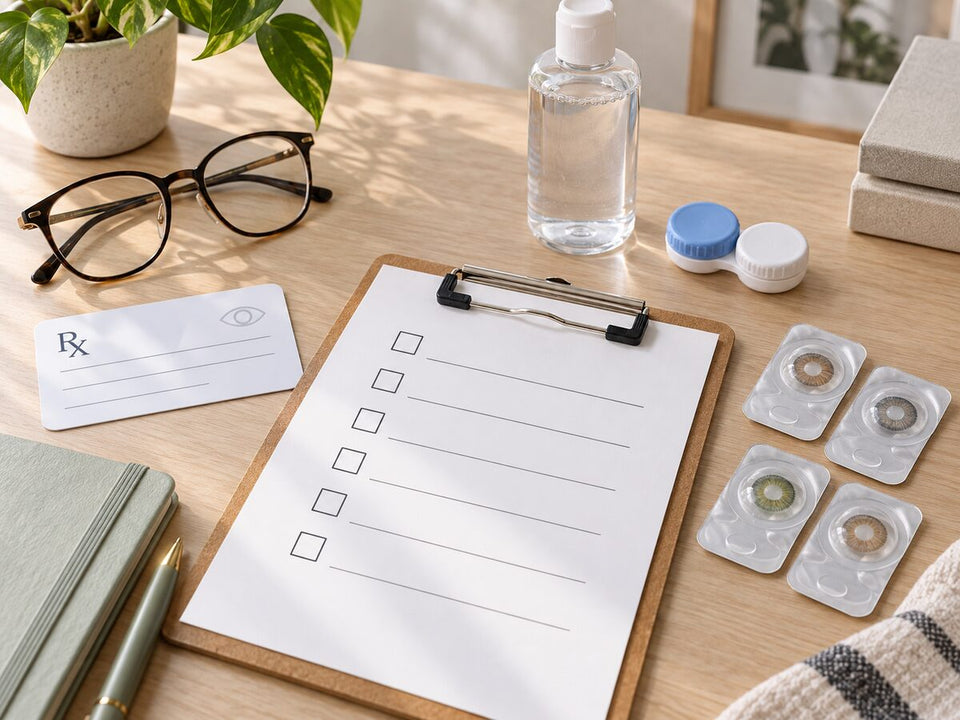
Check the document’s patient name, prescriber contact information, issue and expiration dates, and the right and left rows. A glasses prescription is a different document, even if it lists zero or very low powers. Do not convert a glasses prescription or use it as a placeholder for a contact lens fitting. If the prescription copy is cropped or too faint to read, request a clearer version before ordering.
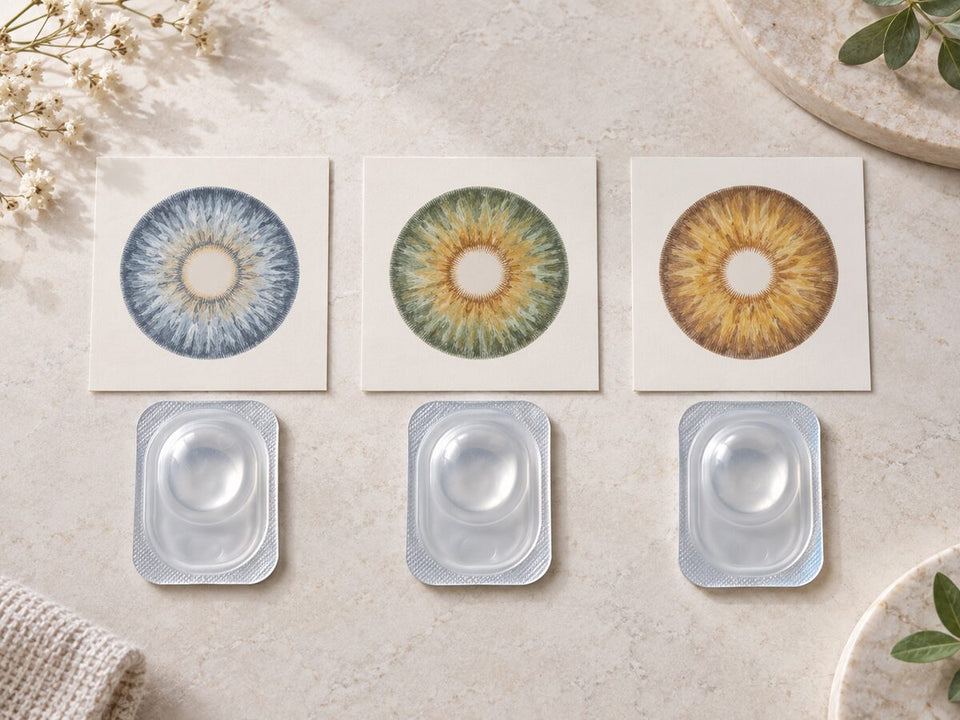
For a colored lens, the appearance and the prescription can be discussed together, but they answer different questions. The shade can help you select among professionally suitable candidates. The prescription identifies the fitted lens and optical details. A different shade or version may correspond to a different product. Verify the exact model, replacement format and selectable configuration rather than assuming all products in a color family share one approval.
What to expect when ordering 0.00 contacts online in the U.S.
Under the FTC Contact Lens Rule, sellers must obtain a copy of the prescription or verify the prescription information with the prescriber before filling an order. The rule applies to decorative contact lenses, including plano products. A seller that asks for prescription information is following the medical-device framework, not imposing an arbitrary extra step on people without refractive correction. Follow the seller’s stated process and submit a complete readable document.
For KPOP2, use the prescription verification page to see the site’s submission instructions. A store can verify order information and clarify which product options are listed. It cannot perform an eye exam, issue a new prescription, change the prescribed brand or decide that a similar-looking lens is clinically interchangeable. If the prescribed product is unavailable, ask the prescriber whether another product should be fitted or prescribed.
Before checkout, compare the final cart with the document. Check the full product name, 0.00 or other power for each eye, any other required parameters, shade, replacement format, box contents and quantity. A cart line may change after selecting a shade or version. Inspect the final selection rather than relying on a product photograph or a remembered previous order.
Common plano-lens scenarios
“I have 20/20 vision and want a one-night costume.” In the United States, the decorative contact lens still requires a prescription. Plan the eye exam and fitting before the event. A one-night intention does not remove the lens’s physical fit or handling requirements. If the appropriate lens cannot be obtained in time, use a lens-free version of the costume.
“A seller offers 0.00 without asking for a prescription.” Do not treat that as proof that the requirement has changed. The FDA warns against buying decorative lenses without a prescription. Choose a seller that follows the applicable prescription and verification requirements, and ask your eye care professional about a properly fitted product.
“My friend’s colored lenses are plano, so I can borrow them.” No. Contact lenses are fitted for an individual wearer, and the FDA warns against sharing them. The same 0.00 number does not make the lens suitable for another eye, and sharing also creates hygiene concerns. Obtain your own fitted product and follow its instructions.
“I have a prescription for one plano brand but prefer another color.” Ask the prescriber about the exact other product. Similar listed dimensions or a shared 0.00 power do not establish equivalent fit. The seller can tell you whether it stocks the item, while the clinician determines whether a product change is appropriate.
A concise plano order checklist
- Obtain a contact lens exam and fitting for the intended lens.
- Receive the final, current contact lens prescription after fitting is complete.
- Check the exact lens name and right/left details, including 0.00 where prescribed.
- Confirm the product page offers the full prescribed configuration and replacement format.
- Follow the seller’s prescription verification process with a legible copy.
- Learn insertion, removal, wear, care and symptom-response instructions before wearing.
If any step is unresolved, pause the order or wear plan and ask the right party. The seller can clarify catalog and submission details; the eye care professional can clarify fit, prescription and clinical instructions. This order lets you enjoy the cosmetic effect without confusing “no spherical correction” with “no medical-device requirements.”
Ordering shortcuts to avoid
- Do not enter 0.00 simply because you do not need glasses.
- Do not use an eyeglass prescription for a contact-lens order.
- Do not copy a friend’s brand or measurements.
- Do not assume all plano colored contacts fit alike.
- Do not buy from a seller that treats decorative contacts as unrestricted cosmetics.
Related KPOP2 guidance
Frequently asked questions
If my vision is perfect, do I still need a prescription?
Yes in the United States. The requirement applies to decorative contact lenses even when the selected power is 0.00.
Can an eyeglass prescription be used to order plano colored contacts?
No. A contact-lens prescription follows a fitting for an exact lens; an eyeglass prescription does not provide that approval.
Does 0.00 mean one size fits all?
No. Zero describes sphere power, not fit, dimensions, material or replacement schedule.
Can I choose any brand if every option says 0.00?
No. The brand or lens line is part of the prescribed lens identity. Ask the prescriber about any change.
Do both eyes always use 0.00?
Not necessarily. Use the prescription for each eye rather than assuming the selections match.
Does prescription verification guarantee comfort?
No. Verification addresses the prescription information; it is not a comfort guarantee. Follow the fitting, product instructions and professional follow-up plan.
Primary sources
- U.S. FDA: Colored and Decorative Contact Lenses—A Prescription Is a Must
- U.S. FTC: Contact Lens Rule guide for prescribers and sellers
Reviewed September 14, 2026. This U.S.-specific educational guide summarizes the linked federal sources and does not replace an eye examination, fitting or product-specific instructions.