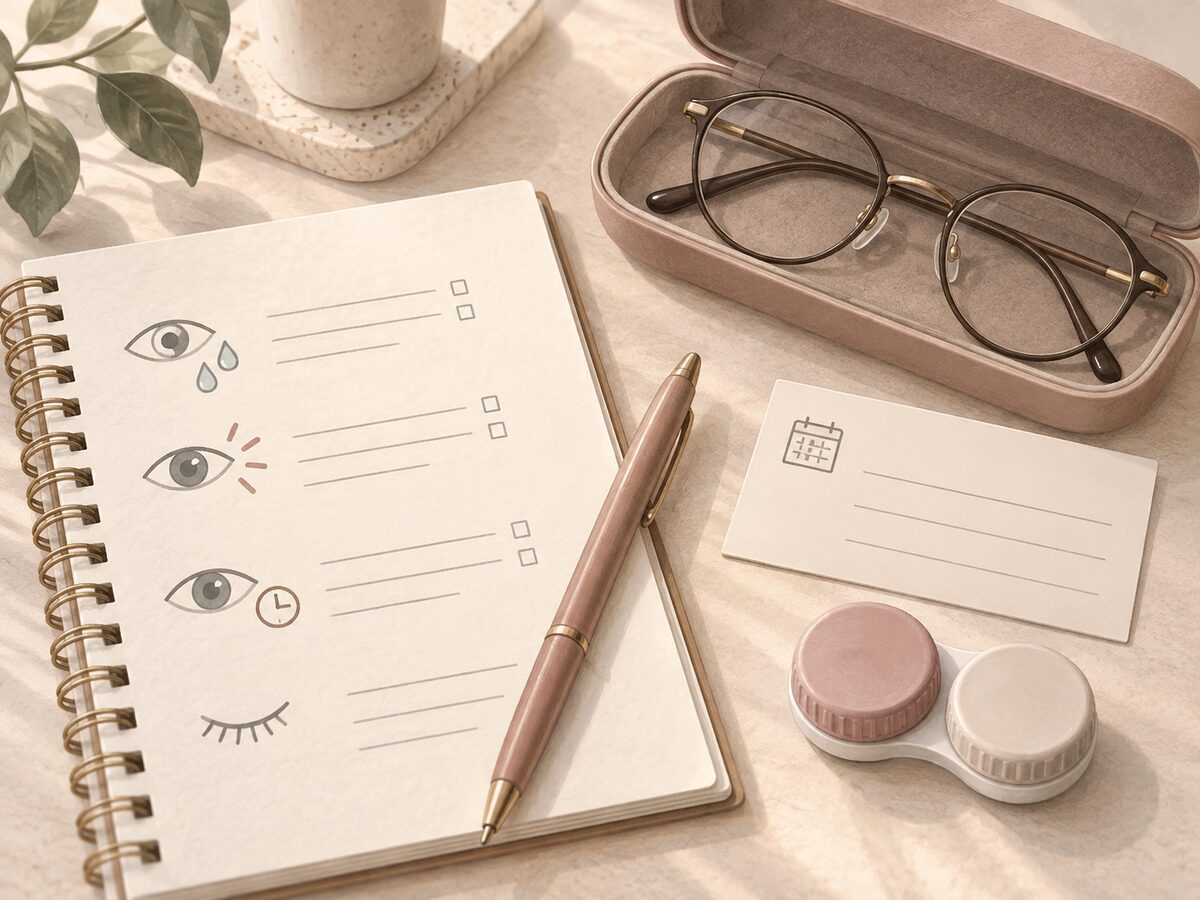

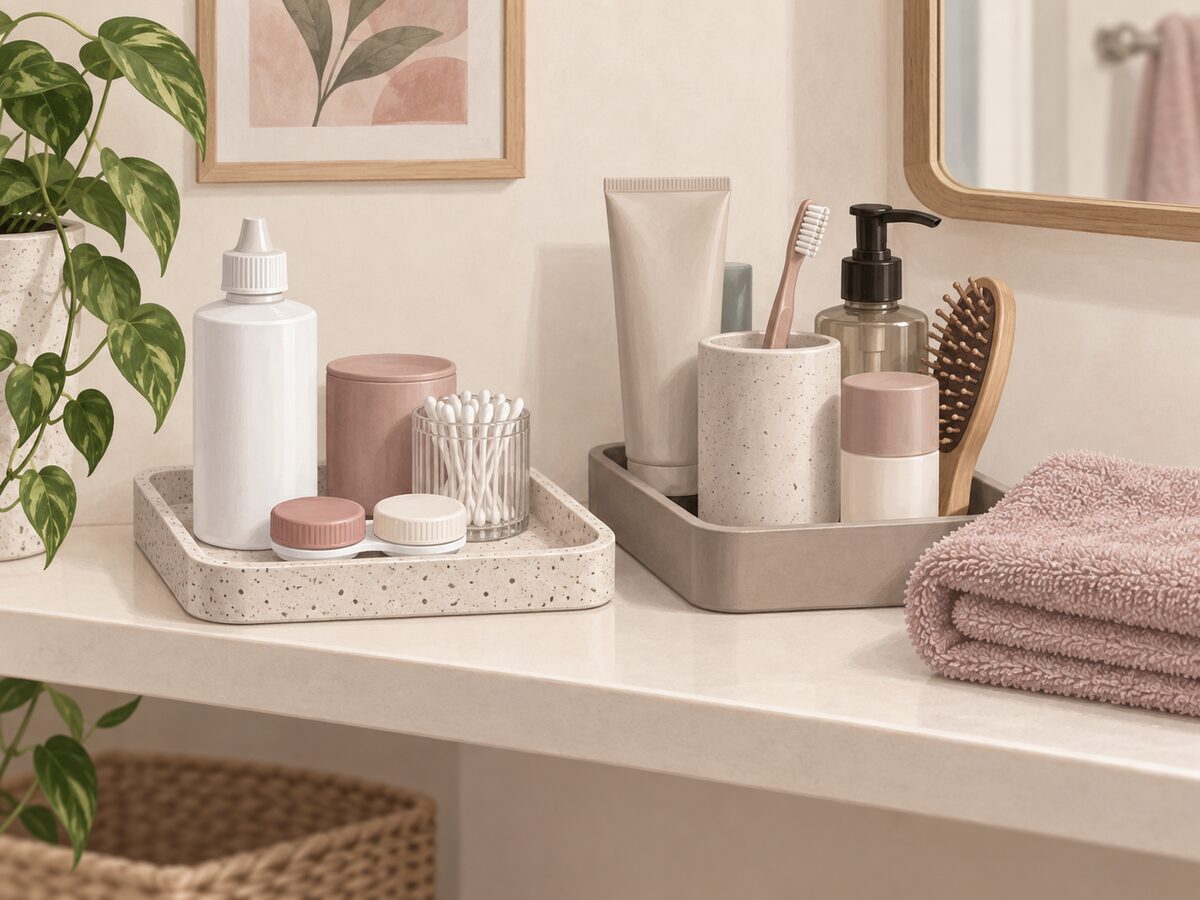
In a dorm, shared apartment or shared bathroom, plan where you can wash and dry your hands, identify your own supplies and complete the instructed lens routine without interruption. Keep a glasses alternative accessible. The aim is a repeatable personal routine in a shared space, not an improvised shortcut when the sink or shelf is busy.
In this guide
Map the routine before buying an organizer
Walk through the places you actually use: where you wash your hands, where you handle lenses, where the case is cleaned and dried, and where products are stored. A spacious bathroom is not required to write that sequence down. Knowing which step happens where is more useful than buying a large bag and hoping it solves the problem.
The CDC recommends washing hands with soap and water and drying them completely with a clean cloth before handling lenses. Build access to those steps into your plan. If the only available arrangement means skipping them, change the wearing plan rather than reducing the preparation.
A shared sink may be busiest at the same time you need to leave. Discuss a practical time or place with the people using it. You do not need to disclose your prescription; the useful household request is simply space and time to complete a personal care routine.
Make ownership and product purpose obvious
Keep your lens packages, case and care products identifiable. Preserve the original labels and any left/right system you were taught. If two people use similar-looking bottles, a separate storage location can help prevent an accidental mix-up without covering the instructions.
Do not identify a bottle only as “the pink one.” Record its complete product name and purpose. A saline rinse and a disinfecting system are not interchangeable, as explained in the care-solution guide. An eye-drop bottle belongs to another set of instructions.
Keep personal supplies separate from communal cleaning products and cosmetics. This is an organization measure: it makes the intended item easier to find. A tray or pouch does not disinfect a case or make a contaminated item usable.
Ask household members not to move your supplies into another container or combine partly used bottles. The FDA advises against topping off old solution and transferring solution to smaller containers. Convenience should not erase the product's identity or change its care instructions.
Plan for the objects you touch between steps
A phone, door handle or drawer can interrupt an otherwise organized routine. Set out the instructions and required items before starting so you are less likely to search for them while holding a lens.
If you need another demonstration of how to prepare, insert or remove the lens, ask your practitioner. The beginner handling guide helps identify which part you need to practice. A roommate's preferred technique is not a substitute for instruction with your prescribed lens.
Consider a common scenario: your supplies are on one side of the room, your phone timer is on the other, and the bathroom door needs to be opened halfway through. The useful improvement is to reorganize those steps beforehand. Trying to finish faster does not resolve the interruption.
For a small shared room, a written checklist beside your storage area can be enough. Keep it short: correct product, required supplies, hand preparation, taught method, and after-removal instructions. Put the detailed manufacturer leaflet somewhere you can retrieve when a question arises.
Give case care a place in the room
Reusable lenses need their complete instructed care routine. The case's cleaning, drying and replacement requirements remain in force when space is shared. Follow the exact system's directions, including any special case required; a spare ordinary case is not automatically suitable for every system.
The case-care guide explains that routine. Choose a location where household members know the case is part of personal care and will not casually fill it with water, close it early or move it into a wet sink.
Do not confuse a storage pouch with the case's drying location. Ask your practitioner how to arrange the routine if the room setup makes the required steps difficult. Describe the actual limitation—no suitable surface, frequent splashes or shared storage—rather than asking only for “a better case.”
Use the dates guide to keep product opening dates, lens replacement and prescription information separate. A household cleaning day is not a substitute for those records.
Keep showering separate from lens handling
The CDC advises removing lenses before showering or swimming. A morning routine that combines everything in one bathroom still needs to respect that distinction.
Write the order of your activities before deciding where supplies belong. For example, your glasses may need to be accessible before the shower rather than packed at the bottom of a school bag. The order is a practical arrangement; the lens's instructions determine the actual care steps.
If the schedule changes, use the alternative you prepared. A late start does not create a new method for handling lenses in the shower. Our sleep and water guide addresses the common questions without repeating them here.
Agree on a fallback for busy mornings
Suppose your usual space is unavailable. Decide in advance whether another suitable arrangement exists or whether you will wear glasses. Keeping that option ready avoids making a rushed choice with an open lens package in your hand.
A fallback note can include where your glasses are, which supplies travel with you, and who to contact if removal becomes difficult. Use Wear & Care as a reference alongside the instructions for your actual lens.
If discomfort or a vision change develops, use the stop-and-seek-help guide. A household discussion about storage cannot determine the cause of an eye problem. Resolve eye-care needs first and review the room setup afterward.
Shared-space questions
Can I use my roommate's spare lens?
No. Keep your own prescribed supply. A shared color preference or apparently matching power does not establish that another person's lens is appropriate for you. FDA's everyday guidance advises against swapping lenses.
Does every item need a special storage box?
No special organizer is established as necessary by this article. Use an arrangement that preserves identification, follows storage instructions and makes your routine workable.
Can I copy the care routine of someone using the same brand?
Confirm the exact lens and system first. A brand may include different replacement formats and products. Keep the instructions that apply to your prescribed model.
Is a clean-looking counter enough?
Appearance alone does not complete the handling routine. You still need hand preparation, the taught method and the prescribed supplies. Ask for advice if the available space makes those steps difficult.
Should I switch to daily lenses because the bathroom is shared?
Discuss the exact proposed lens with your practitioner. Shared space is a practical consideration, not automatic approval to change products or skip fitting.
What is the simplest improvement to start with?
Write the sequence once, identify the step that is usually interrupted, and arrange a reliable alternative for it. Keep glasses accessible while you resolve the routine.
AI-assisted educational content using the linked primary sources, checked September 12, 2026. This guide does not report an individual clinical assessment or a KPOP2 product test. Explore related guidance in Lens 101.